Low snowpack, high river spikes complicate Dolores County water outlook
Low mountain snowpack but episodic San Juan River surges are reshaping water availability for Dolores County residents.
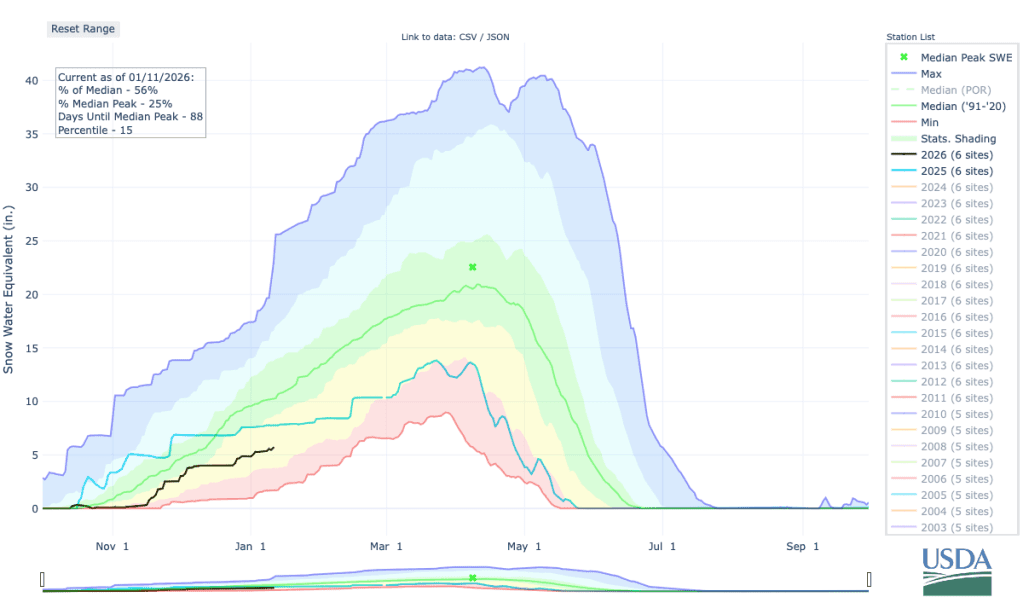
Snow surveys and river gauges this winter have produced an unusual mix: below-normal seasonal snowpack in the high country alongside sudden, unusually high daily river flows. That combination is forcing water managers, irrigators and recreation providers in Dolores County to reassess short- and long-term plans for supply, safety and economic activity.
Field measurements through early January showed low snow water equivalent at key mountain sites. Wolf Creek Pass, at 10,930 feet, registered about 7.6 inches of snow water equivalent on Jan. 7 compared with a 15.5-inch median for that date. Basin-wide metrics were similarly down: the San Miguel, Dolores, Animas and San Juan basins measured roughly 49 percent of their 30-year median snowpack on Dec. 31, 2025 and improved only to about 56 percent by Jan. 7, 2026. Those figures indicate the mountain snow reservoir that normally supplies spring and summer runoff is significantly below typical levels.
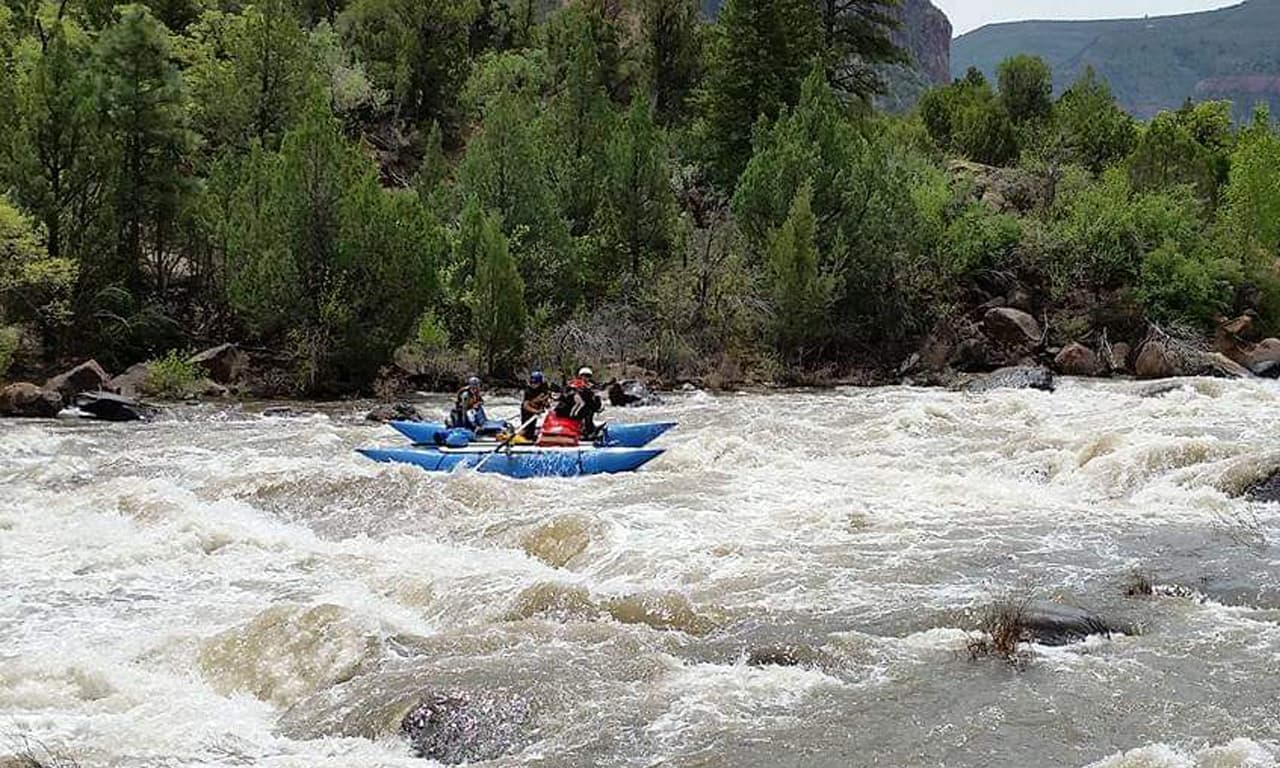
Despite the low seasonal totals, the San Juan River at Pagosa Springs experienced several short-term flow spikes in early January. The USGS gauge recorded 128 cubic feet per second (cfs) on Jan. 2 and 119 cfs on Jan. 5, compared with daily medians near 53 cfs and 54.5 cfs respectively. Such episodic surges reflect storm-driven runoff or rain-on-snow events that produce high instantaneous flows even when cumulative snowpack remains light.
For Dolores County, the consequences are practical and immediate. Short-term high flows can raise safety risks for anglers, ice users and boaters and complicate river access and trail conditions. At the same time, the reduced snowpack points to lower late-spring and summer runoff volumes, heightening uncertainty for irrigators who depend on predictable deliveries and for municipal water providers managing reservoirs and groundwater recharge schedules. Economically, tourism tied to rafting, fishing and winter recreation could see altered seasonality: more hazardous or unpredictable river conditions during shoulder seasons and less water available for summer recreation and agriculture.
The pattern also has policy implications. Episodic high flows emphasize the need for agile reservoir operations and improved streamflow forecasting, while below-normal seasonal storage highlights long-term investments in storage capacity, water markets and conservation incentives. The region’s current drought-related impacts underline the urgency: water allocations, voluntary fallowing programs and contingency planning are likelier to surface in local water board discussions this year.
Long-term trends reinforce the stakes. Lower median snowpacks and more variable runoff timing are consistent with a warming, more volatile climate regime that stresses traditional water accounting. Local water managers and users should expect more of these mixed signals—flashy high flows amid shrinking seasonal reserves.
Our two cents? Watch the gauges, plan for volatility and conserve where you can. Short-term spikes won’t replace a weak snow year, so practical steps now—adjusting irrigation schedules, checking river conditions before heading out, and supporting flexible water management—will help Dolores County ride out an unpredictable season.
Sources:
Know something we missed? Have a correction or additional information?
Submit a Tip