Lydia Rippey Elementary Earns Spotlight Status Again, Improves Math
Lydia Rippey Elementary was named a Spotlight School by the New Mexico Public Education Department for the second consecutive year, placing its overall index score above the 75th percentile. The designation highlights steady reading results and gains in math that have implications for classroom practice and local families.
On December 5 Lydia Rippey Elementary was named a Spotlight School by the New Mexico Public Education Department for the second consecutive year, putting the school among the state’s top performers with an overall index score above the 75th percentile. The recognition comes as the school reports a stable reading performance and mixed but improving results in math, trends that shape resource allocation and classroom priorities in San Juan County.
Reading proficiency at Lydia Rippey held at 54 percent, essentially unchanged since the 2022 23 school year. Principal Josh Adams attributed that stability to staff training in the science of reading, and to focused reading instruction. "It just gives us as professionals that background knowledge that we need to know in order to best meet kids’ needs," Adams said. Teachers credit that training with clearer instruction and consistent expectations across grade levels.
Math results showed more movement. Overall math proficiency rose from 23 percent in 2022 23 to 40 percent in 2023 24, before dipping to 35 percent in 2024 25. School leaders say the improvement was driven in part by the addition of a math interventionist who works with individual students to close learning gaps. Second grade teacher Corie Dutton pointed to stronger communication across grade levels and with intervention staff as a practical driver of classroom success. "I think relationship and respect for each other, between grade levels and within the building, with our interventionists, I feel that's super important," she said.
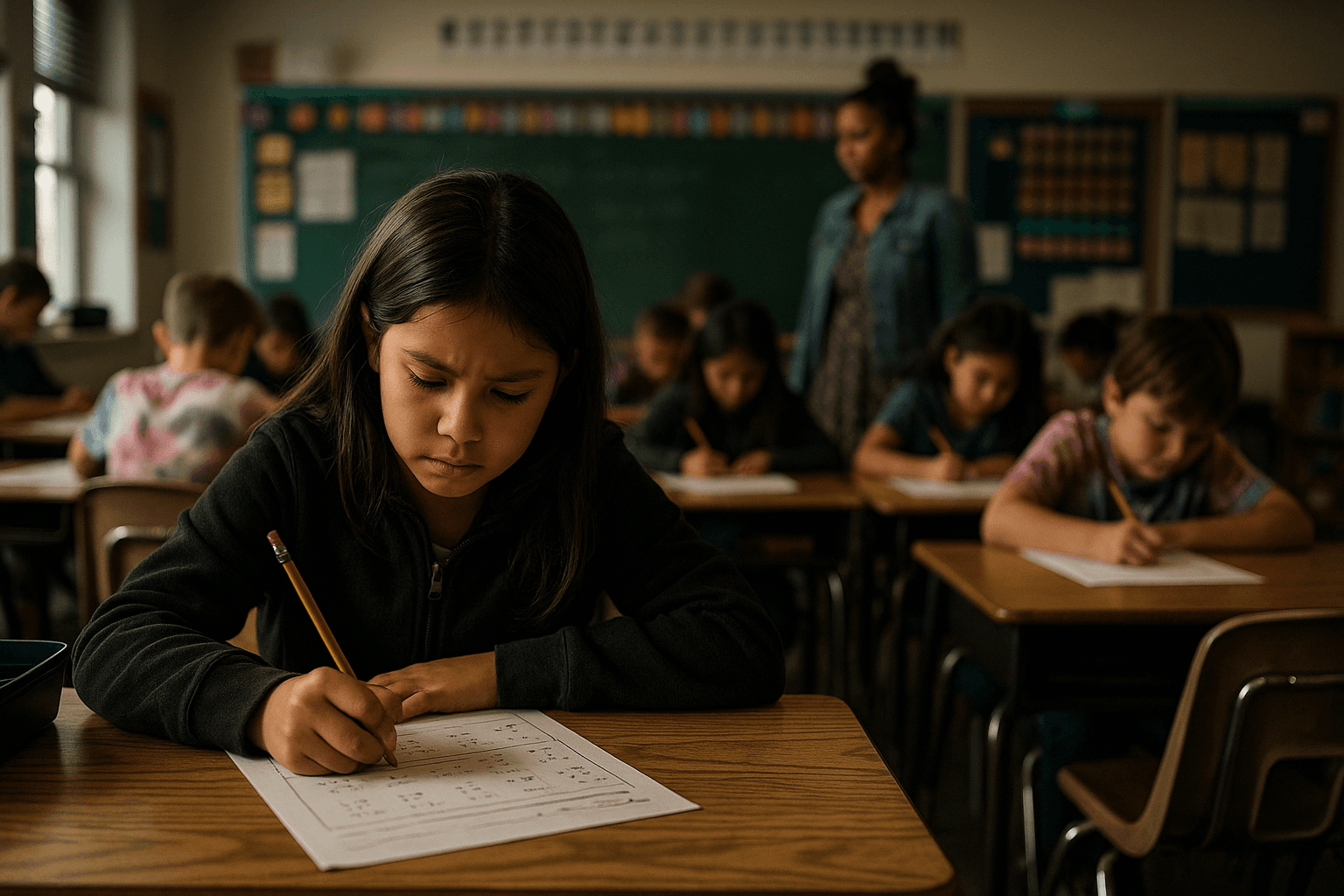
Adams said improved organization of Grade level Professional Learning Communities has helped teachers better review student data and align instruction. "I think that's become more organized, and I think that's helped just to have that better collaboration," he said. Teachers also emphasize balancing assessment with instruction so that data informs teaching without overwhelming it. "I think another important point is that we don't just spend all our time assessing," Dutton said. "I do notice it seems like in our profession that there's sometimes a drive toward that, data, data, data. I personally think there can be too much data and then what happens to the teaching? So it is a fine balance."
School leaders framed student wellbeing and safety as core measures of success. "I also just really want them to be happy," Adams said. "To me, it's just important that the kids are just happy … that they just have a really good environment to learn in. If we have those pieces in place, they're going to receive that good education." For local families, the recognition signals consistent reading outcomes, renewed math focus, and a school culture that prioritizes collaboration and student wellbeing, factors that can influence enrollment choices and district planning going forward.