Menominee College trail blends plant science with Menominee language
A phenology trail at the College of the Menominee Nation labels plants with Menominee names and seasonal notes, linking science and culture for students and residents.
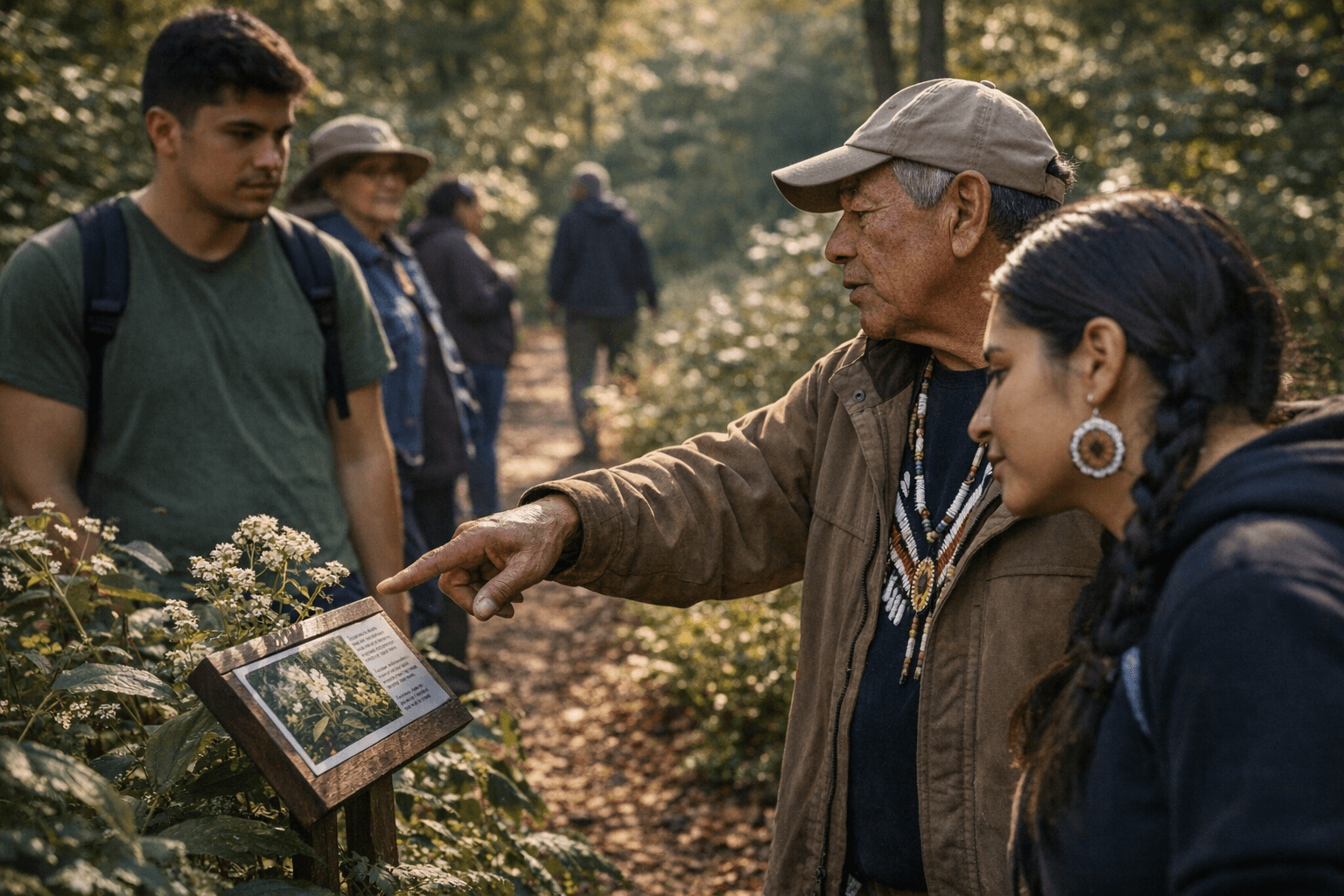
A phenology trail on the College of the Menominee Nation campus in Keshena now pairs botanical signage with Menominee language and seasonal notes, giving students and visitors a new way to read the landscape. Phenology, the study of seasonal changes in plant and animal life, is used on the trail to show not only common and scientific names but the Menominee names and the phases plants go through each year.
The trail is operated by the college’s Sustainable Development Institute. Jennifer Gauthier, the institute’s director, framed the dual mission plainly: “Our language is a way to see the world. And a way that our ancestors saw the world. It’s a way to connect with things around us.” That phrasing underscores the project’s goal to braid Western scientific methods with Indigenous ways of knowing so that seasonal observation carries cultural as well as ecological meaning.
Phenology trails are a recent phenomenon in environmental education, and the College of the Menominee Nation’s installation serves two distinct local purposes. Academically, it functions as a hands-on teaching tool for biology, ecology, and environmental science classes on campus. Culturally, it is an active resource for Menominee language learning and traditional ecological knowledge, offering a visible, outdoor classroom where vocabulary and seasonal practices anchor language to land.
For Menominee County residents, the trail strengthens connections between language preservation and land stewardship. Seasonal markers—bloom times, leaf changes, fruiting periods—carry practical information for gardening, harvesting, and monitoring environmental shifts. By labeling those markers in Menominee, the trail supports intergenerational transmission of place-based knowledge that can inform local decisions about forestry, harvest timing, and outdoor education programs.
The project also has implications beyond classroom walls. Phenology data collected through observation can contribute to community awareness of shifting seasonal patterns, an increasingly relevant issue as climate trends alter timing for migration, flowering, and growing seasons. Integrating Indigenous seasonal calendars with scientific observation creates a richer data set for local leaders and natural resource managers who plan planting schedules, cultural events, and conservation work.
The trail is a model for how small institutions can merge cultural revitalization with hands-on science education, offering both civic value and practical outcomes for residents. Our two cents? Walk the trail with a student or elder, learn a Menominee name, and use that knowledge next season—the payoff is stronger language, better stewardship, and a clearer sense of how our seasons are changing.
Sources:
Know something we missed? Have a correction or additional information?
Submit a Tip