Miami Mayoral Runoff Tests National Parties, Hispanic Voter Coalitions
A Miami mayoral runoff between Democrat Eileen Higgins and Republican Emilio Gonzalez, endorsed by President Donald Trump, is drawing national attention as a barometer of party strength among Hispanic voters. The outcome matters because it could signal how both parties will fare with diverse urban Hispanic electorates as they prepare for the 2026 midterm contests.

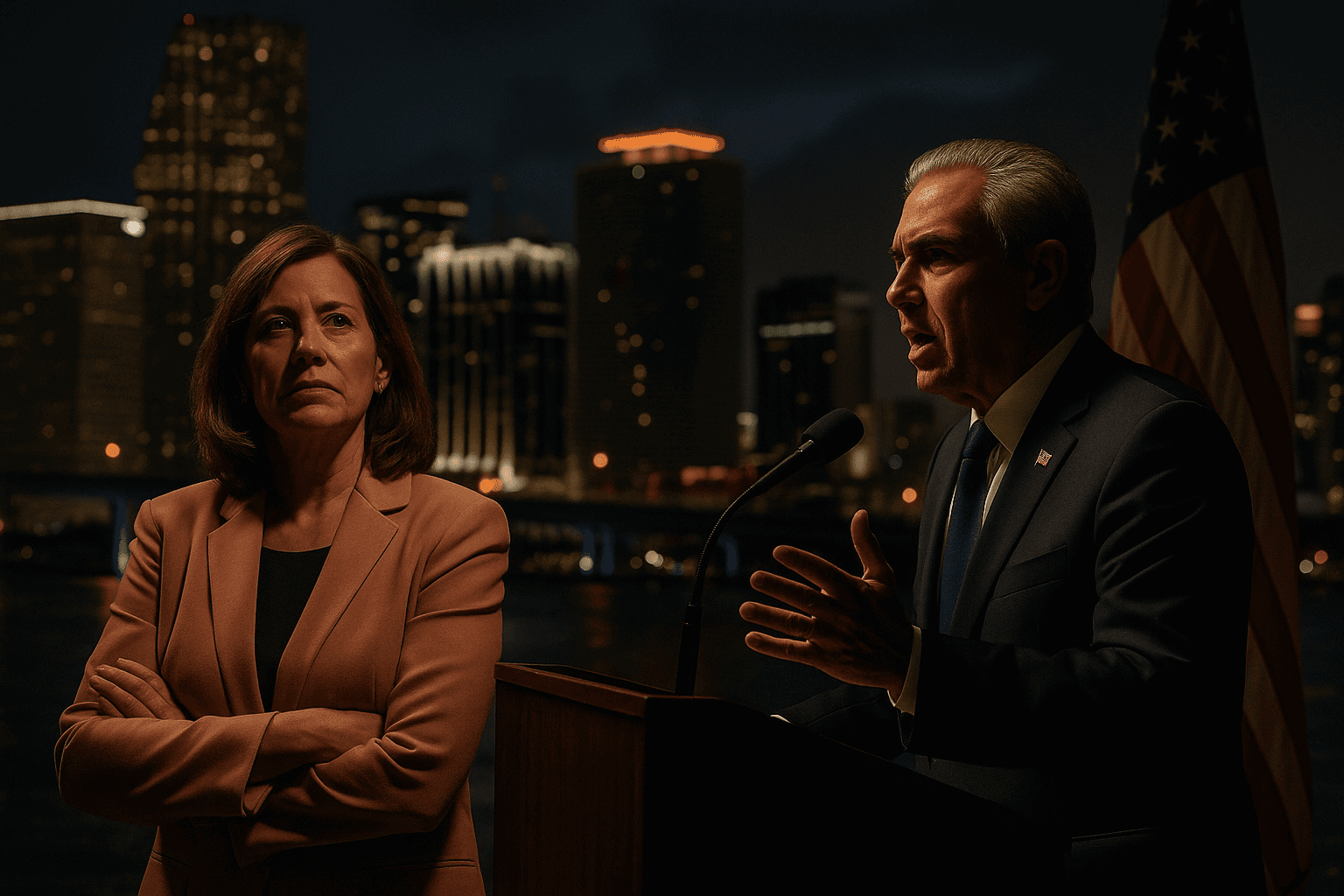
Miami voters are deciding Tuesday in a mayoral runoff that has been nationalized by endorsements and party interest, turning a municipal contest into a contested symbol of broader political trends. Democrat Eileen Higgins, who would be the first Democrat to lead the city in nearly three decades if elected, faces Republican Emilio Gonzalez, who has secured the endorsement of President Donald Trump and backing from national Republican operatives. Both sides have cast the race as more than local, tying issues of public safety, housing affordability, and economic development to larger national debates.
Campaign events and advertising have emphasized conventional municipal themes, but national narratives are threaded through the contest. Republican strategists view Miami as a critical test of the party’s ability to win Hispanic voters in an urban, majority Hispanic city that has trended away from its historical partisan alignments in recent years. Democrats see an opening to recover urban ground and to demonstrate that a pluralistic Hispanic electorate can be mobilized around local governance performance and progressive policy priorities.
The turnout and preferences of Cuban American voters have long shaped Miami politics, but this runoff is being watched for signals from a broader mosaic that includes Venezuelan Americans, Colombian Americans, Central American migrants and younger Hispanic voters with varied national origins and political histories. Observers caution against flattening these communities into a single bloc. Cultural background, generational status, immigration experience, and economic circumstances produce distinct priorities on policing, rental costs, and pathways to economic opportunity. How campaigns address that complexity could offer lessons for national messaging ahead of the 2026 midterms.
Miami’s role as a regional economic hub and gateway to Latin America gives the mayoralty an outsized symbolic profile. The office presides over policy areas that intersect with international trade, port operations, tourism, and diaspora engagement. National parties are attuned to how local leaders manage relationships with consular networks, multinational investors, and transnational communities, seeing these interactions as extensions of soft power and domestic outreach.
The runoff will likely be parsed not only for who wins but for what coalition carried the day. A Democratic victory would be framed by some as evidence of restored urban appeal and effective coalition building among diverse Hispanic voters. A Republican victory, especially one bolstered by an endorsement from a former president, would be presented as confirmation of Republican inroads into communities once assumed to be reliably Democratic.
Legal and administrative authority in the mayor’s office is bounded by federal and state law, yet the political reverberations are national, and parties on both sides are prepared to treat the result as a talking point in shaping strategy. As the polls close and provisional ballots are counted, strategists will measure more than a single municipal outcome. They will seek clues about messaging, turnout dynamics, and the resilience of partisan realignments in a region whose demographic and cultural ties reach well beyond city limits.