Mother Goose House Preservation Urgent for Hazard's Tourism and Safety
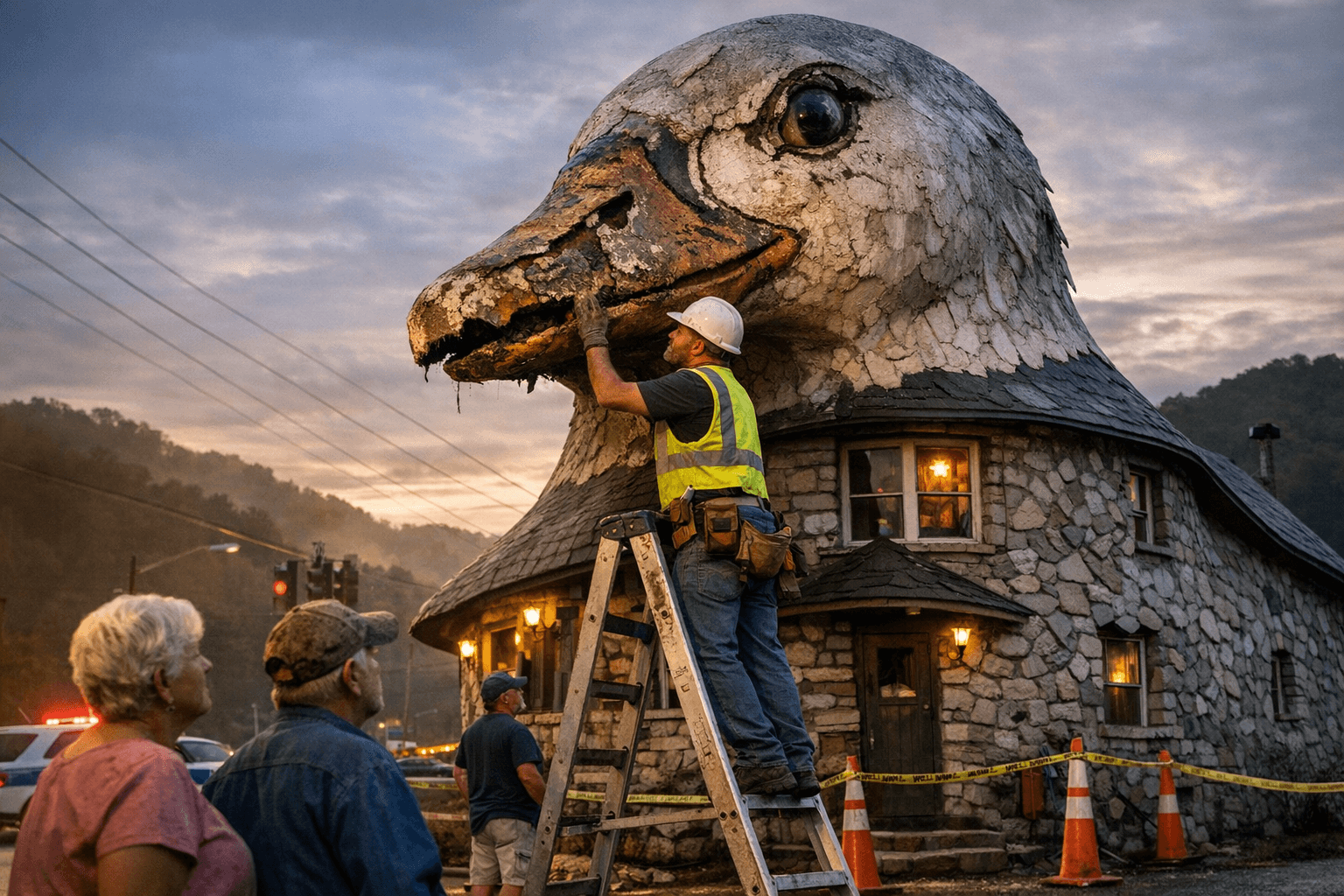
The iconic Mother Goose House in Hazard, built by George Stacy beginning in the 1930s and completed around 1940, remains a beloved local landmark but now needs exterior repairs, especially to the sculpted goose head. Residents and local officials are appealing for resources and volunteer efforts to stabilize the structure, an effort that matters for public safety, local tourism revenue, and Perry County’s cultural identity.
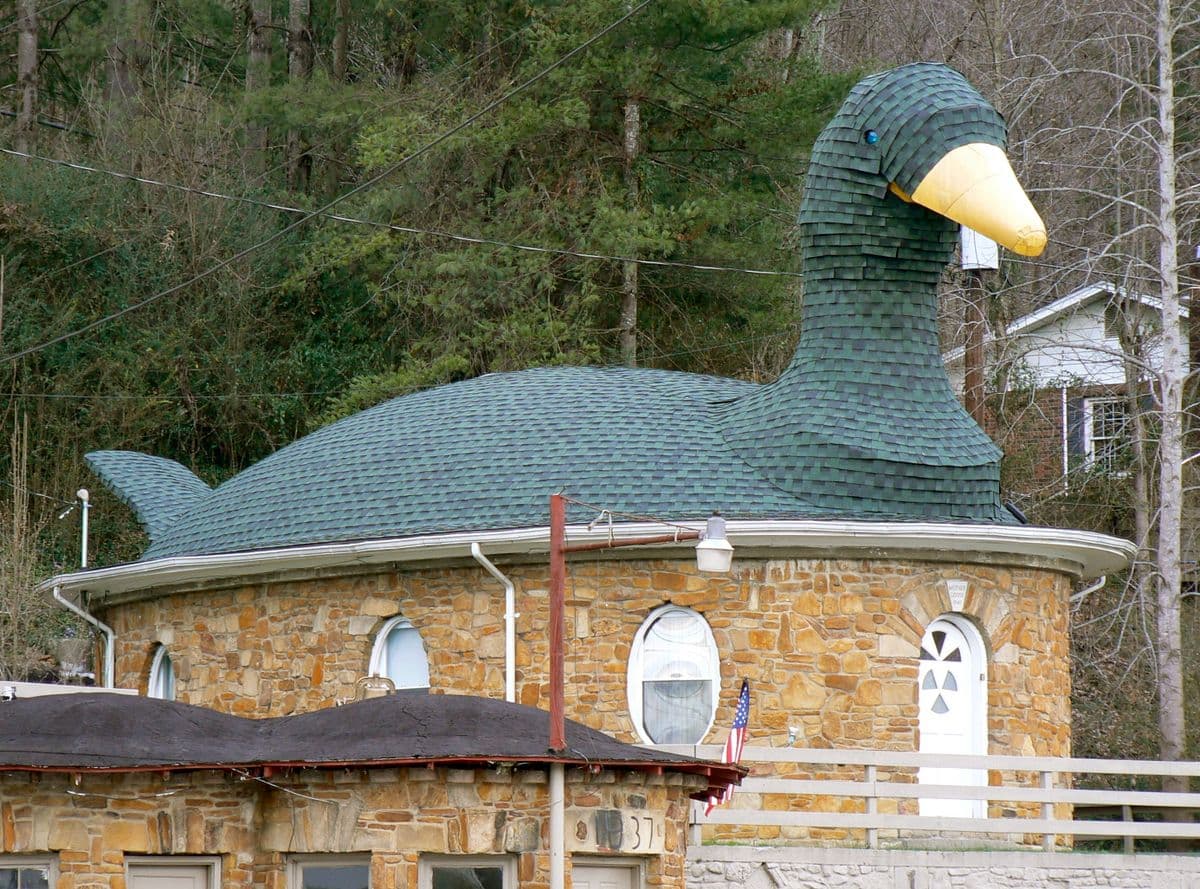
The round stone building topped by a goose-shaped upper structure that locals simply call the Goose has long been one of Hazard’s most photographed and visited landmarks. Constructed beginning in the 1930s by George Stacy and finished around 1940, the structure’s walls are made from stones gathered from many U.S. states and Canada and are punctuated by distinctive oval windows and the sculpted goose head that crowns the roof. Over the decades the building has housed a private home, a market, a filling station, and more recently operated as a bed-and-breakfast and visitor attraction that draws people to downtown Hazard.
Local tourism information continues to list the Mother Goose House as a recommended stop for visitors to the city, and the site’s unusual architecture has drawn national attention at various times in its history. That popularity has helped bring visitors, foot traffic, and small-scale economic activity to nearby businesses. But recent local reporting and community appeals have highlighted persistent maintenance needs, particularly on the goose head and exterior stonework, and neighbors say community volunteers have been mobilizing to help preserve the structure.
The immediate concern for Perry County is twofold: preserving a piece of the community’s cultural fabric and preventing conditions that could pose risks to visitors. Structural deterioration on visible elements such as the sculpted head can accelerate weather damage and create hazards in a heavy-traffic visitor area. Ensuring the site is stable and safe aligns with public health priorities by reducing the risk of injury and reducing demands on emergency services in a rural county where resources are already constrained.
Beyond safety, the Mother Goose House raises broader questions of equity in heritage preservation. Rural landmarks often rely on volunteer labor, small donations, and uneven local budgets, while grant funding and preservation programs frequently concentrate on urban centers or widely known national sites. For Hazard, sustaining the Goose means protecting tourism income, preserving local jobs and small businesses that benefit from visitors, and maintaining an accessible public landmark that contributes to community pride and continuity.
Local leaders, preservation advocates, and tourism officials face choices about how to prioritize repairs, apply for preservation funding, and coordinate volunteer efforts. Stabilizing the exterior and addressing the goose head are urgent first steps to keep the site safe and welcoming for residents and visitors alike, and to ensure this singular piece of Hazard’s built environment remains part of Perry County’s living heritage.
Sources:
Know something we missed? Have a correction or additional information?
Submit a Tip