Nationals open supplemental minor-league training camp in West Palm Beach
Washington Nationals will run a supplemental minor-league training camp Jan. 20 to boost individualized offseason development for roughly 60 prospects.
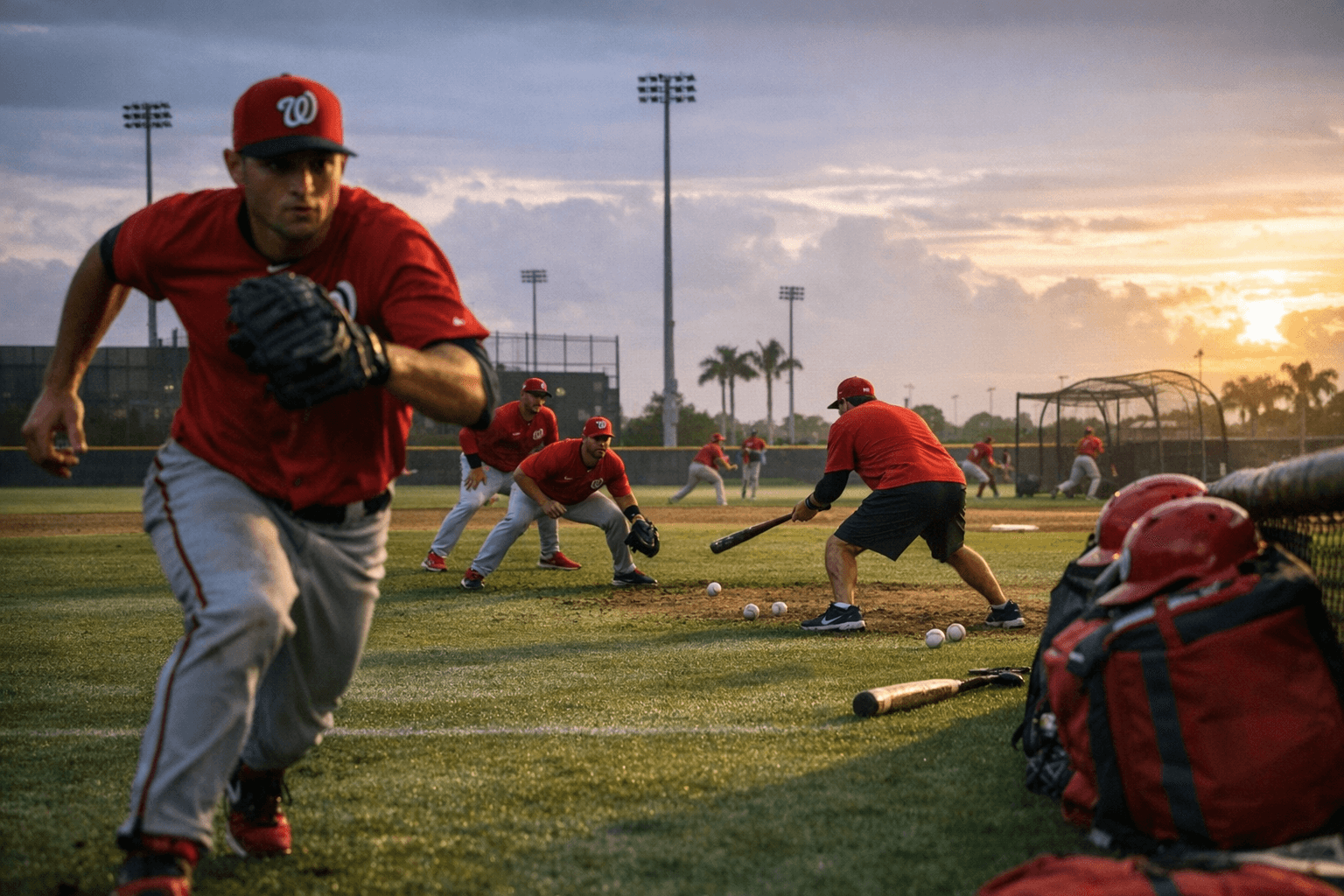
The Washington Nationals will hold a supplemental minor-league training camp at their West Palm Beach facility beginning Jan. 20, inviting roughly 60 minor-league players as part of a push to expand the club’s offseason player-development footprint. The camp is an early test of president of baseball operations Paul Toboni’s plan to make scouting and player development the organization’s core focus.
Assistant general manager Devin Pearson, who oversees player development, said the camp will concentrate on individualized programs. Players will work on strength and conditioning, nutrition, skill work and medical assessments under a stabilized coaching core that will remain in West Palm Beach for the season. Affiliate coordinators and other coaches will cycle in for shorter windows, creating continuity while preserving specialist input from the system’s full staff.
The initial invite list includes some of the farm system’s near-term names to know: 2025 draftees Miguel Sime Jr. and Coy James, 2024 second-round pick Luke Dickerson, and international signee Angel Feliz. Their presence underscores the camp’s role as both a development accelerator and a chance for the front office to standardize training approaches across levels.
This supplemental camp also follows a broader revamp of the Nationals’ minor-league operation. The organization has invested in technology and staffing upgrades aimed at tighter integration between scouts, coordinators and on-field instructors. Those investments are intended to create a more data-informed pipeline, smoothing transitions from Single-A to Triple-A and beyond and improving player availability and long-term durability.
For affiliates and coaches, the camp offers practical benefits: a predictable offseason schedule for core staff who will be on-site through spring, clearer handoffs when coordinators rotate through, and centralized medical evaluations that can flag workload or injury risks before the calendar flips to full-season activity. For players, the emphasis on individualized programs means targeted plans rather than one-size-fits-all routines, an important factor for prospects managing return-to-play timelines or late-stage skill development.
If the West Palm Beach experiment produces measurable gains in performance, health or cohesion, the Nationals plan to expand offseason programming in subsequent years. That should mean more organized opportunities for prospects to receive consistent coaching and greater transparency for fans tracking the farm system.
Our two cents? Keep an eye on the names heading to West Palm Beach—Sime Jr., Coy James, Dickerson and Feliz are worth following—and watch how the Nationals translate winter work into midseason promotions. This camp is the kind of infrastructure move that helps a farm system stop spinning its wheels and start turning prospects into reliable call-up options.
Sources:
Know something we missed? Have a correction or additional information?
Submit a Tip