Navajo Committees Move to Strengthen Enforcement of Grazing Permits
A joint meeting of the Navajo Nation Resources and Development Committee and Law and Order Committee on Jan. 6 addressed chronic enforcement gaps in grazing permits and violations of the Agricultural Resource Management Plan. Proposed amendments to Titles 3, 11, and 17 and a push for cross-deputization aim to clarify authority and improve responses that directly affect ranchers, land stewardship, and dispute resolution across McKinley County.
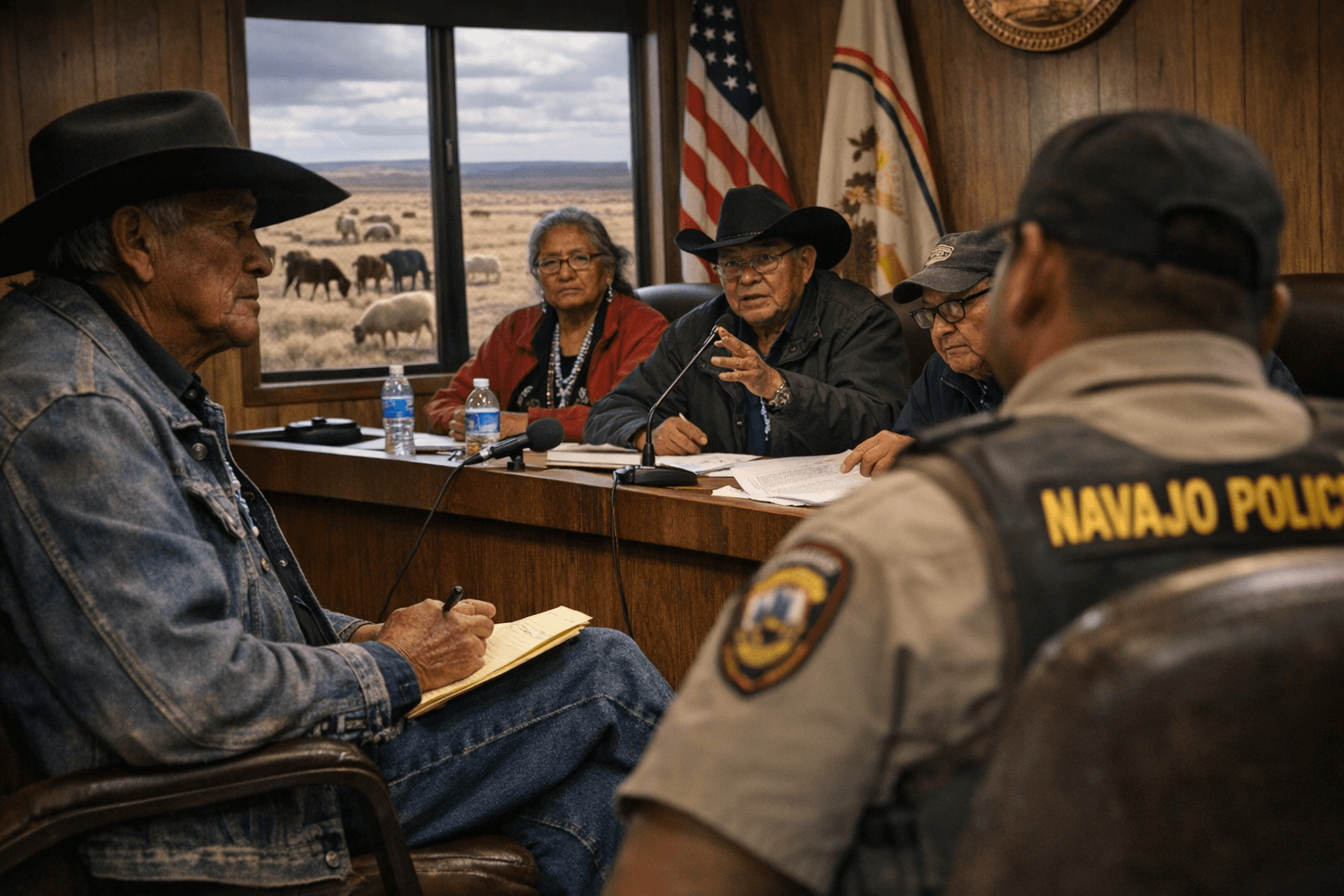
Committee leaders and agency officials gathered on Jan. 6 in Window Rock to confront mounting problems tied to grazing permit enforcement and compliance with the Navajo Nation Agricultural Resource Management Plan. Resources and Development Committee Chair Brenda Jesus and Law and Order Committee Chair Eugenia Charles-Newton led the session, where Navajo Nation Department of Agriculture Manager Jesse Jim outlined draft changes to Title 3 of the Navajo Nation Code. The Law and Order Committee is advancing revisions to Title 17 while proposed changes to Titles 3, 11, and 17 were discussed to better align statutory authorities on grazing regulation.
Officials described a pattern of challenges undermining orderly grazing management: limited education for permittees, persistent noncompliance with livestock counts, unclear permit boundaries, unbranded and feral animals, unauthorized grazing on permitted grasslands, and resistance encountered by NNDA staff carrying out oversight. Participants also identified enforcement gaps and staffing shortages that reduce timely law enforcement responses to agricultural disputes, leaving permit holders and neighbors without reliable mechanisms to resolve conflicts.
Bureau of Indian Affairs Navajo Region Director Deborah Shirley attended and clarified the federal-tribal division of responsibilities: the BIA manages grazing permits while enforcement has been delegated to the tribal government. That arrangement has created practical complications for on-the-ground enforcement, prompting delegates to pursue institutional remedies. Committee members requested that the Department of Justice develop a cross-deputization program and discussed pursuing a memorandum of agreement to enable cross-deputization of officers. RDC and LOC scheduled a follow-up on Feb. 19 to assess progress.
For residents and livestock owners in McKinley County, the outcome of these policy changes matters for daily livelihoods and land use certainty. Accurate livestock counts and clear permit boundaries affect grazing allocations, funding for rangeland management, and the prevention of overgrazing. Improved enforcement could reduce disputes that currently fall into prolonged administrative or legal limbo because of personnel shortages and jurisdictional ambiguity.
The committees’ effort to synchronize Titles 3, 11, and 17, strengthen NNDA capacity, and secure cross-deputization arrangements frames the next phase of work. The Feb. 19 follow-up and the drafting of statutory amendments will determine whether those measures translate into faster, clearer enforcement and stronger protections for permittees and the rangelands they depend on.
Sources:
Know something we missed? Have a correction or additional information?
Submit a Tip