Naval aircrew's owl photos spotlight Whidbey Island wildlife
A Whidbey aircrewman shared owl photos online last week, drawing local attention. The images highlight island parks and wildlife and could boost interest in outdoor recreation.
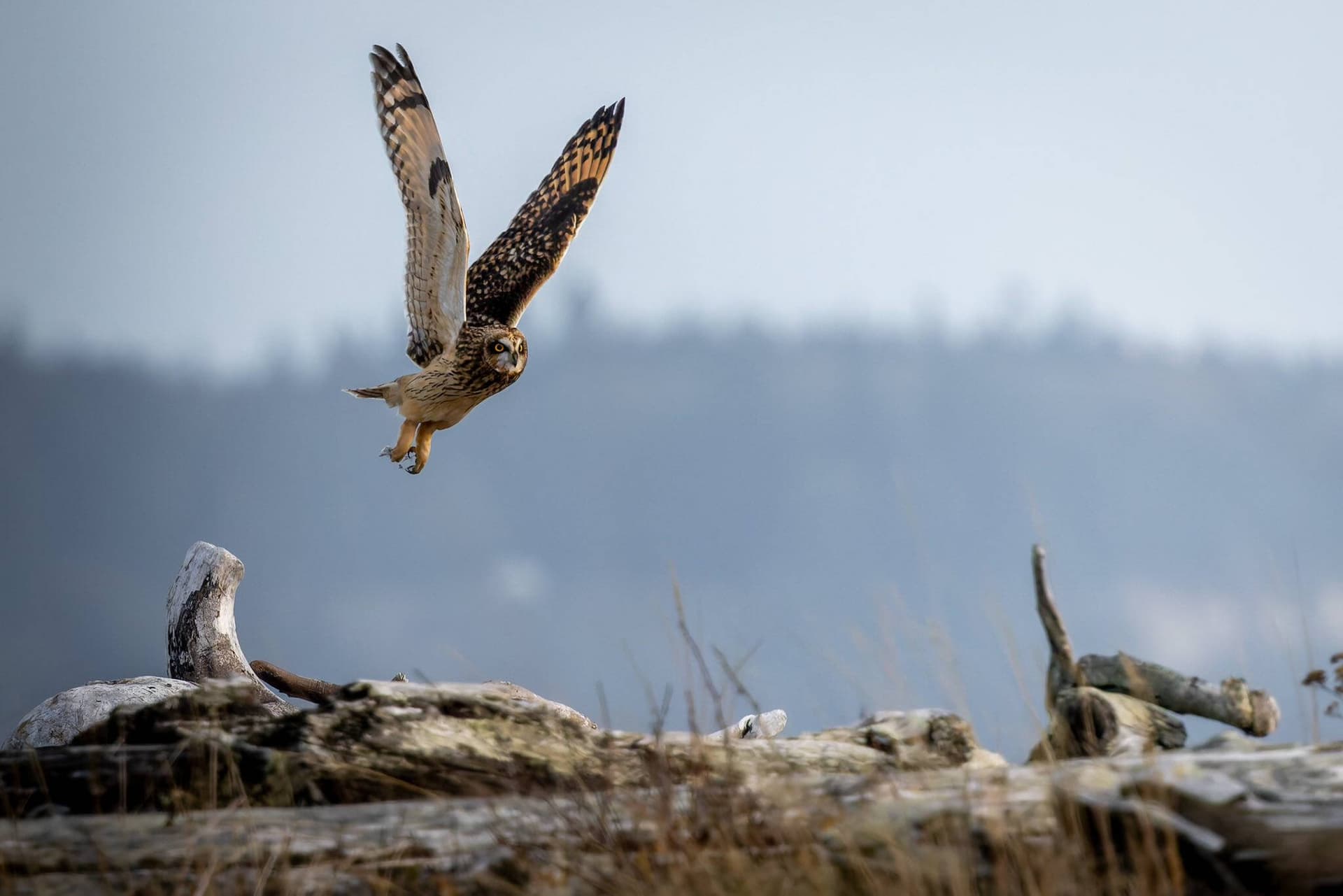
Andrew Tokar, an aircrewman at Naval Air Station Whidbey Island, drew a wave of local attention after sharing his top owl photos on Facebook on Jan. 13. Each image, taken last year at different state parks around the island, showcases species and settings that Whidbey residents know well and visit for quiet daytime walks and evening birding.
Tokar’s images are the product of a deliberate hobby turned semi‑professional pursuit. After upgrading from phone photography, he spent the past six months roaming Whidbey parks, wetlands and fields with a Canon R6 Mark II and a Canon RF 100–500 mm lens. He balanced that field time with Navy duties and college coursework in engineering while living on the island for about two years. The combination of military schedules and student obligations is common here, and Tokar’s work illustrates how service members contribute to local community life beyond the base.
Finding and photographing owls, he says, takes patience and a research approach to habitat and seasonality. “I’ve learned if you want to find something, you have to do some research on their habits.” Often that means hours spent locating a bird before pressing the shutter and then stabilizing the camera on a tripod as light fades. “So you can even take photos of owls when it’s very dark, as long as you keep your camera stationary and have the shutter open for a long time,” he added.
Many of the photos were taken at familiar island locations, with Joseph Whidbey State Park and Crockett Lake among his favorites. His portfolio also includes marmots and mountain goats from trips to the North Cascades, and he plans to focus on birds into 2026 with hopes of visiting the San Juan Islands to photograph foxes.
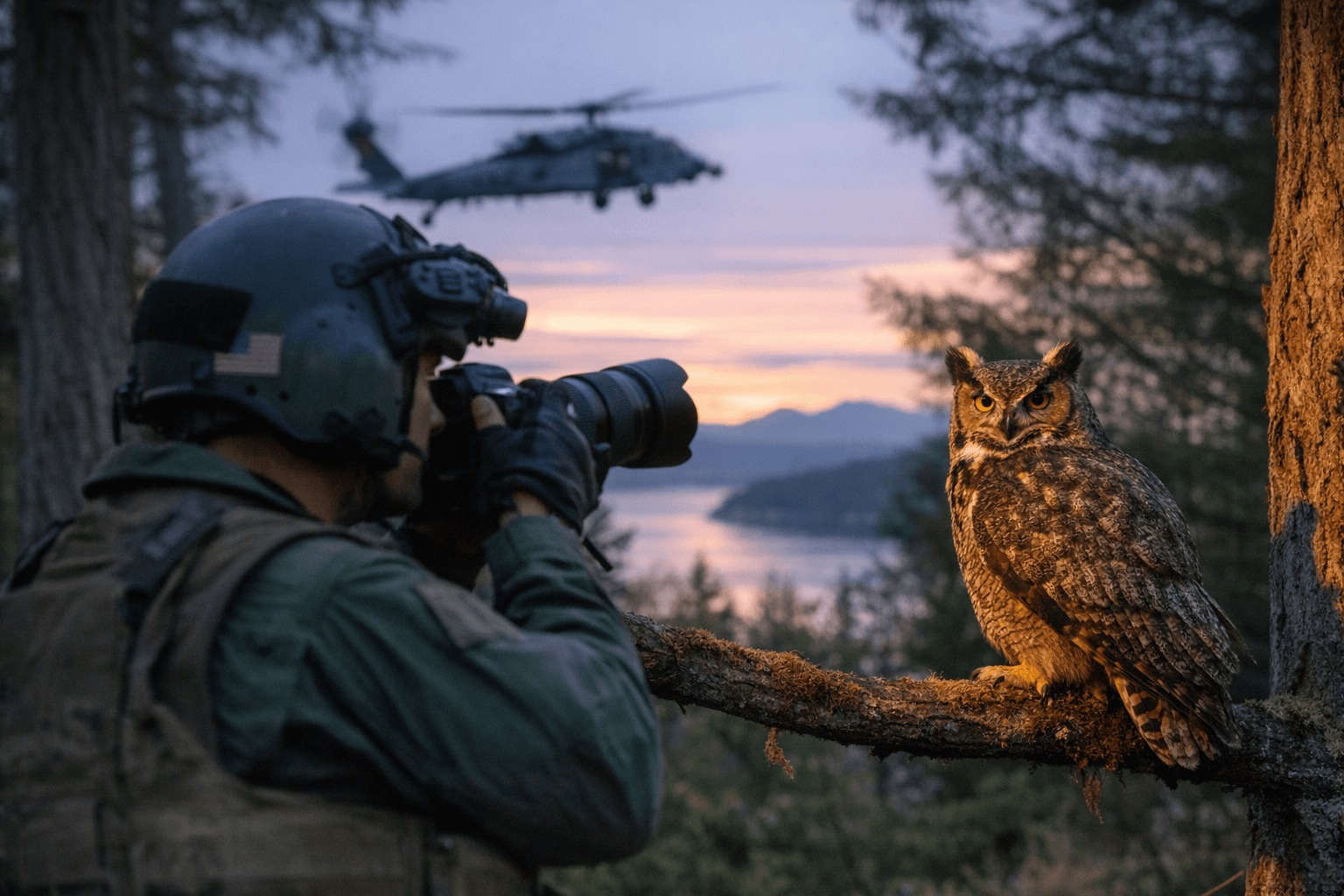
The local implications extend beyond pretty pictures. Social attention to Tokar’s work can increase interest in nearby parks, feeding modest spikes in foot traffic that matter to small businesses such as outdoor outfitters and local guides. It also highlights the role of citizen naturalists in documenting wildlife; a resident with a good camera and an understanding of habitat patterns can add to seasonal knowledge that benefits stewardship and park managers.
The photos are also a reminder of balancing access with protection. More visitors means a need for careful behavior around nesting sites and sensitive wetlands. For residents, Tokar’s experience underscores that wildlife watching is largely a game of patience and preparation rather than luck.
The takeaway? If you want better birding, do your homework, go slow and leave no trace. Consider a sunset walk at Crockett Lake or a daytime trek at Joseph Whidbey State Park—and keep the wildlife’s welfare ahead of your camera.
Sources:
Know something we missed? Have a correction or additional information?
Submit a Tip