New Frank J. Wood Bridge Opens, Restoring Direct River Crossing
The new Frank J. Wood Bridge linking Brunswick and Topsham opened to traffic on December 12. The replacement restores direct crossing over the Androscoggin River, improves safety and pedestrian access, and ends detours that had redirected northbound traffic since September 22.
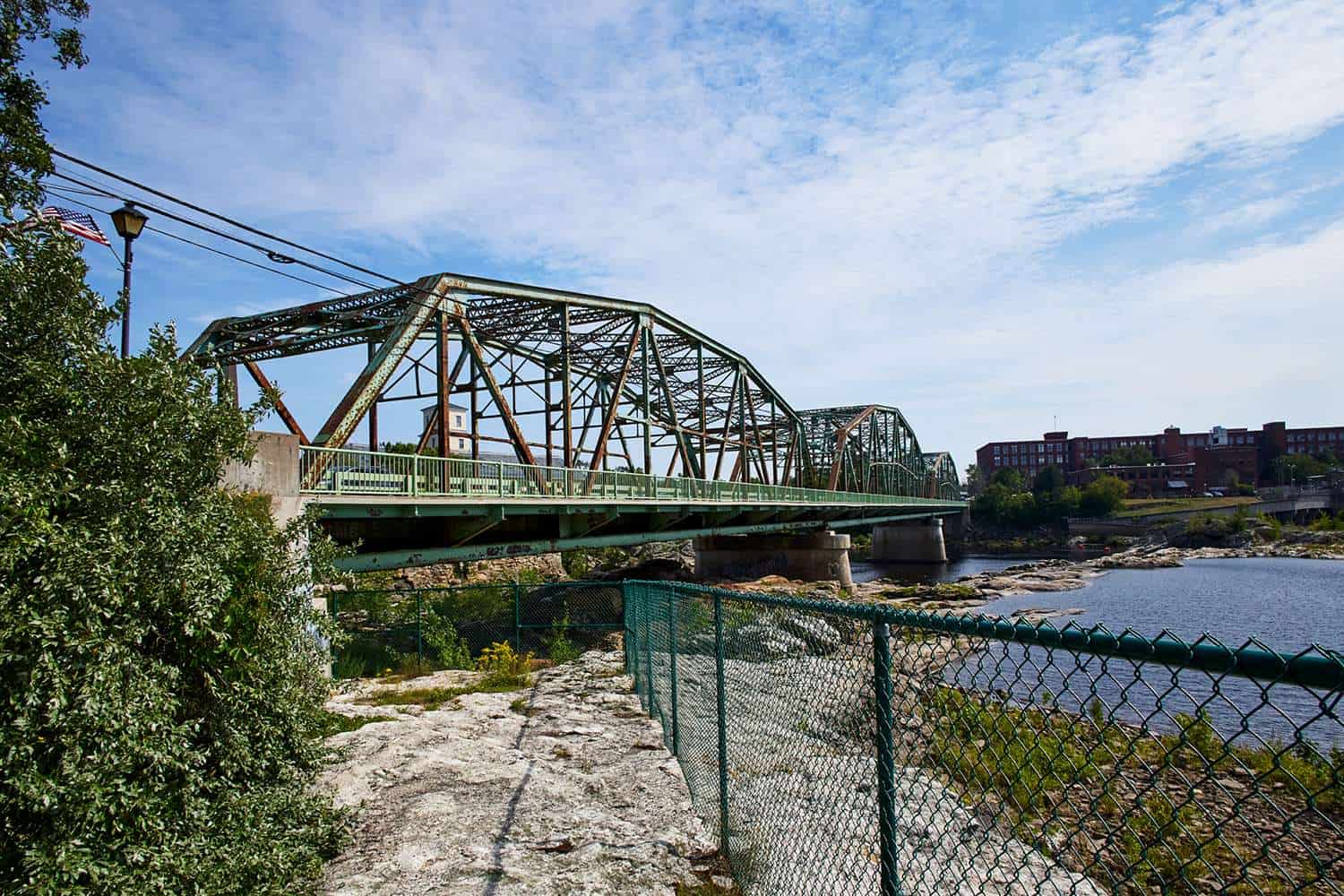
The Maine Department of Transportation opened the new Frank J. Wood Bridge to traffic on December 12, ending a prolonged diversion for northbound drivers and reinstating a direct connection between Brunswick and Topsham. The replacement structure occupies a curved upstream alignment and was built to improve safety and reliability for the surrounding communities.
The original Wood Bridge first opened in 1932 and carried U.S. Route 201 across the Androscoggin River for nearly 100 years. That span had been restricted to southbound traffic beginning September 22, requiring northbound vehicles to detour via the Topsham Bypass and Route 196 over the Merrymeeting Bridge. The new crossing reopened the direct route and removes the need for those detours for most local traffic.
MaineDOT described design features that align with current standards for safety accessibility and durability. The new bridge includes wider shoulders on both sides and sidewalks on both sides with pedestrian viewing bump outs. Planned parks at each end of the bridge are intended to expand public access to the river and the views of Pejepscot Falls, and the design includes aesthetic details to preserve unobstructed sight lines to the falls.
Construction of the replacement began in January 2024. The new span briefly opened to limited traffic on November 20 and 21 before closing again for final grading and paving. Some finishing work remains, and an official ribbon cutting ceremony is scheduled for 2026.
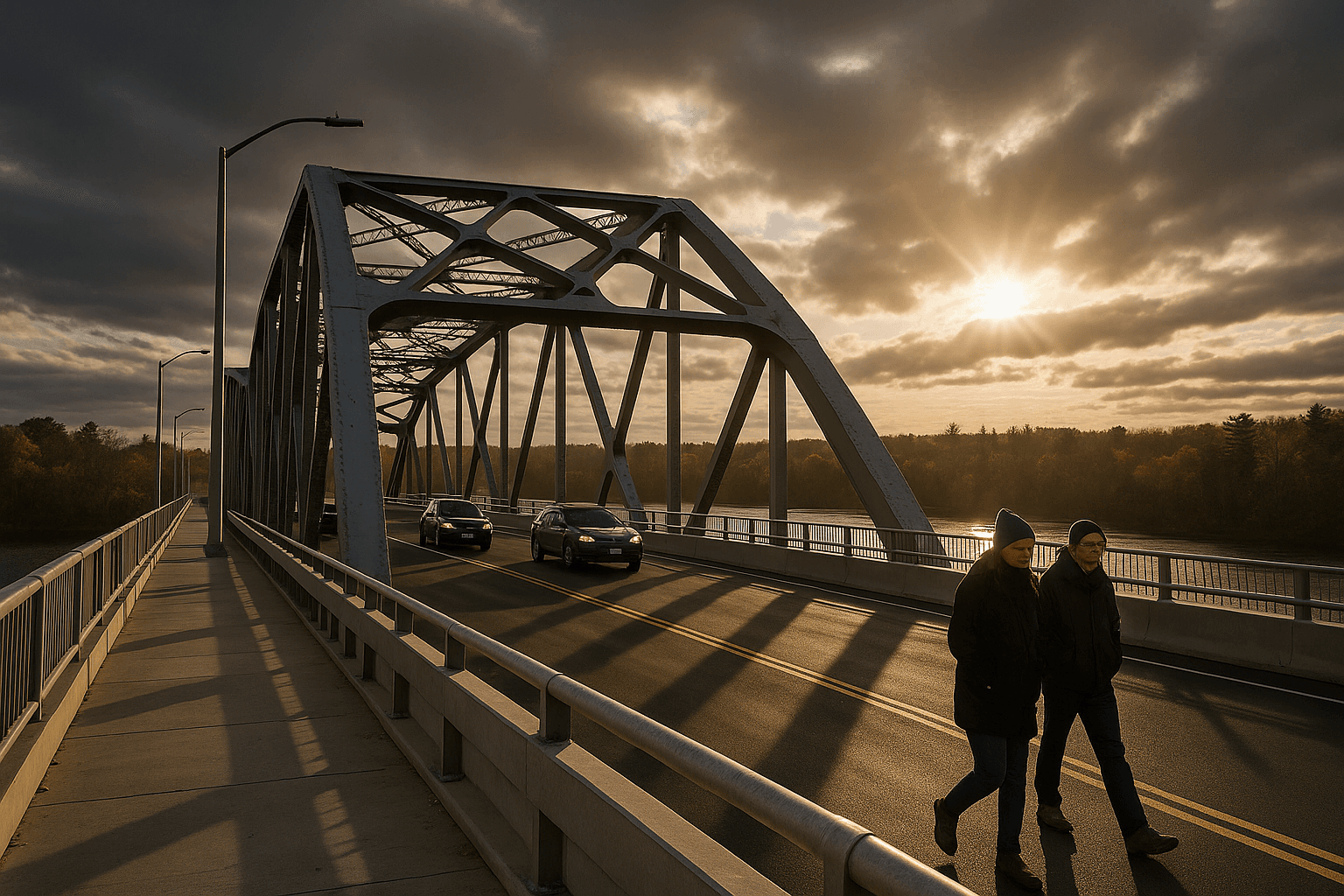
For residents and local officials the opening carries practical consequences. Restored traffic patterns will shorten commutes for drivers who had faced longer routes and may reduce traffic volumes on alternate corridors used during the detour period. The wider shoulders and continuous sidewalks improve conditions for pedestrians cyclists and emergency vehicles, which can affect local response times and daily mobility. The planned parks and viewing areas are likely to increase pedestrian traffic and support recreational and tourism activity near the falls.
While the bridge is now carrying traffic, MaineDOT continues final site work before the formal ceremony next year. Local leaders will monitor how traffic flows settle and how the new public spaces are integrated into town planning and riverfront access.
Sources:
Know something we missed? Have a correction or additional information?
Submit a Tip