New Interlochen Community Art Trail Moves Forward, Boosts Safety
Construction moved forward on a long planned Interlochen Community Art Trail, bringing a three and a half mile multi use corridor closer to reality. The project promises safer routes for students, greater accessibility, and stronger non motorized connections for Grand Traverse County residents.
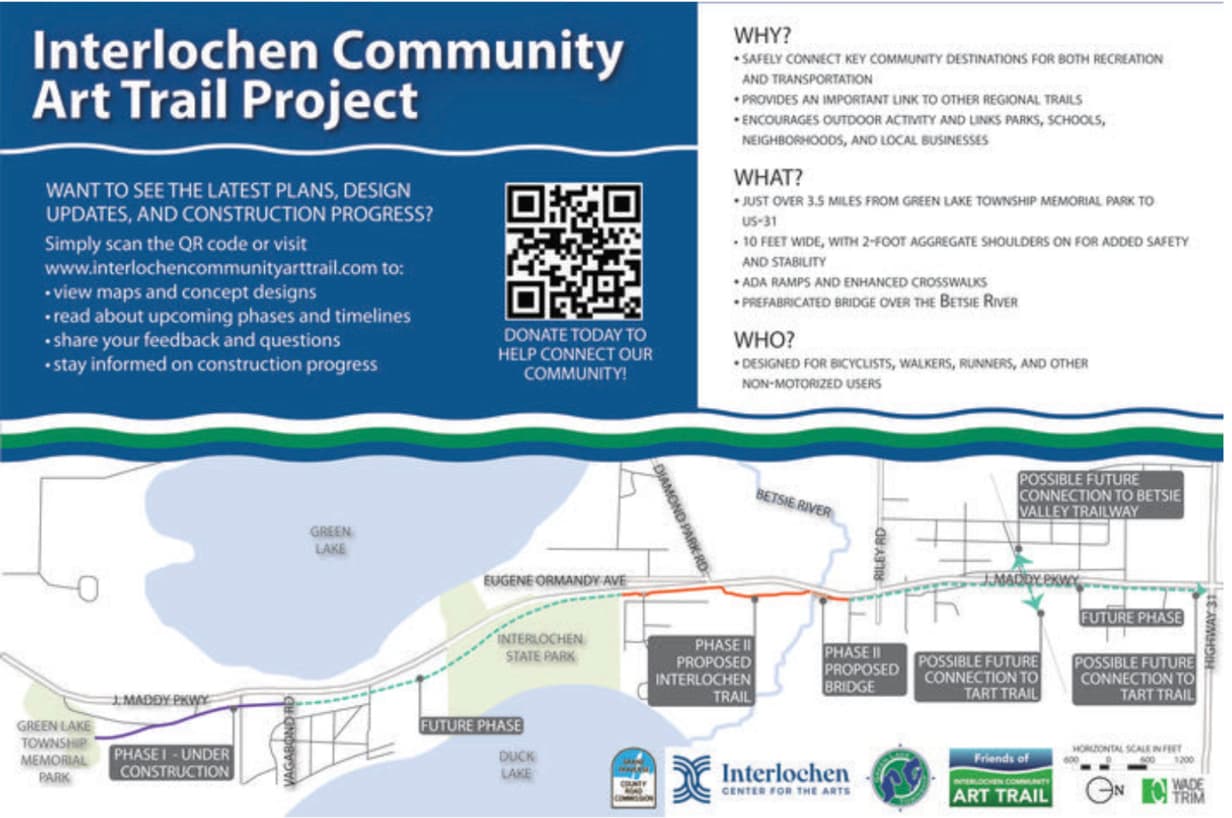
Construction of phase one of the Interlochen Community Art Trail moved forward on December 13, as work began on the section between Green Lake Township Memorial Park and Vagabond Road. The full plan calls for a three and a half mile, ten foot wide paved path running from Memorial Park north to U.S. 31, with ADA accessible ramps, enhanced crosswalks, public art installations and a scenic bridge over the Betsie River. Phase one follows a preexisting railroad grade and bids are being sought for a crushed stone base, with completion of that phase possible by spring depending on funding.
The trail is intended to improve the daily flow of students between Interlochen Center for the Arts and downtown Interlochen while offering a safer alternative for walkers and bicyclists. Organizers envision the path linking to the Betsie Valley Trail and TART, strengthening the region's non motorized network and opening new recreation and commuting options across Grand Traverse County.
Planning partners include Interlochen Center for the Arts, Green Lake Township, Interlochen State Park, the Interlochen Downtown Development Authority and the nonprofit Friends of Interlochen Community Art Trail, which is leading the effort. Total project cost was estimated around three and a half million dollars, though officials caution that later phases are more complex and costly and that the estimate may change as design and permitting proceed.

Beyond convenience and recreation, the trail carries public health implications. A continuous, accessible route can increase active transportation, reduce short car trips and provide equitable access to cultural and natural assets for residents with mobility limitations. Enhanced crossings and ADA features are expected to benefit older adults, people with disabilities and families with young children who currently face limited safe pedestrian options.
Funding uncertainty and future maintenance obligations remain key challenges. Later phases will require additional engineering, environmental review and capital support. Local leaders say the project also aims to integrate community art and natural stewardship so benefits extend beyond transportation. As phase one moves ahead, residents can expect visible construction activity near Memorial Park and further planning updates as fundraising and permitting advance.
Sources:
Know something we missed? Have a correction or additional information?
Submit a Tip