New Law Lets Orange County Bars Buy Local Alcohol
State Sen. James Skoufis announced on Jan. 8 that a new state law allows bars, restaurants and similar businesses to purchase small quantities of wine and liquor directly from local liquor stores. The change, announced at Delancey’s Bar & Restaurant in Goshen, aims to cut costs for small operators and shift some purchasing away from large distributors, with estimated savings of $5,000 to $10,000 a year per business.
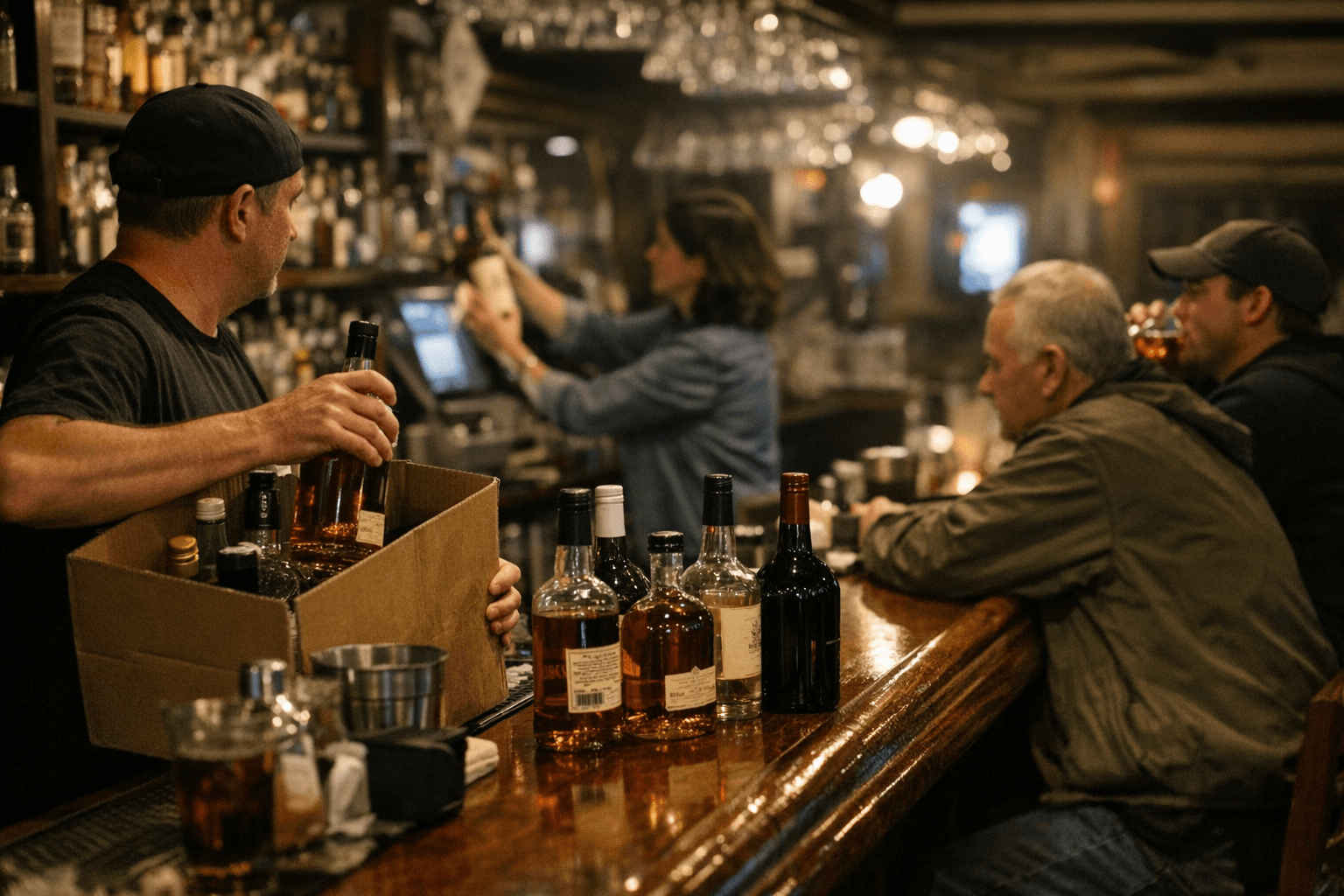
State lawmakers signed a bill that gives bars, restaurants and comparable establishments the ability to buy up to six bottles of wine or liquor per week from local liquor stores, a measure intended to lower operating costs for small hospitality businesses across Orange County. State Sen. James Skoufis described the law at a Jan. 8 press conference held at Delancey’s Bar & Restaurant in the Village of Goshen.
The weekly cap works out to 312 bottles per year per establishment. Using the state estimate of $5,000 to $10,000 in annual savings, operators could save roughly $16 to $32 per bottle on average if they fully replace distributor purchases with local-store buys. For restaurants and bars operating on thin margins, those savings can materially affect cash flow and profitability, especially as labor and food costs remain elevated.
The law effectively loosens parts of the traditional three-tier alcohol distribution model by allowing limited direct retail purchases that bypass larger wholesalers. That shift is likely to increase retail liquor-store sales to on-premise accounts and could generate small but meaningful additional revenue for independent stores in Orange County neighborhoods. For on-premise operators, buying local could reduce delivery minimums, lower per-unit costs, and improve margin management for higher-cost wines and spirits.
Wholesale distributors may see a modest revenue impact if many establishments adopt the new option, but the six-bottle weekly limit constrains potential scale. Regulators and businesses will need to clarify compliance and recordkeeping to ensure limits are observed and taxes are correctly remitted. Local health and licensing officials may also update guidance to reflect the new purchasing pathway.
For the community, the change reinforces a broader economic trend toward local sourcing and support for small businesses. It gives neighborhood liquor stores a new role supplying hospitality customers and gives small bars and restaurants another tool to manage operating costs. Over time the law could support greater price competition on certain products and encourage closer commercial relationships between on-premise operators and independent retailers.
Orange County patrons may see menus or offerings shift as operators respond to the new supply option, and local liquor stores could become more visible partners for neighborhood restaurants and bars. The law is a targeted step toward easing cost pressures for small hospitality businesses while maintaining limits intended to preserve the broader wholesale market.
Sources:
Know something we missed? Have a correction or additional information?
Submit a Tip