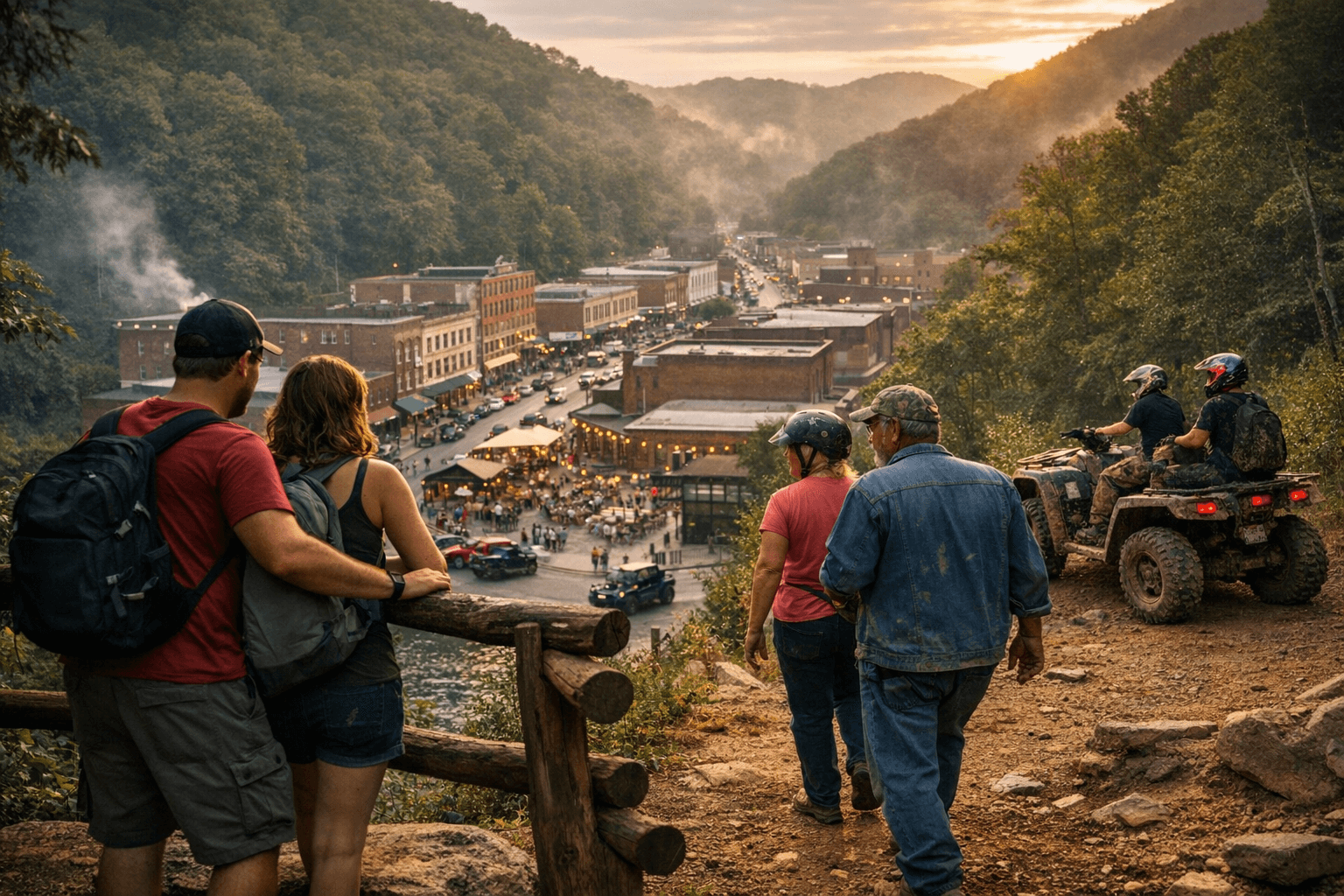
New Renaissance Village Housing Aims to Lure Teachers and Revive Downtown Welch
Renaissance Village, a multi-story mixed-use housing complex in downtown Welch, opened with the goal of providing low-maintenance apartments and commercial space to help attract teachers and other workers to McDowell County. Early occupancy shows local residents moving in, but persistent gaps in amenities, transportation, and broader job opportunities mean the project’s workforce-stabilizing effects remain uncertain.

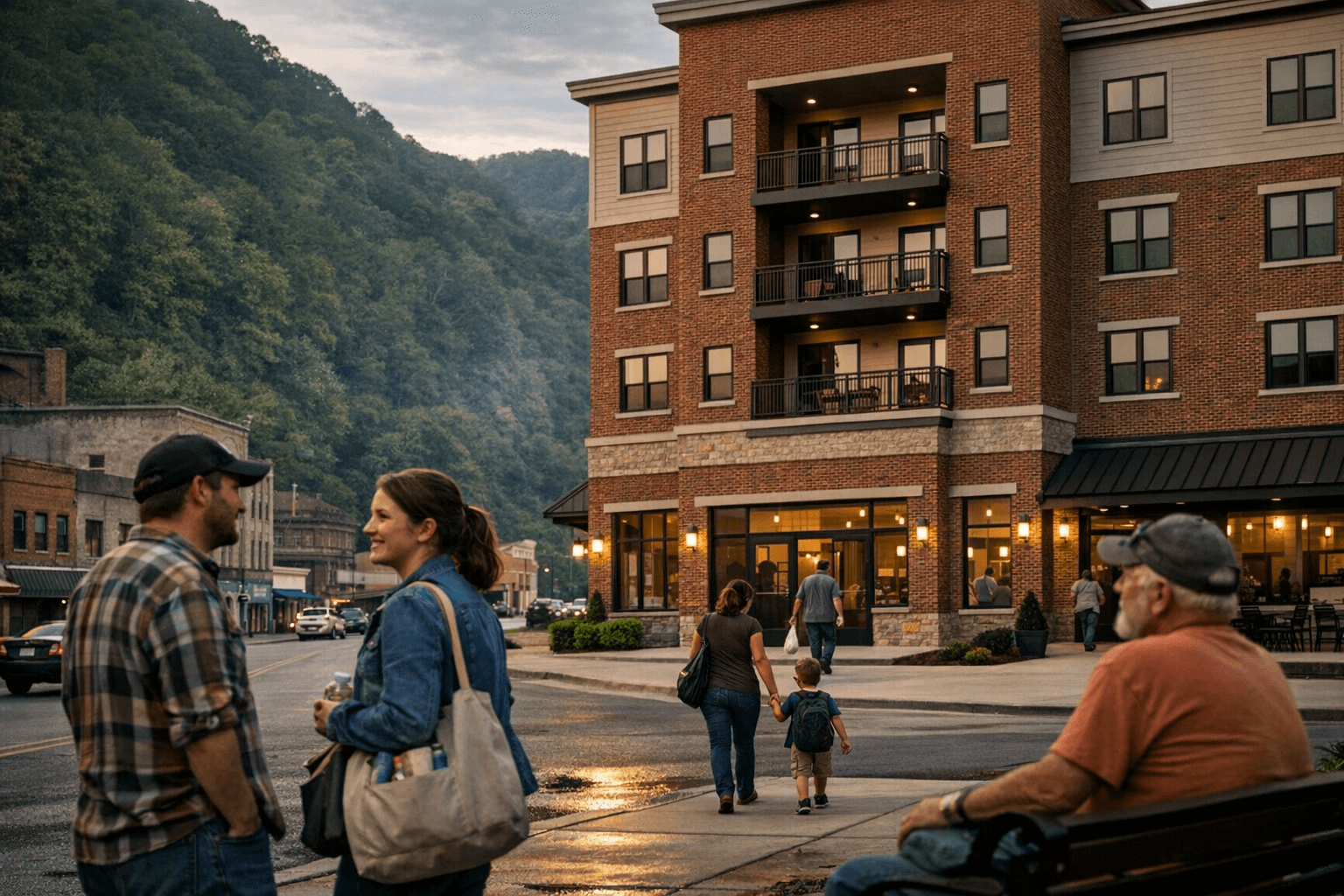
Renaissance Village brings a visible, concentrated investment into downtown Welch: multi-story apartments above ground-floor commercial space designed for a coffee shop, retail and restaurant tenants. The development was created by a coalition of nonprofit partners to provide safe, low-maintenance housing that could reduce one barrier to relocating to McDowell County for school employees and other essential workers.
Since the complex opened, some units have been filled by local residents, signaling demand for quality rental housing within Welch’s core. But initial occupancy patterns suggest the project has not yet decisively shifted the residential choices of the target group of teachers. Organizers and residents interviewed after opening described both optimism about the project’s potential and persistent obstacles that influence whether professionals will move here to live and work.
Those obstacles are practical and economic. The downtown units address housing quality and maintenance concerns, but they do not by themselves create the amenities and services—such as diverse retail, regular public transit, or evening social options—that many professionals consider when choosing where to live. Transportation remains a particular issue in a county with dispersed settlements and limited transit options; without reliable commutes or nearby employment beyond schools, some workers remain reluctant to relocate. The development also highlights a common policy challenge in post-industrial counties: housing supply is only one lever in a broader ecosystem that must include jobs, childcare, broadband, and storefront activity to sustain long-term population growth.
From a market perspective, mixed-use housing can increase foot traffic and support small businesses in downtown Welch if commercial spaces are leased and patronized. Early leasing to local residents keeps rental income in the community and can stabilize property management risk, but the broader economic multiplier hinges on attracting a mix of daytime and evening customers that professionals and their families provide.
Policy implications are clear. Housing investments targeted at workforce stability need complementary strategies: incentives or relocation supports for teachers, improvements in transportation connectivity, and local economic development that expands non-school employment options. For McDowell County officials and nonprofit partners, coordinating housing with school staffing plans could make future phases more effective in meeting recruitment goals.
The opening of Renaissance Village marks an important step in downtown revitalization and provides tangible housing stock where it has been scarce. Whether it becomes a durable tool for stabilizing school staffing and supporting broader economic recovery will depend on follow-through investments that address the nonhousing barriers professionals cite when choosing where to live.
Sources:
Know something we missed? Have a correction or additional information?
Submit a Tip