Ole Miss Reveals 2026 Football Schedule, Community Prepares for Surge
Ole Miss unveiled its full 2026 football schedule in a primetime presentation on the SEC Network, setting dates for high profile matchups that include LSU, Florida and Texas. The slate matters for Lafayette County because big game weekends drive local traffic, public safety needs, hospital demand and economic activity across Oxford and surrounding neighborhoods.

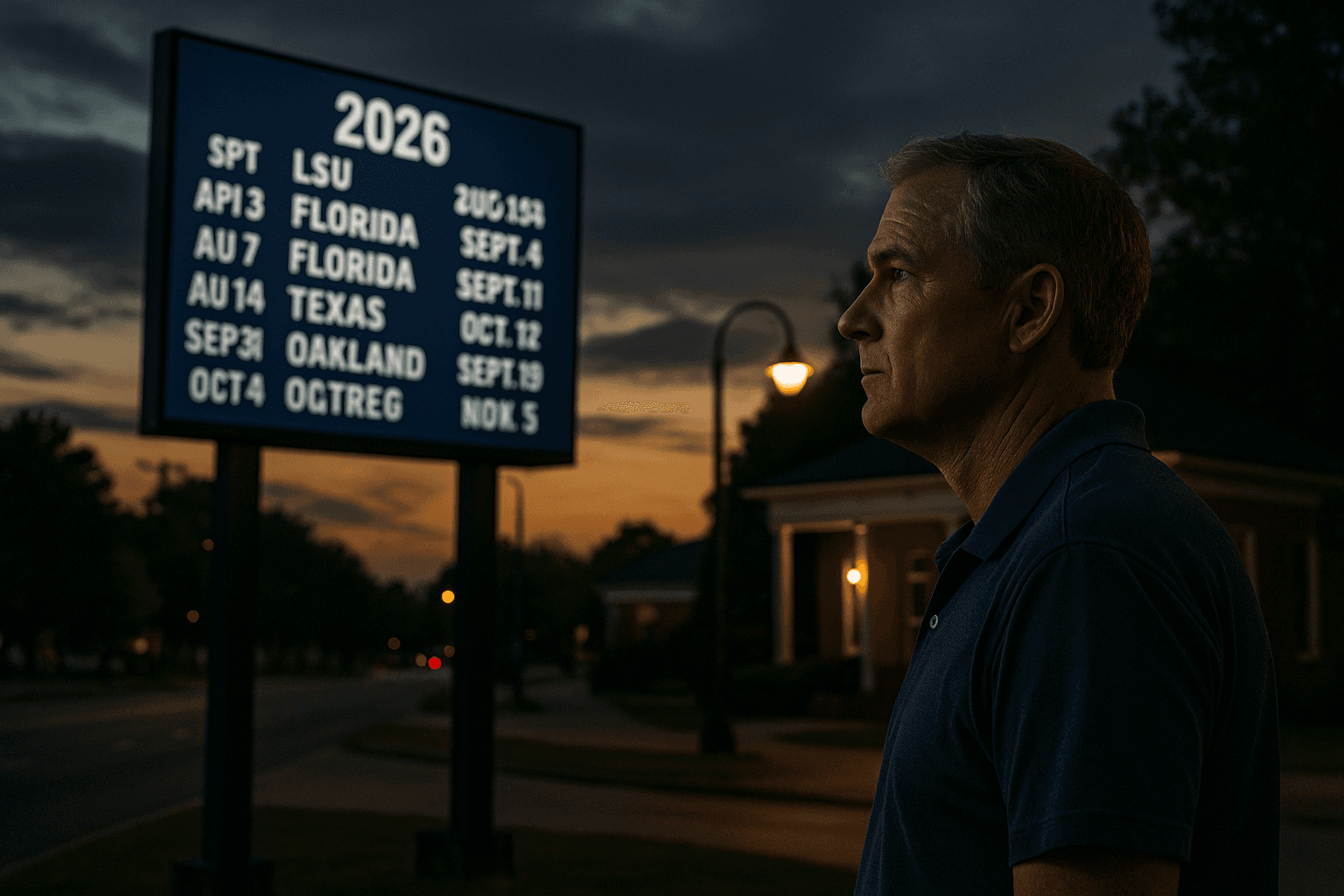
Ole Miss announced its complete 2026 football schedule on Friday night, confirming a neutral site season opener in Nashville against Louisville followed by three home games to start the season. The Rebels will play in Nashville on Sept. 5 or 6, return to Vaught Hemingway Stadium on Sept. 12 to host Charlotte, and then stage an SEC opener against LSU on Sept. 19. The schedule continues with a road game at Florida on Sept. 26, a bye week, a trip to Vanderbilt on Oct. 10, a home game against Missouri on Oct. 17, and a road game at Texas in Austin on Oct. 24.
For Lafayette County residents the calendar is more than a list of opponents. Home games, particularly the LSU matchup, traditionally draw large crowds from across the region and bring a surge in hotel stays, restaurant business and retail activity in Oxford. That boost in commerce also carries public health and public safety implications. Increased traffic volumes on county roads and near the campus demand expanded traffic management and emergency medical services capacity. Local clinics and emergency departments may see higher volumes on game weekends, and first responders will need staffing plans that avoid leaving routine community needs underserved.
These events also raise questions of equity. Residents with limited transportation, caregiving responsibilities or work obligations can face barriers accessing services when city resources shift toward major events. Public health planning that anticipates large crowds offers an opportunity to prioritize equitable access to care and information by coordinating mobile health services, clear transit options and multilingual outreach.
University and city planners traditionally coordinate with law enforcement, fire and EMS, as well as local businesses, to manage crowd flow and safety. This season schedule gives officials months to refine those plans and to communicate changes in road closures, parking rules and public health resources to residents and visitors. Community organizations and health providers can also use the lead time to prepare outreach for vulnerable populations and to advocate for measures that keep everyday services available during peaks.
The fall lineup promises excitement for fans and financial gains for local businesses. It also underscores the need for intentional planning so that economic benefits do not come at the expense of equitable access to health and safety for all Lafayette County residents.
Sources:
Know something we missed? Have a correction or additional information?
Submit a Tip