Orange County Extends Fare Free Transit in Newburgh and Middletown
Transit Orange has continued fare free service on routes serving Newburgh and Middletown through the end of 2025, a move backed by county and state officials aimed at improving access to jobs, medical care and shopping. Riders should verify schedules and monitor local government announcements for service changes, winter weather updates and holiday adjustments.
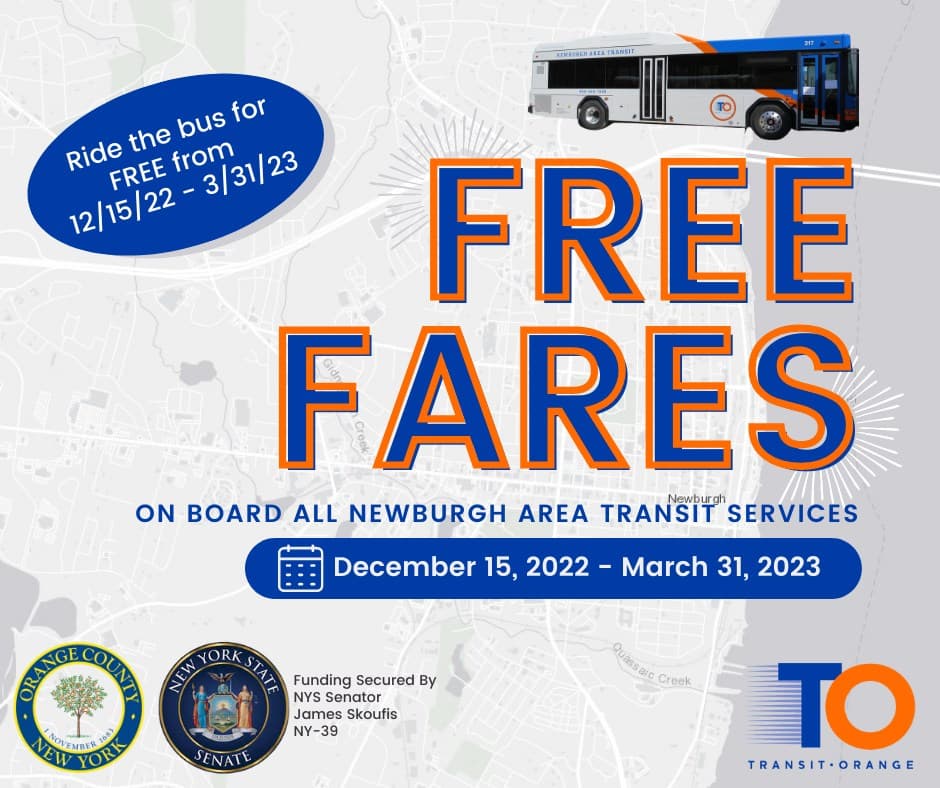
Transit Orange, the county transit program, is operating fare free service on routes that connect Newburgh, Middletown and surrounding communities through the end of 2025. The program covers both fixed route buses and ADA paratransit services and has received support from county and state officials through pilot programs and subsequent extensions that county notices have described as active through 2025.
The extension is intended to reduce barriers to employment and essential services by removing the fare as a cost obstacle for riders who depend on public transportation. Local tourism materials and government announcements have highlighted the temporary fare free status as part of broader efforts to boost ridership and make local commerce and health care more accessible. Transit Orange continues to publish route schedules and operational notices, and riders are advised to check those schedules before traveling.
The policy carries immediate benefits alongside long term questions about funding and evaluation. Fare free service can increase ridership and reduce household transportation costs, but sustained implementation requires budgetary commitments from county and state budgets or alternative revenue sources. County decision makers will need performance data on ridership, cost per trip and economic impacts to justify continuing the program beyond the current timeline. Public records and upcoming budget sessions will be the venues where those trade offs are debated.

Institutionally, the program illustrates growing collaboration between county transit agencies and state partners to address local mobility gaps. It also highlights the role of pilot projects as a policy tool to test measures before making them permanent. For residents, the stakes are practical and civic. Reliable access to transit affects job retention, health appointments and retail activity in downtown corridors. How voters and community groups engage with county budget hearings and transit board meetings will influence whether fare free service becomes a longer term feature.
For immediate travel planning, riders should consult Transit Orange schedules, monitor local government announcements for service changes, and review district or city pages for winter weather and holiday schedule adjustments. Those concerned about long term funding or equity impacts should follow county budget discussions and attend public meetings where transit policy and spending priorities are decided.
Sources:
Know something we missed? Have a correction or additional information?
Submit a Tip