Oregon Guard cavalry unit transfers command amid infantry conversion
The 3rd Battalion, 116th Cavalry changed command in Hermiston as it shifts from armor to infantry, signaling changes to training, equipment and local Guard operations.

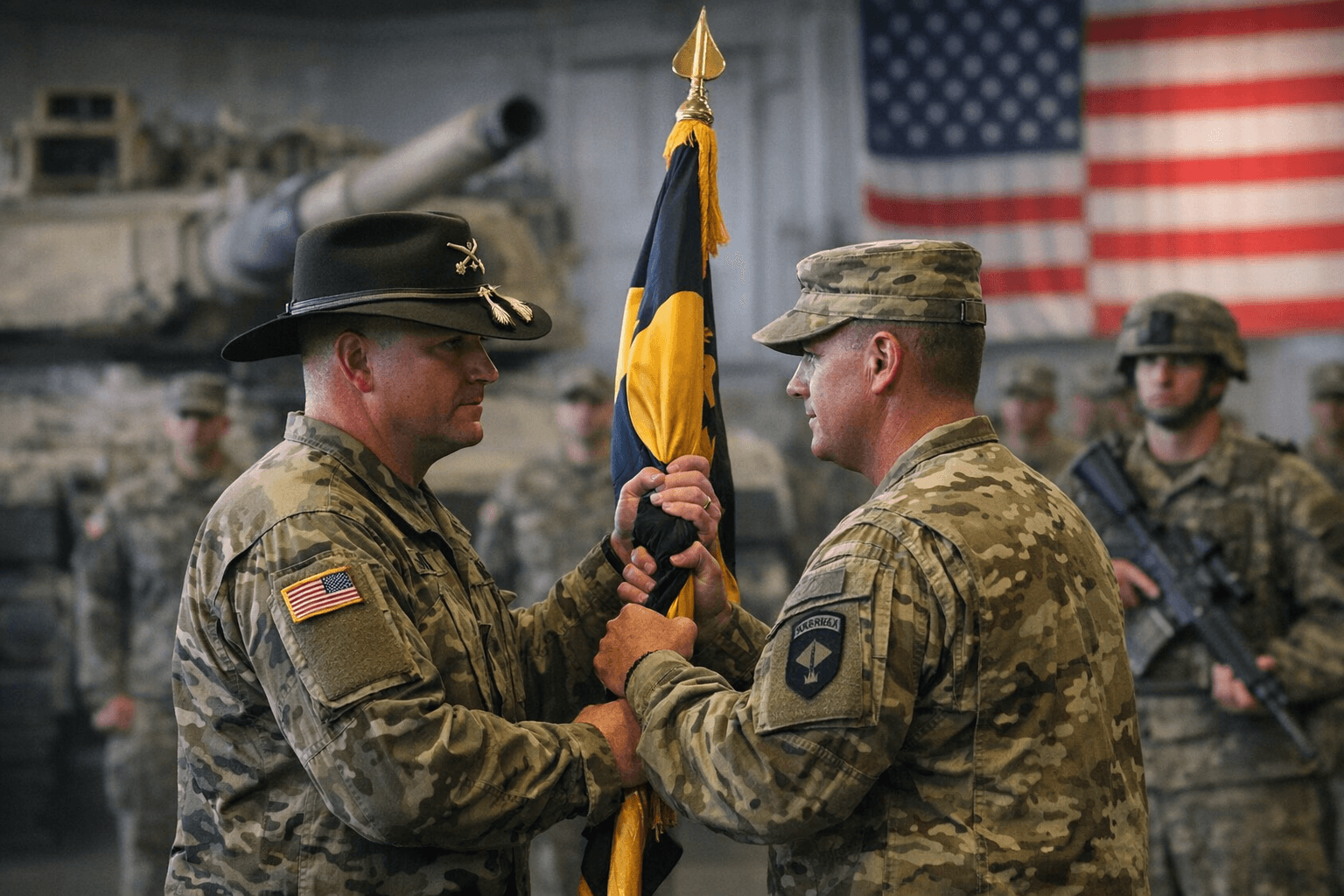
The La Grande-based 3rd Battalion, 116th Cavalry Regiment of the Oregon Army National Guard held a Change of Command ceremony Jan. 10 at the Hermiston Armory, where Lt. Col. Christopher R. Miller formally relinquished command to Maj. Jorge L. De Anda. Col. Russell Gibson presided over the ceremony as the unit marks a major reorganization tied to the Army’s Transformation in Contact initiative.
The transfer of leadership coincides with the battalion’s conversion from an armored to an infantry unit, a structural shift that will change its equipment, training profile and operational focus. The ceremony included symbolic acknowledgments of the battalion’s armored past; three M1A2SEP tanks participated last summer in a ceremonial last-round event that underscored the end of an era for the unit’s tank capability.
Maj. De Anda is a career member of the battalion who has risen through its ranks, and he addressed the balance of pride in the unit’s history and anticipation for its new mission while recognizing local community support. The change of command is administrative, but the broader transformation will have practical implications for soldiers and for the communities that host Guard facilities.
For Union County residents, the conversion is likely to affect several local touchpoints. Training cycles will shift toward dismounted tactics and the support structures that sustain infantry units. That can alter the armory’s equipment footprint, maintenance needs and contractor relationships. Local families may see different training schedules and travel patterns as the battalion transitions its skill set. Community ceremonies and public events that celebrated the unit’s armored identity are likely to evolve as the unit adopts new traditions tied to infantry service.
Institutionally, the move reflects broader Army-level decisions about force posture and readiness. For local civic leaders and elected officials, the conversion presents an opportunity to review county support for military families, emergency response coordination with the Guard, and workforce implications tied to equipment support and training contracts. The Guard’s dual state-federal role means changes at the battalion level can ripple into emergency response capacity during state missions as well as federal deployments.
The ceremony in Hermiston celebrated continuity of leadership while signaling significant operational change. Residents who have longstanding ties to the battalion should expect practical transitions in how the unit trains and engages with the community over the coming months.
The takeaway? Stay connected to the Hermiston Armory and local officials, ask how schedules and community programs might change, and keep showing up for Guard families who will be adapting alongside the unit during this transition. Our two cents? A little community attention now will smooth the shift from tank to foot.
Sources:
Know something we missed? Have a correction or additional information?
Submit a Tip