Park City Logs Show Spike in Main Street Parking Problems Over Holidays
Park City Police Department records show a cluster of parking complaints and enforcement actions on Main Street and nearby corridors during late December and early January, coinciding with heavy holiday crowds. The incidents highlight strain on parking supply, enforcement resources, and emerging gaps such as improper use of electric vehicle spaces that carry local policy implications.

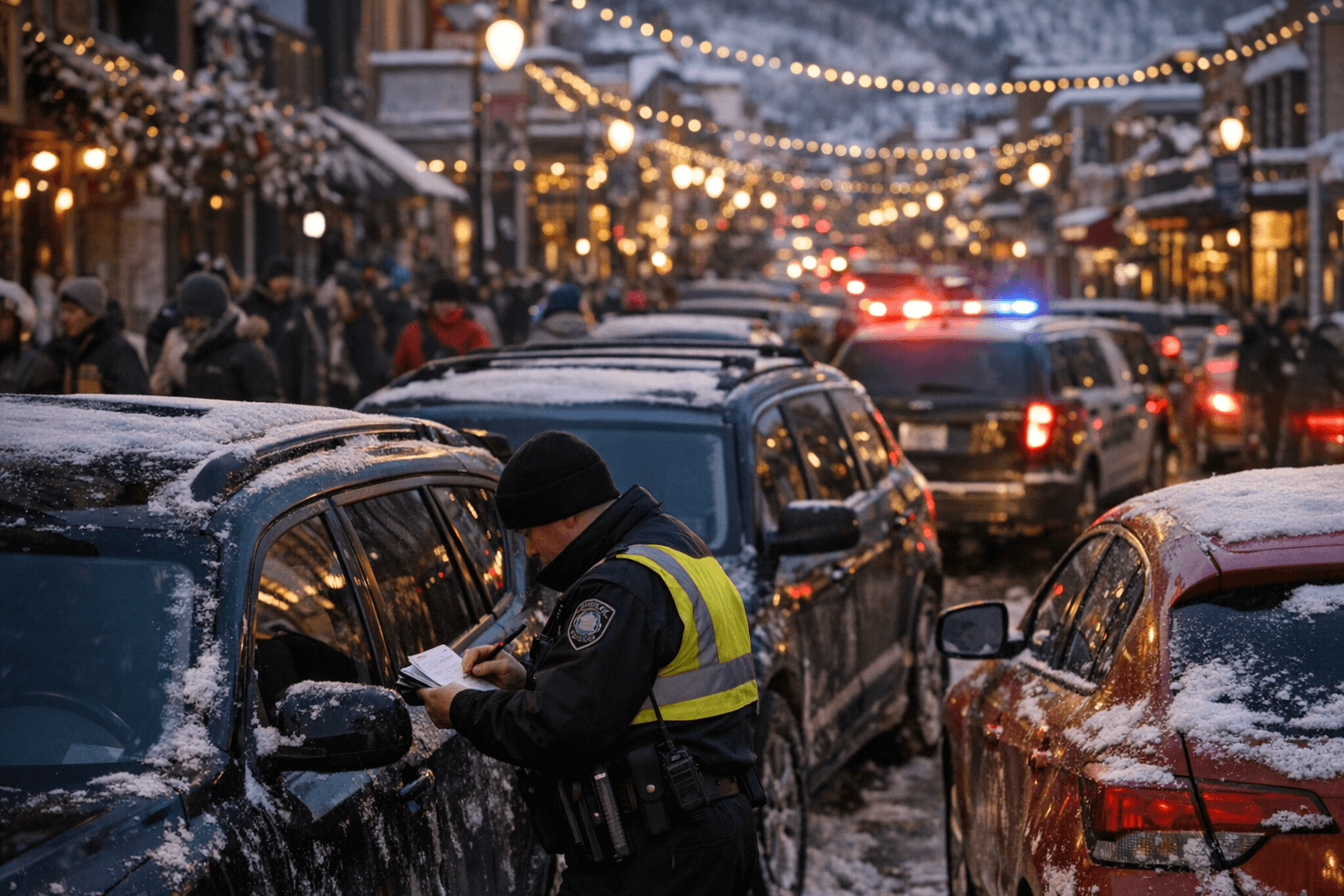
Park City police records compiled through early January documented a series of parking-related complaints and enforcement incidents centered on Main Street, with additional reports along Sidewinder Drive and Sullivan Road. The logs show four parking issues reported within seven minutes beginning at 11:56 p.m. on Jan. 1, underscoring how quickly problems can accumulate during peak periods.
Several entries described vehicles left where overnight parking is prohibited, triggering enforcement actions. One noted incident involved a gas-powered vehicle occupying a space reserved for electric vehicles, a violation that speaks to both behavioral noncompliance and the growing need to manage EV infrastructure. The department’s summaries emphasize that these kinds of parking problems are common during busy times when demand for spots is high.
For residents and downtown businesses, the immediate impacts are tangible: added congestion, reduced turnover of curbside spots, and increased pressure on enforcement personnel. During holiday and winter tourism peaks, limited curb parking can impede access to retail and dining establishments and shift parking demand into adjacent residential streets. Enforcement responses also consume officer time that departments balance against other public-safety priorities.
Institutionally, the pattern raises questions about parking policy and management. Seasonal surges expose limitations in curb supply and the effectiveness of existing restrictions, signage, and penalties. The recorded misuse of an EV-designated stall points to a need for clearer marking, monitoring, and possibly more visible enforcement around EV chargers as electrification expands. Similarly, repeated overnight-prohibition violations suggest opportunities to reassess notification methods, time-limited zones, or permit strategies that could reduce repeat infractions without overburdening enforcement.
Policy options available to local officials range from targeted enforcement during known peak hours to investments in wayfinding, real-time parking information, and expanded short-term lots or shuttle services. Each approach has trade-offs: stricter enforcement can improve turnover but may displace vehicles into neighborhoods; infrastructure investments carry upfront costs and require budgetary prioritization.
Civic engagement will shape how Summit County and Park City respond. Residents, business owners, and neighborhood associations can present data-driven concerns to city leaders and weigh in on proposals for enforcement, permits, or capital improvements. As winter events and tourism continue to drive demand, officials will need to balance access, equity, and enforcement capacity to maintain downtown vitality and neighborhood livability.
Sources:
Know something we missed? Have a correction or additional information?
Submit a Tip