Plano's corporate boom clashes with shrinking family population
Plano attracted big companies but faces school closures and tax hikes as its population ages.
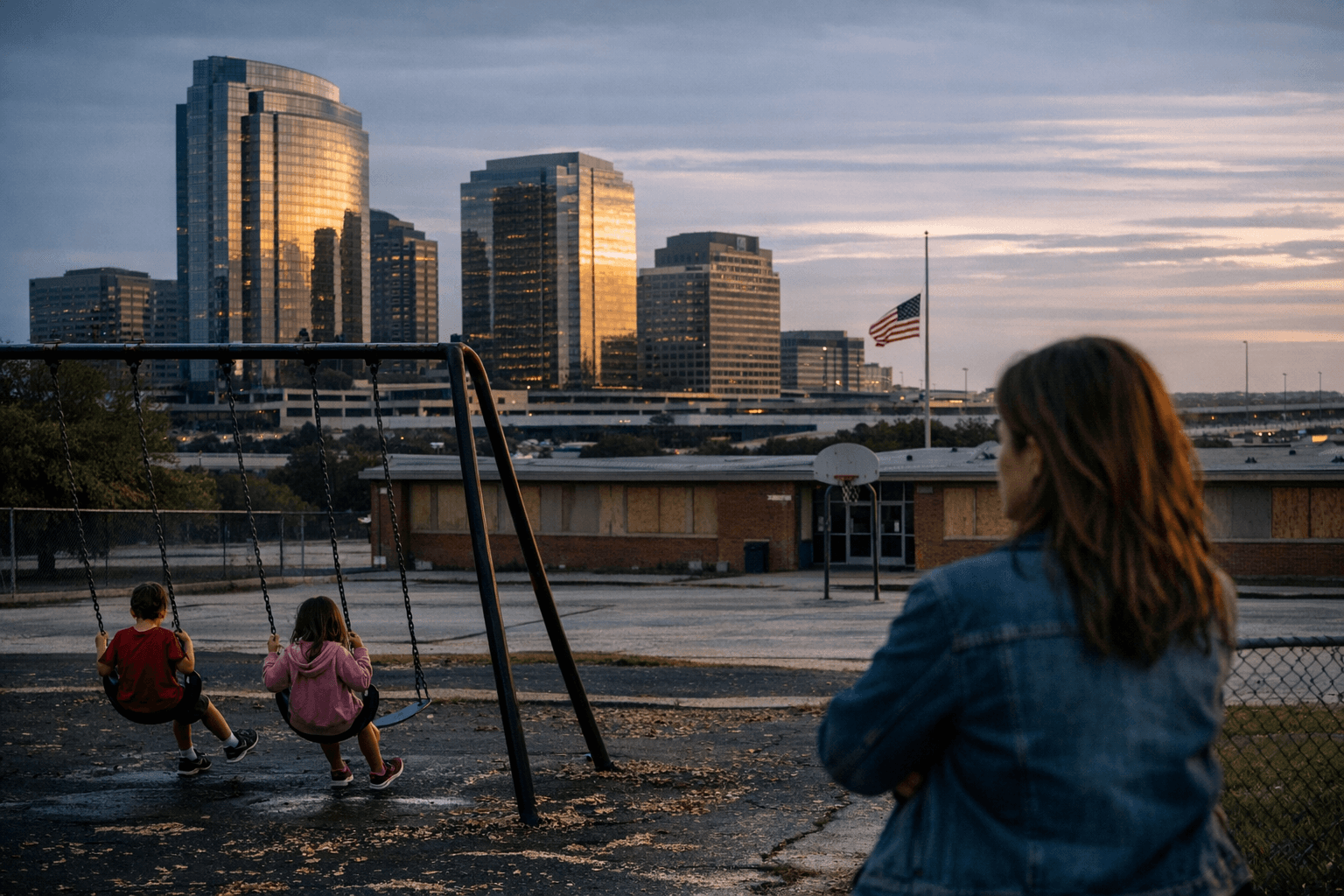
Plano has won another corporate prize with news that AT&T is relocating operations from downtown Dallas to the city, reinforcing its reputation for landing large campuses. That economic headline, however, masked a deeper challenge: Plano does not have enough new residents, particularly families with children, to sustain services and infrastructure without raising taxes.
City leaders raised property taxes last September for the first time in 16 years, a response city officials said was necessary to cover aging infrastructure amid limited growth. The fiscal strain showed up in a painful symbol of demographic change: Plano ISD closed four campuses in 2024 because enrollment fell below sustainable levels. Three of those campuses — Davis Elementary, Forman Elementary and Armstrong Middle School — are now being purchased by the city. The Forman site is slated to house a relocated fire station, but officials have not settled on uses for the Davis and Armstrong properties.
Community meetings on the future of the Davis site drew 282 residents. According to city staff reports, about 85 percent of attendees favored expanding adjacent Caddo Park, while only 3 percent said they would be open to housing. Opposition to duplexes, townhomes and patio homes was nearly universal, and single-family detached homes were rejected by roughly 85 percent of participants. That feedback reflects both grief over losing neighborhood school space and resistance to denser residential options.
The paradox is stark: school closures are happening because there are not enough children, and residents are steering the conversation away from new housing that could help reverse that trend. Plano already has the second-highest median age in Collin County, with roughly 17 percent of residents over 65, many of whom are eligible for property tax freezes. Without growth in housing and population, the city’s tax base could remain constrained even as demands on services increase.
This issue is not unique to Plano. Declining enrollment and aging populations are part of a broader demographic shift affecting many communities nationwide, forcing cities to weigh parks and open space against housing needs that sustain schools, emergency services and infrastructure. Elected officials must balance residents’ preferences with long-term fiscal strategy if Plano is to turn corporate arrivals into lasting community prosperity.
Our two cents? Preserve beloved green space where it makes sense, but also be candid about tradeoffs and pilot modest, context-sensitive housing on city-owned parcels — small steps now could help keep schools open and taxes stable later.
Sources:
Know something we missed? Have a correction or additional information?
Submit a Tip