Practical Sly Flourish Tactics to Cut Prep and Improve Sessions
Sly Flourish, the long-running DM advice site by Mike Shea, offers pragmatic, session-focused workflows that help Dungeon Masters spend less time preparing and more time running games. These distilled tactics—covering one-shot design, prep priorities, combat speedups, and quick tools—give immediate, practical steps DMs can apply to improve table flow and onboard new players.

For DMs juggling work, family, or multiple tables, Sly Flourish has become shorthand for efficient, playable prep. Mike Shea’s site collects short guides and posts that emphasize preparing for the session rather than the entire campaign and delivering tight, engaging play with minimal overhead. The result is a set of repeatable habits that reduce prep time and keep players engaged.
Start with one-shots when onboarding new players. Keep options limited to core classes, offer simple pregenerated characters or a brief character-creation window, and avoid complex multiclass or subsystem choices in first sessions. These constraints lower cognitive load and let new players learn the game while the DM tests pacing and expectations without managing sprawling options.
Shift prep emphasis to the table, not the campaign. Think two horizons ahead: focus most of your work on the upcoming session’s scenes, while noting only immediate future developments that hinge on player choices. This session-focused approach prevents wasted work and keeps the game reactive to what actually happens at the table.
Combat is the biggest time sink, and small house rules speed play dramatically. Consider slightly reducing monster hit points or treating minions as thinner pooled HP to shorten fights. Pre-roll or pre-calc monster actions and run monsters by role—think "archer," "brute," "controller"—so you and your table avoid reading full stat blocks mid-combat. Those techniques cut decision time and keep tension high.
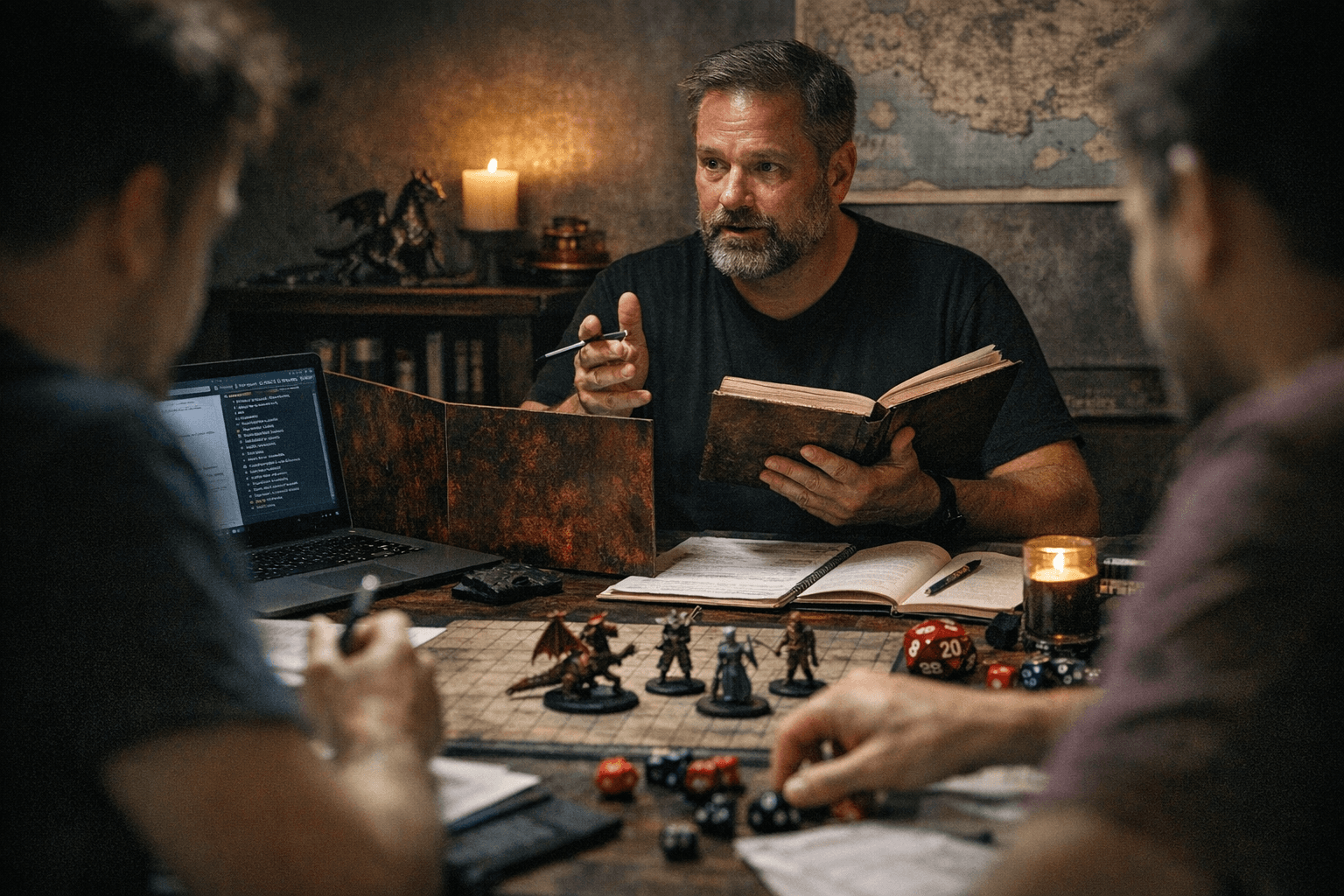
Design one-shots around three strong scenes: a hook, escalation, and climax. Include a clear time-sink or obstacle to create urgency, and prepare multiple likely outcomes so you can respond to player choices without re-prepping. That structure gives a reliable arc while preserving room for improvisation.
Use practical tools that travel well between sessions: maps and handouts that communicate information quickly, two-sentence NPC notes capture motivations and voice, and modular encounters you can scale up or down depending on party speed. These elements combine into a lightweight toolkit that supports improvisation instead of replacing it.
Try one change next session: run a three-scene one-shot with pregens and a single combat-speed house rule, or swap full stat block reading for role-based monster handling. These small, repeatable steps deliver immediate benefits: faster prep, smoother tables, and a friendlier entry path for new players.
Sources:
Know something we missed? Have a correction or additional information?
Submit a Tip

