Practical switch lubing guide for smoother typing and predictable results
Lubing mechanical switches is one of the most effective hobby mods for improving smoothness, cutting scratchiness, and tuning acoustics. This practical primer lays out the materials, step by step technique, and safety tips to get repeatable gains without expensive tools, while warning when restraint is required.
Lubing switches can transform a keyboard from scratchy and uneven to consistently smooth, making it a high impact mod for community builders and newcomers. The most important takeaway is simple, light, and consistent application produces predictable results while heavy handed lubing causes sluggish keys and inconsistent actuation.
Start by gathering the right materials. Use a switch opener for MX style switches, small brushes or fine point lube applicators in the 0.5 to 1.5 mm range, Krytox GPL 205g0 for housings and stems on linear and many tactile builds, and Tribosys 3204 or 3203 for tactile components where you need to preserve a crisp bump. Consider Krytox 205g0 or 206 for springs if you want to reduce ping, or 105 for a very light spring coat. A tray or mat and paper towels help keep parts organized during the process.
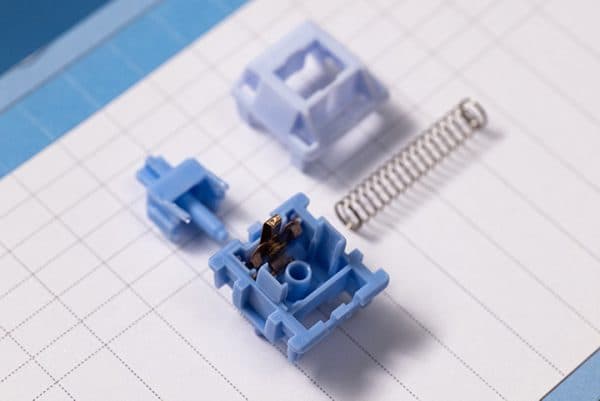
Disassemble switches carefully, opening the top housing, removing the stem and spring, and keeping parts separated in a tray. Apply a small amount of lube to the stem rails and the underside of the stem where it contacts the housing. Apply a very light coat inside the top housing where the stem rubs, taking care to avoid contact with the electrical leaf or optical sensor areas. If you choose to lube springs, brush on a thin layer to reduce ping, and remember some builders prefer dry springs for a crisper feel. Reassemble and test a sample switch on a tester or PCB before committing to a larger batch.
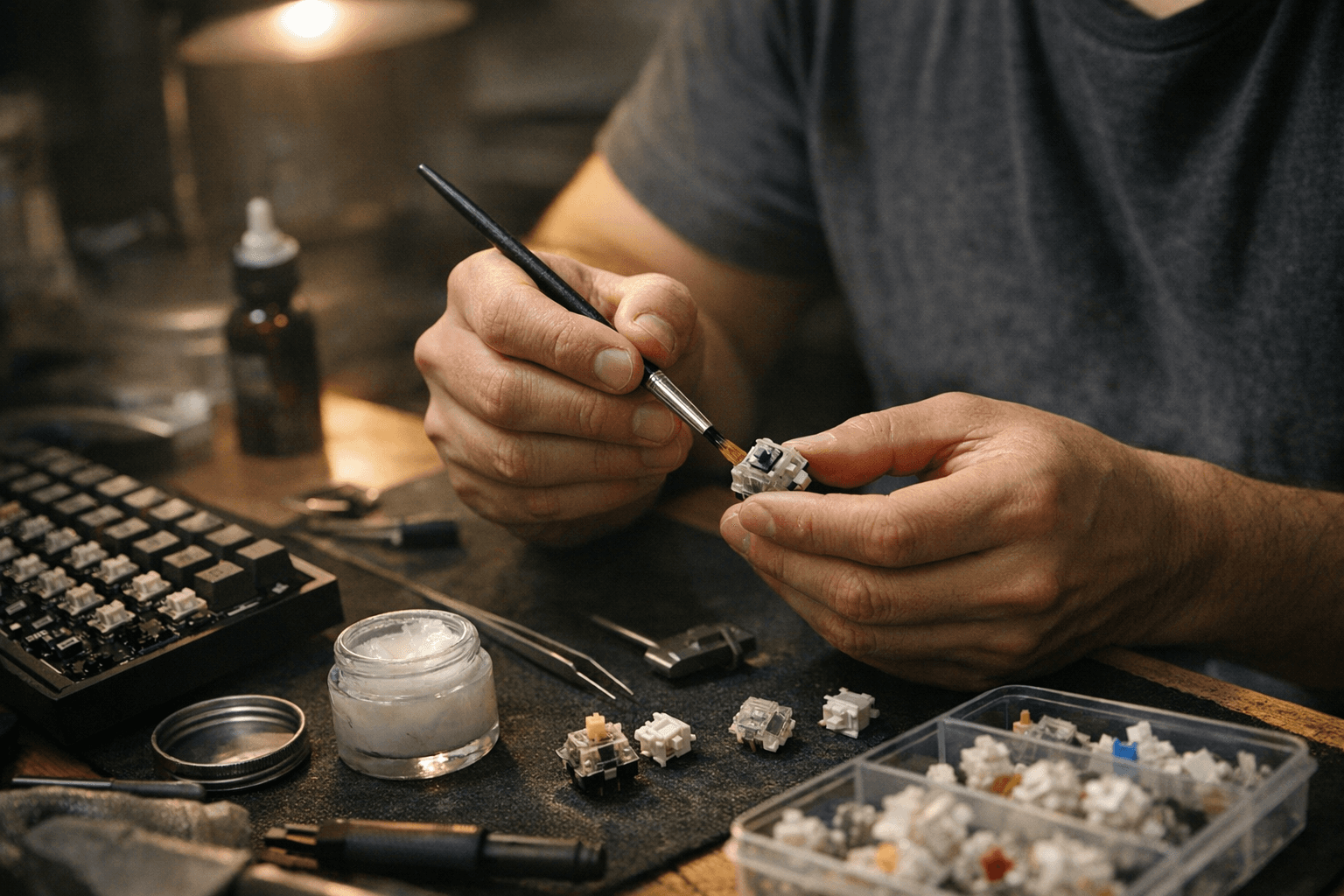
For tactile switches exercise restraint. Tactile legs are sensitive, and over lubing will blunt the bump. Use a lighter weight lube such as Tribosys 3204 and apply only to the tactile bump if the bump is too scratchy. For optical and Hall effect switches verify manufacturer guidance before applying lubricant, because sensors and magnetic systems may not tolerate lubricant near critical surfaces.
Work efficiently by lubing 10 switches, testing, then scaling up. Keep a consistent application method, use a hobby pen or tiny brush for reproducible coverage, and wipe away any excess immediately to avoid sluggish feel. If rework is necessary clean parts with alcohol and thorough care, noting that removal is time consuming. Light, consistent lubing will dramatically improve most linear builds, and careful restraint will preserve desired characteristics on tactile and clicky switches.
Know something we missed? Have a correction or additional information?
Submit a Tip