Prince George's Expands Trails and Allows E-bikes on Key Routes
Prince George’s County parks officials operate an extensive network of hundreds of playgrounds, regional parks and trail segments and are advancing capital projects and policy changes to increase access and year-round use. A permanent Park Directive now permits low-powered e-bikes and e-scooters on designated paved shared-use trails, a move that could reshape commuting options, recreation patterns and maintenance needs across the county.
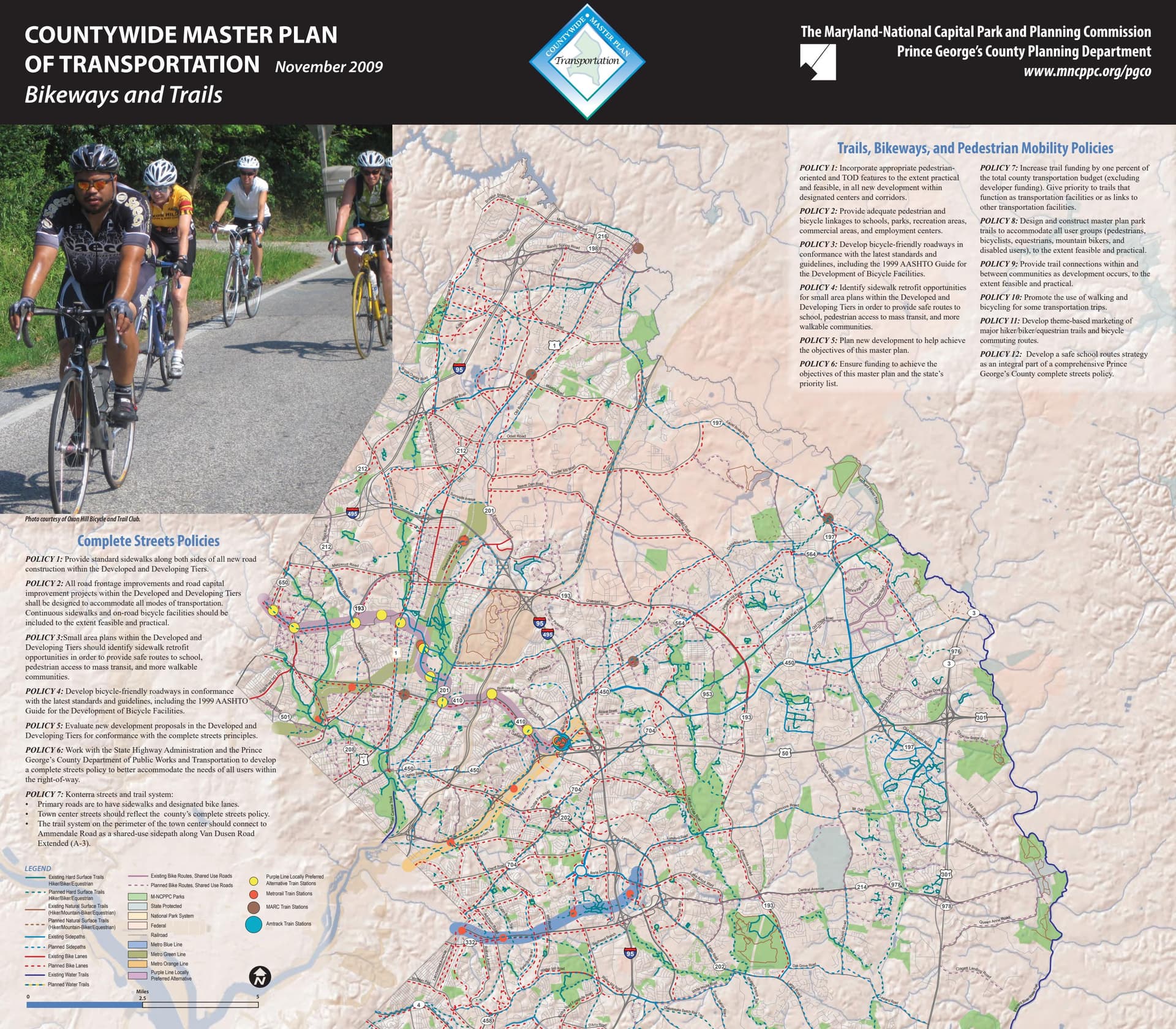
Montgomery-National Capital Park and Planning Commission operations in Prince George’s County provide an expansive system of parks, playgrounds and trails used by residents for recreation, exercise and local travel. County authorities are proceeding with multiple capital improvements and a strategic framework for trails that together aim to modernize facilities and manage growing demand.
Among current projects are upgrades to existing trail segments and parks, development of Horsepen Park in Bowie and strategic planning for the Central Avenue Connector Trail. Officials point to a Strategic Trails Plan that guides maintenance priorities and future trail investments across the county, ensuring that new construction and repairs fit into a long-term network.
A notable policy change is the permanent Park Directive permitting low-powered e-bikes and e-scooters on specified paved and shared-use trails. Designated routes include the Anacostia River Trail, Paint Branch, the WB&A Rail-Trail and segments around Lake Artemesia, among others. The directive clarifies where these vehicles are allowed and is intended to balance access for micromobility users with safety for pedestrians and traditional cyclists. Residents are advised to consult official trail maps and the directive before riding to confirm permitted routes and any local rules.
Park Rangers continue to play a central role in programming and stewardship. Rangers lead nature programs such as Suitland Bog tours, kayaking and stargazing, and run safety and skills offerings including Bike Rodeos and self-defense classes. Volunteer opportunities such as Adopt-a-Trail and Adopt-a-Pond help maintain green space while fostering community engagement. These programs keep parks active across seasons and reduce long-term maintenance costs through grassroots support.

The combination of capital projects, permissive micromobility policy and robust ranger-led programming carries several local implications. Expanded trail access with e-bikes could broaden commuting options for county residents and increase trail usage, putting more demand on maintenance budgets and safety enforcement. Investments like Horsepen Park and the Central Avenue Connector Trail are likely to create near-term construction jobs and increase foot traffic that benefits nearby businesses and property values over time. At the same time, the county faces the policy challenge of managing mixed-use trails to protect vulnerable users and preserve natural areas.
For maps, trail designations and program schedules, residents should consult the Prince George’s County Parks and Recreation website at pgparks.com to plan visits, verify permitted uses and learn how to participate in ranger programs or volunteer maintenance efforts.
Sources:
Know something we missed? Have a correction or additional information?
Submit a Tip