Propane Explosion Destroys Greenhouse Near Penn Cove; No Injuries
A propane-related blast on Jan. 6 destroyed a roughly 10-by-20-foot greenhouse on Glencairn Road north of Penn Cove after a heater left running overnight led to a pressurized tank failure. North Whidbey Fire & Rescue contained the blaze in about 10 minutes; no injuries were reported, but the incident highlights risks for residents who rely on portable propane heating.
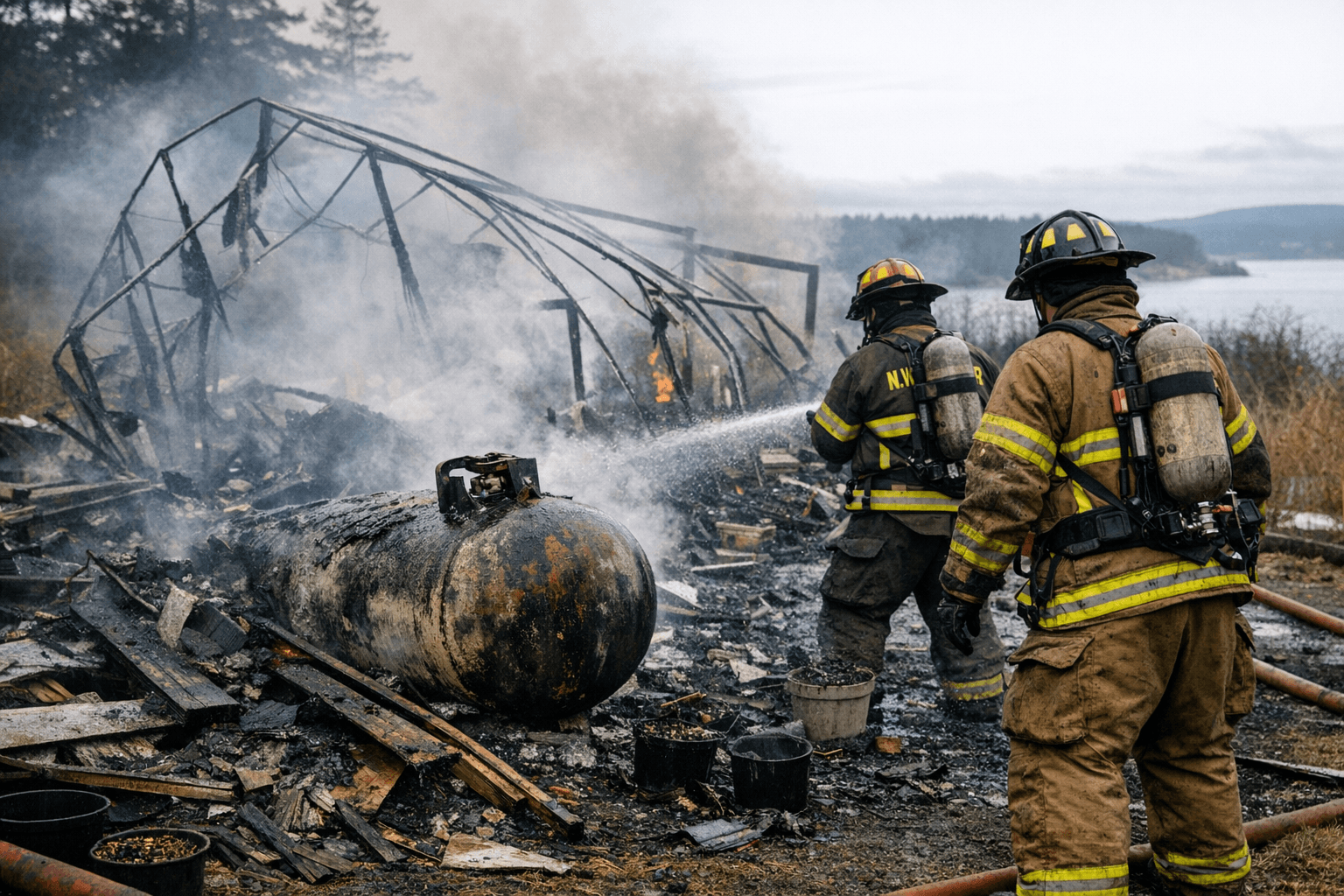
On the morning of Jan. 6 a propane heater left running overnight caused a pressurized tank failure and a subsequent explosion that destroyed a 10-by-20-foot greenhouse on Glencairn Road north of Penn Cove. North Whidbey Fire & Rescue reported that four 100-pound propane tanks were involved and that one tank experienced a BLEVE, a boiling liquid expanding vapor explosion. The blast cracked a nearby garage window and melted part of a tractor, but the adjacent house was not damaged and no injuries were reported.
Fire crews arrived quickly and contained the fire in about 10 minutes, preventing damage to nearby structures and limiting the potential for personal injury. The incident prompted local fire officials to warn residents against leaving propane heaters unattended, especially indoors or in semi-enclosed structures such as greenhouses and garages.
Beyond the immediate destruction of the greenhouse, the event underscores several public health and safety concerns for Island County. BLEVE events generate intense heat, flying debris, and rapidly expanding vapor that can cause severe burns, blunt trauma, and secondary fires. Even when no one is injured, the shock and financial loss to homeowners and small farmers can be significant, particularly for those who rely on low-cost heating options.
The explosion also raises questions about equity and access to safe heating alternatives. Portable propane heaters are common in rural and low-income households, where central heating may be inadequate or unaffordable. Households without access to safer, code-compliant heating systems face higher risks when using heavy-duty propane tanks and improvised setups in outbuildings. This incident serves as a reminder that public education, affordable retrofit programs, and targeted outreach to vulnerable households are essential to reduce preventable hazards.
Residents should inspect heating equipment, follow manufacturer and safety guidance for propane storage and use, and avoid leaving fuel-fired heaters unattended. Property owners who use propane for space heating in outbuildings or temporary structures should consider installing monitors, automatic shutoffs, or switching to electric heaters where feasible. Local authorities and community organizations can play a role by sharing safety information and prioritizing support for households that lack safer heating options.
North Whidbey Fire & Rescue’s rapid response limited the physical damage and prevented injuries in this case, but the explosion is a stark example of how small oversights can produce dangerous outcomes. For Island County residents, the lesson is both practical and urgent: treat propane appliances with caution, and seek safer alternatives or professional guidance when heating living or working spaces.
Sources:
Know something we missed? Have a correction or additional information?
Submit a Tip