Publix, Force Blue and Mote Install 25 Coral Nursery Trees
On January 7, Publix’s Good Together campaign, Force Blue, Mote Marine Laboratory and local scientists installed 25 coral nursery trees in the Publix Coral Nursery in Monroe County. The project bolsters local reef restoration capacity and highlights a growing model of corporate-funded, veteran-led conservation that could shape future local policy and community engagement around marine habitat recovery.
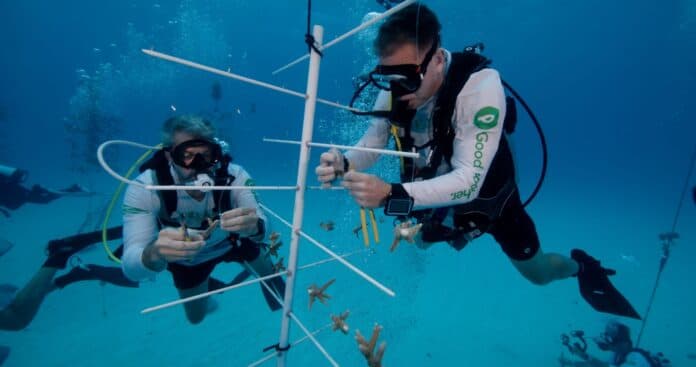
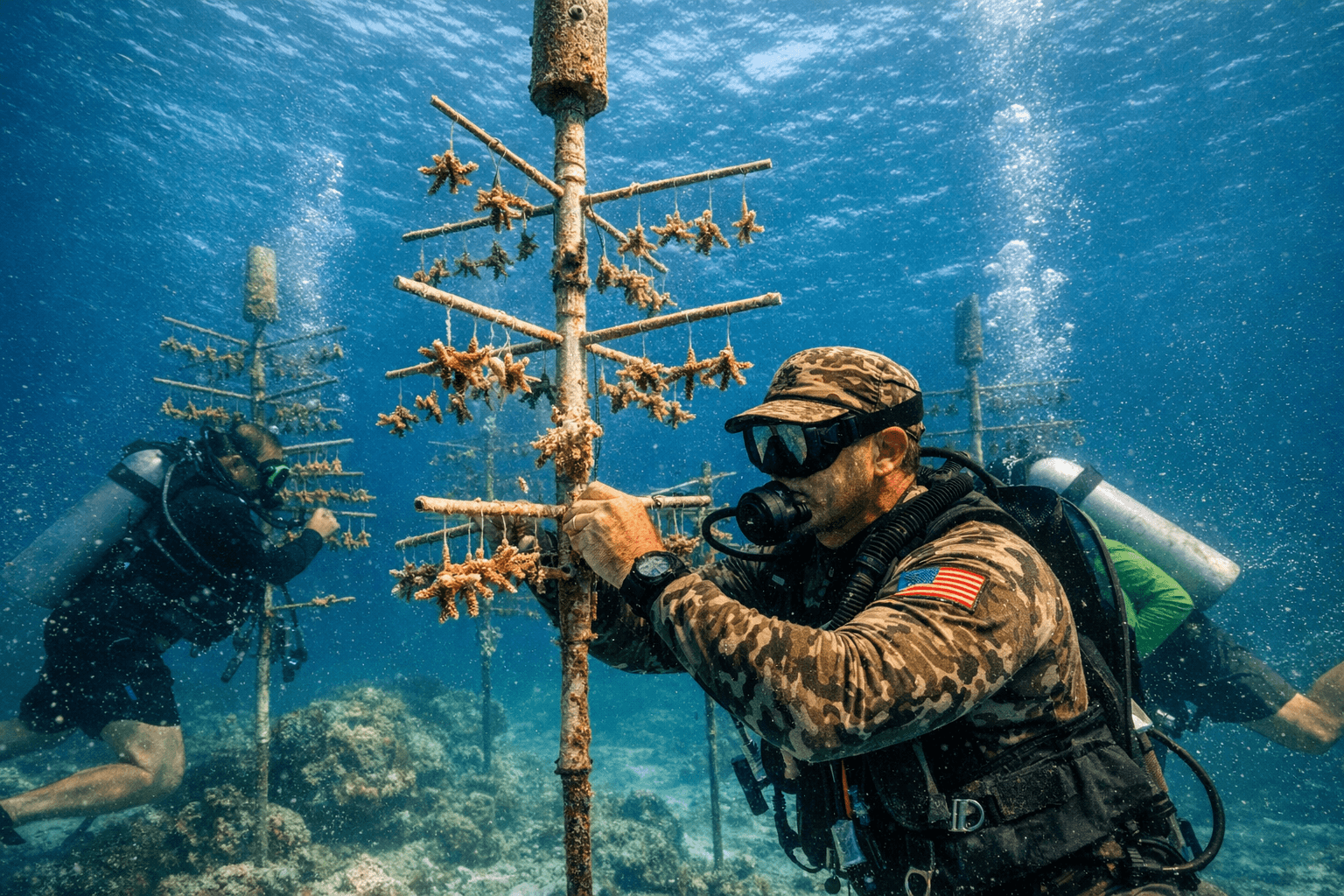
Members of Force Blue, retired military divers who work on conservation projects, teamed with scientists from Mote Marine Laboratory and local conservation partners to deploy 25 coral nursery trees on January 7 at the Publix Coral Nursery, an extension of Mote’s underwater coral field nursery located in Monroe County. The trees were anchored to the seafloor and fitted with buoys that suspend coral fragments, a method that facilitates coral growth until colonies reach sizes suitable for transplanting back to degraded reef sites.
Publix’s Good Together environmental campaign provided funding and logistical support for the installation, marking continued multi-year backing of Force Blue projects. Military veterans from Force Blue played a hands-on role during the operation, anchoring the structures and attaching coral fragments sourced and prepared by participating scientists. The nursery now increases local capacity for reef propagation, with planned future transplanting to rehabilitate reef habitat impacted by disease, warming waters and storm damage.
The project carries practical implications for Monroe County residents. Healthy reef systems underpin key local industries including commercial and recreational fishing, dive and boating tourism, and shoreline protection. Restored coral cover can contribute to fish habitat and biodiversity, which in turn supports livelihoods and the county tax base tied to tourism. The visible partnership between a major regional employer, a veteran-led nonprofit and a scientific institution underscores how public, private and nonprofit roles are converging on environmental challenges.
There are also governance and policy considerations. Expanded restoration activity will require ongoing permitting, monitoring and funding commitments from local and state authorities. County officials and local policymakers will face decisions about supporting long-term maintenance, scaling restoration efforts, and integrating nursery outputs into broader reef management plans. The collaboration sets expectations for transparency in outcomes and measurable benchmarks for success that residents and elected leaders can track.
Civic engagement opportunities will grow as restoration moves from nursery to reef. Volunteer monitoring, local scientific outreach and public education about reef-friendly practices are likely follow-ups that can deepen community involvement. For Monroe County voters, the intersection of environmental restoration, corporate philanthropy and veteran employment may inform future discussions about resource allocation and conservation priorities at the ballot box.
This installation is an incremental but tangible step in reef rehabilitation for Monroe County. Its lasting impact will depend on sustained funding, clear performance metrics and coordination among the corporate partners, scientific institutions and public agencies charged with protecting coastal resources.
Sources:
Know something we missed? Have a correction or additional information?
Submit a Tip