Raleigh designates downtown Holiday Inn, Barfield Court building as landmarks
Raleigh city leaders on December 2 designated the downtown Holiday Inn on Hillsborough Street and the building at 2204 Barfield Court as historic landmarks, embedding protections that aim to preserve the citys distinctive places. The move qualifies property owners for a 50 percent annual property tax deferral if the special character of the landmark is maintained, a policy that will shape future redevelopment and city revenue considerations.

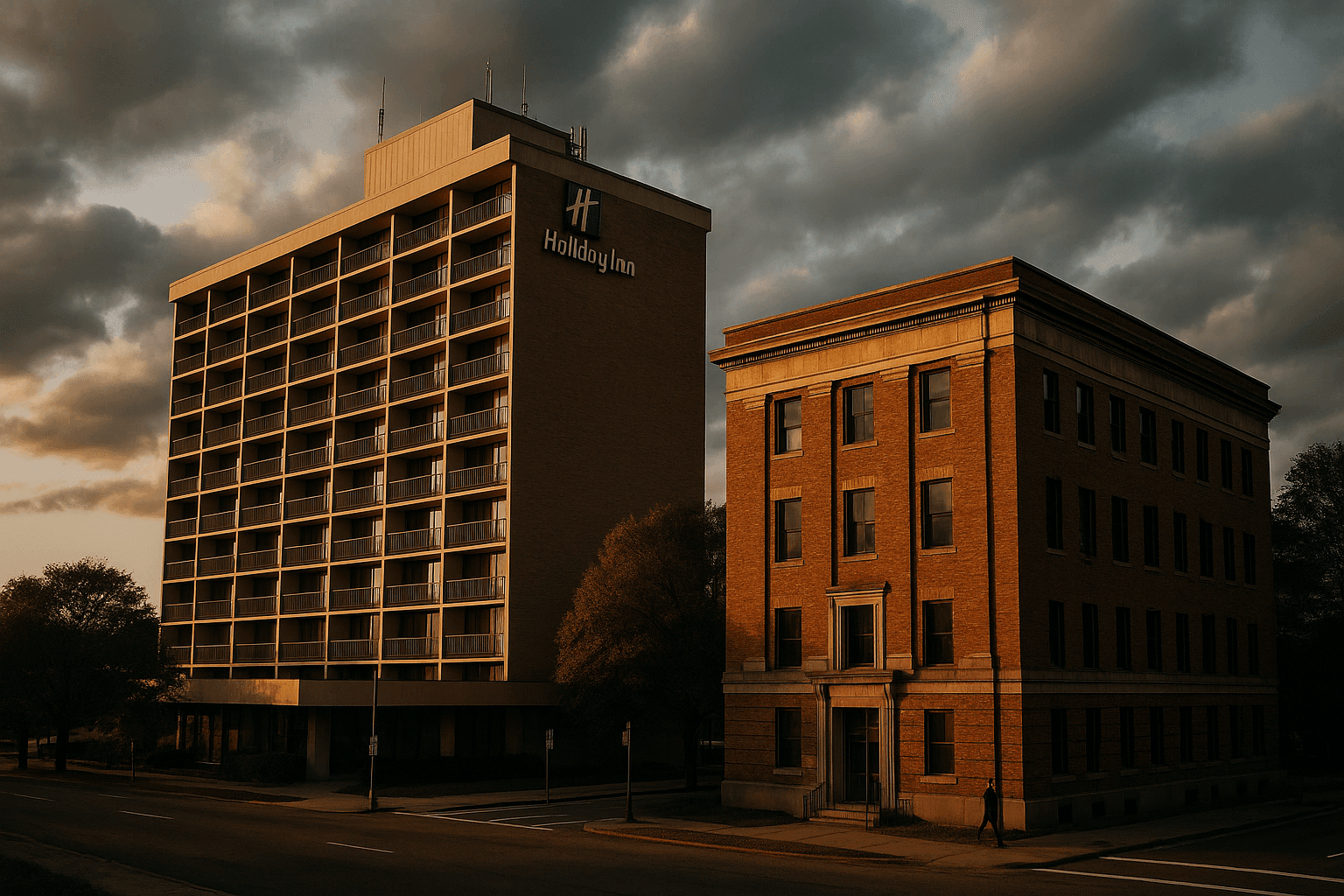
City council action on December 2 added two properties to Raleighs roster of historic landmarks, placing the round Holiday Inn at 320 Hillsborough Street and the structure at 2204 Barfield Court under the citys preservation framework. The round Holiday Inn has been a familiar element of Raleighs skyline since 1969, and the designation formalizes municipal expectations about how both properties may be altered going forward.
City documentation accompanying the designations notes, "Historic resources provide the special character and scale that distinguish Raleigh from other places." The designation makes owners eligible for an annual 50 percent property tax deferral if the propertys special character is maintained. That protection and incentive are administered through the citys certificate of appropriateness process, which requires review and approval of exterior changes to designated landmarks.
Private plans for the downtown building were already in motion. In June, IHG Hotels and Resorts said the buildings distinctive shape will be preserved and the structure will be converted into a Hotel Indigo. The company has not announced a firm opening date, and the landmark designation introduces an additional layer of regulatory review that will govern any work on the facade or overall form.
For residents and neighborhood stakeholders the decisions carry both cultural and practical consequences. The tax deferral is intended to encourage preservation of architectural character and to support heritage tourism and neighborhood identity. At the same time the program defers a portion of property tax revenue, which has implications for municipal budgets and for how the city balances preservation priorities with fiscal planning.
The certificate of appropriateness process creates formal checkpoints for design changes, giving the city and public opportunities to assess alterations before permits are issued. Property owners, developers and neighborhood groups will now navigate that process as plans for conversion and ongoing maintenance advance. The designations preserve visual landmarks that have defined parts of downtown and the surrounding community while shaping the timeline and scope of redevelopment projects.