Rare Swale Paintbrush Listed Endangered in Southern Hidalgo County
Federal wildlife officials listed the swale paintbrush, a very rare wildflower found in a small area of the Animas Valley, as endangered after surveys showed it occupies roughly 28 acres on private land. The decision highlights local concerns about water, grazing and land-use pressures, and raises questions about how small ranching communities will balance conservation requirements with livelihoods and water access.

Federal biologists have concluded that the swale paintbrush, a Castilleja species limited to a pocket of the Animas Valley in southern Hidalgo County, faces a high risk of extinction and has been listed as endangered. The plant is known to occupy roughly 28 acres on private land and is described by scientists as an annual that grows to about 19 inches and bears pale yellow flowers.
Conservation assessments cited the plant’s extremely limited distribution and its dependence on a particular hydrology as primary vulnerabilities. Altered surface water, habitat loss, prolonged drought and grazing pressures were identified as the main threats that could rapidly diminish or eliminate the remaining populations. Officials declined to publish exact location coordinates, citing concerns that disclosure could lead to illegal collection or additional habitat damage.
For residents of Hidalgo County, the listing has practical implications. Because the surviving populations occur on private land, ranchers and landowners will face new regulatory attention when federal actions, permits or funding touch properties in the area. The listing also underscores existing tensions over scarce water resources in this borderland community; the swale paintbrush’s reliance on specific surface-water conditions links its fate to broader water management challenges that affect livestock, crops and household wells.
Local livelihoods and social equity are central to how protections are implemented. Small-scale ranchers who use grazing to support families may lack the financial and technical capacity to adopt alternative practices that reduce impacts on the flower’s habitat. Conservation measures that restrict certain land uses without adequate compensation or assistance can exacerbate economic disparities in rural counties like Hidalgo. Advocacy for equitable responses includes ensuring access to technical support, incentives, or voluntary conservation agreements that respect private property while protecting the species.
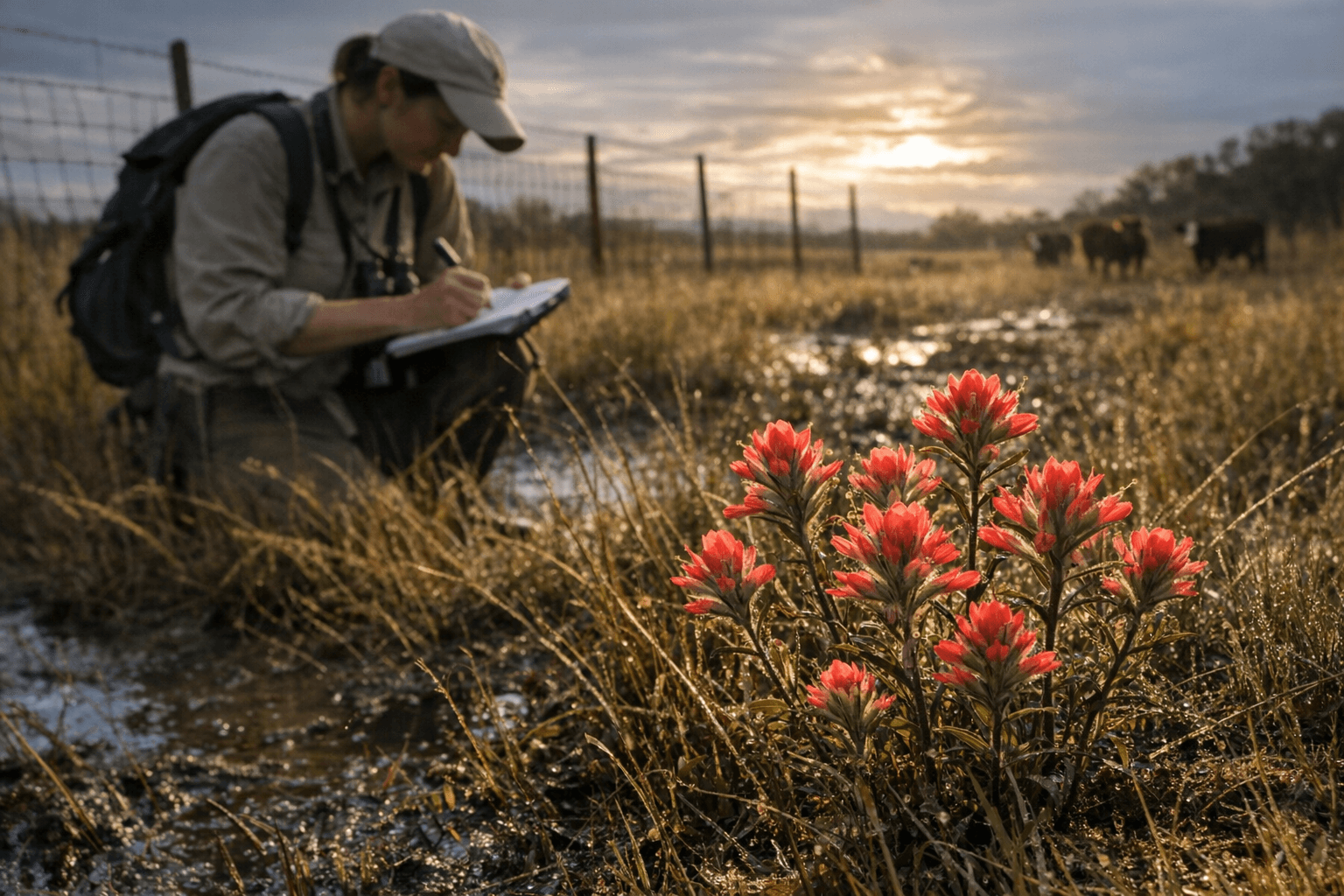
Recovery strategies discussed by experts focus on both science and collaboration. Recommended actions include searching for similar habitat elsewhere in the region to identify new populations, researching the plant’s germination triggers to improve restoration success, and working with Mexican partners to determine whether the species persists across the border. Cross-border cooperation would be important for any effective recovery plan in this borderland ecosystem.
The swale paintbrush’s status is a reminder that biodiversity loss in Hidalgo County is intertwined with water security, rural economies and binational stewardship. How federal agencies, state authorities, conservation groups and local landowners coordinate support and policy will determine whether this tiny, pale-yellow wildflower survives and whether conservation efforts strengthen rather than strain an already vulnerable community.
Sources:
Know something we missed? Have a correction or additional information?
Submit a Tip