Rescue of Hunter on Makaha Ridge Highlights Emergency Response Needs
Kaua‘i Fire Department crews rescued a 23 year old male resident who fell severely ill while hunting on Makaha Ridge on December 6, exposing challenges of medical care in remote terrain. The multiagency extraction and transport underscore the importance of search and rescue capacity, interagency coordination, and outreach to residents who use backcountry areas.
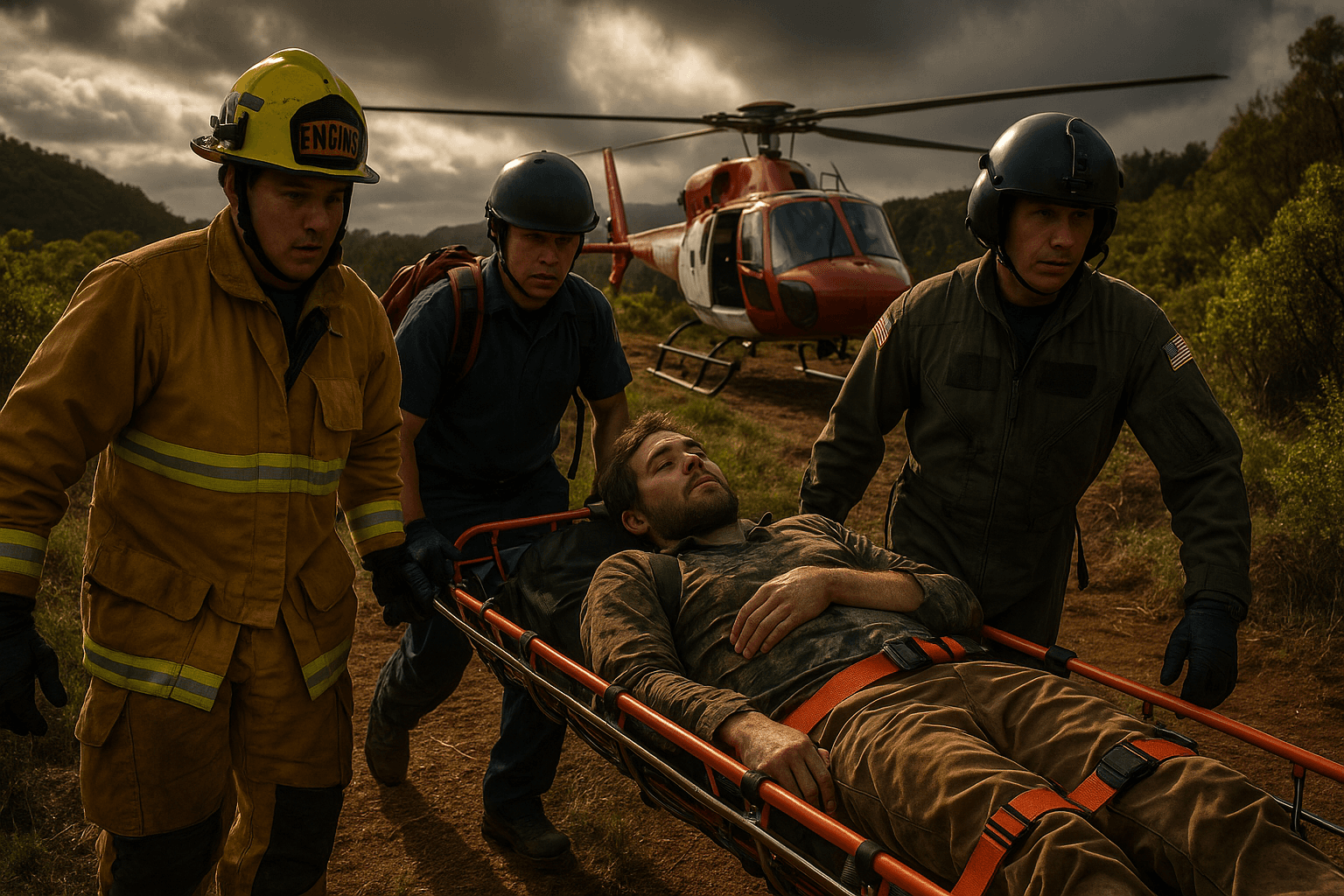
Kaua‘i County emergency crews staged a prolonged rescue on December 6 after a hunter became seriously ill on Makaha Ridge. First responders received a report shortly before 2 p.m. and Waimea Fire Station personnel hiked down steep terrain to locate the 23 year old man, according to a preliminary report. Firefighters rendered initial care and concluded that aerial extraction would best serve the man’s condition.
Crews from the Līhu‘e Fire Station aboard Air 1 performed an aerial hoist using an extraction vest, lifting the man to the National Aeronautics and Space Administration landing zone in Kōke‘e. From there he was transferred to American Medical Response and then taken to a local hospital for further care. The scene was cleared shortly after 6:05 p.m.
The incident highlights several public health and safety issues for Kaua‘i County. Remote ridgelines and steep terrain limit ground access and extend response times, which can worsen outcomes for sudden medical events. The successful use of helicopter extraction demonstrates the value of air rescue assets, yet those capabilities are costly and subject to weather and availability. Coordinated action between volunteer and career firefighters, air crews, medical transport services, and designated landing zones was essential in this case, and it illustrates how interagency planning can save lives.
There are equity implications for residents and visitors who rely on backcountry areas for subsistence, recreation, or cultural practices. People living or working in more isolated parts of the island may face barriers to rapid emergency care, including limited cell reception, long travel times to hospitals, and fewer nearby providers. Strengthening community outreach, first aid and wilderness medicine training, and notification protocols can reduce risk. Investment in search and rescue training, reliable communications infrastructure, and steady funding for air medical services could improve outcomes across the county.
As investigators finalize their report, the episode serves as a reminder for Kaua‘i communities and policymakers that preventing and responding to medical emergencies in remote areas requires sustained resources, clear coordination, and attention to the unequal burdens faced by people who live and spend time in the backcountry.