Sheriff's private messages spark county debate over Flock cameras
Leaked email and private Facebook messages from Sheriff Al Nienhuis intensified a county debate over Flock license-plate readers and proposed oversight. The outcome affects privacy, policing, and upcoming local races.
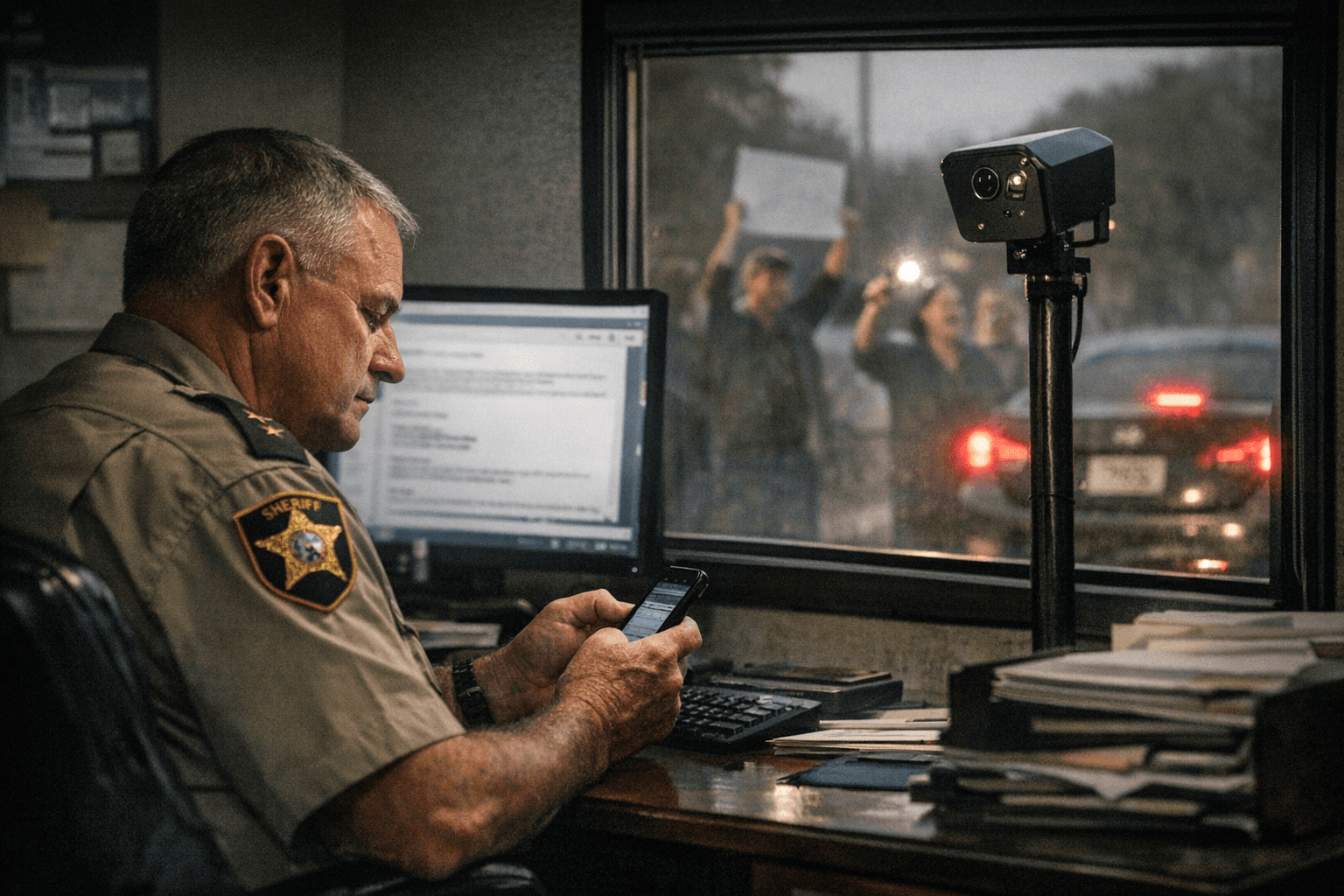
A leaked internal email from Hernando County Sheriff Al Nienhuis about the deployment of Flock Safety license-plate reader cameras set off a chain of responses that have pulled county surveillance policy into the spotlight. After the email circulated, the sheriff privately messaged several residents who had posted critical comments on the agency's official Facebook page, actions that residents said chilled public debate over surveillance and oversight.
Sheriff Nienhuis defended the Flock program in subsequent exchanges, stressing that the system does not use facial recognition or record audio and highlighting cases where license-plate data helped recover stolen vehicles or assist missing-person investigations. In those messages he also reiterated a long-standing position on body-worn cameras, asserting that such devices "do not solve crimes." That comparison has become central to the public discussion about where the county should invest and how it should balance evidence collection with proactive surveillance.
The debate intensified as Commissioner Ryan Amsler pushed a proposed ordinance calling for civilian oversight and use-limitations on Flock cameras. As the ordinance advanced toward a scheduled Board of County Commissioners discussion, the sheriff's office published multiple videos on its Facebook page featuring agency employees describing the technology's benefits, including cases involving missing or endangered children. Comments remained enabled on those posts, and public reaction was sharply divided over both the content and the timing of the messaging.
Political implications have amplified the policy fight. The issue unfolds in a pivotal election year for two county commissioners, and challengers have framed the ordinance as a referendum on transparency, privacy, and accountability. Commissioner Steve Champion, who has previously voiced concerns about government surveillance, is expected to address the board, while Commissioners Brian Hawkins and Jerry Campbell—both frequent allies of Sheriff Nienhuis on law-enforcement spending—face votes that could reverberate through their reelection campaigns.
County residents are raising concrete policy questions: how long Flock data will be retained, what independent audits or access controls will apply, under what conditions third parties might receive data, and how license-plate systems should interact with body-worn camera evidence. As of publication, the Hernando County Sheriff's Office had not issued a consolidated public statement addressing private outreach to critics or those specific transparency and data-retention concerns.
The board meeting presents a clear crossroads for Hernando County leaders weighing law-enforcement utility against constitutional protections, data security, and public trust. The choice will shape not only how policing technology is used but also how officials engage with residents who question government surveillance.
The takeaway? Show up at the BOCC meeting, ask commissioners and the sheriff for clear retention limits and audit procedures, and demand a public record of how Flock data is accessed and shared—those steps will keep the debate public and accountable.
Sources:
Know something we missed? Have a correction or additional information?
Submit a Tip