Southwest Colorado Counties Push Back Against Unfunded State Mandates
County officials from across Southwest Colorado met in Pagosa Springs on Jan. 6 to demand an end to state and federal policies imposed without local funding. Commissioners warned that continued unfunded mandates threaten roads, public safety and basic services in rural counties like Dolores.
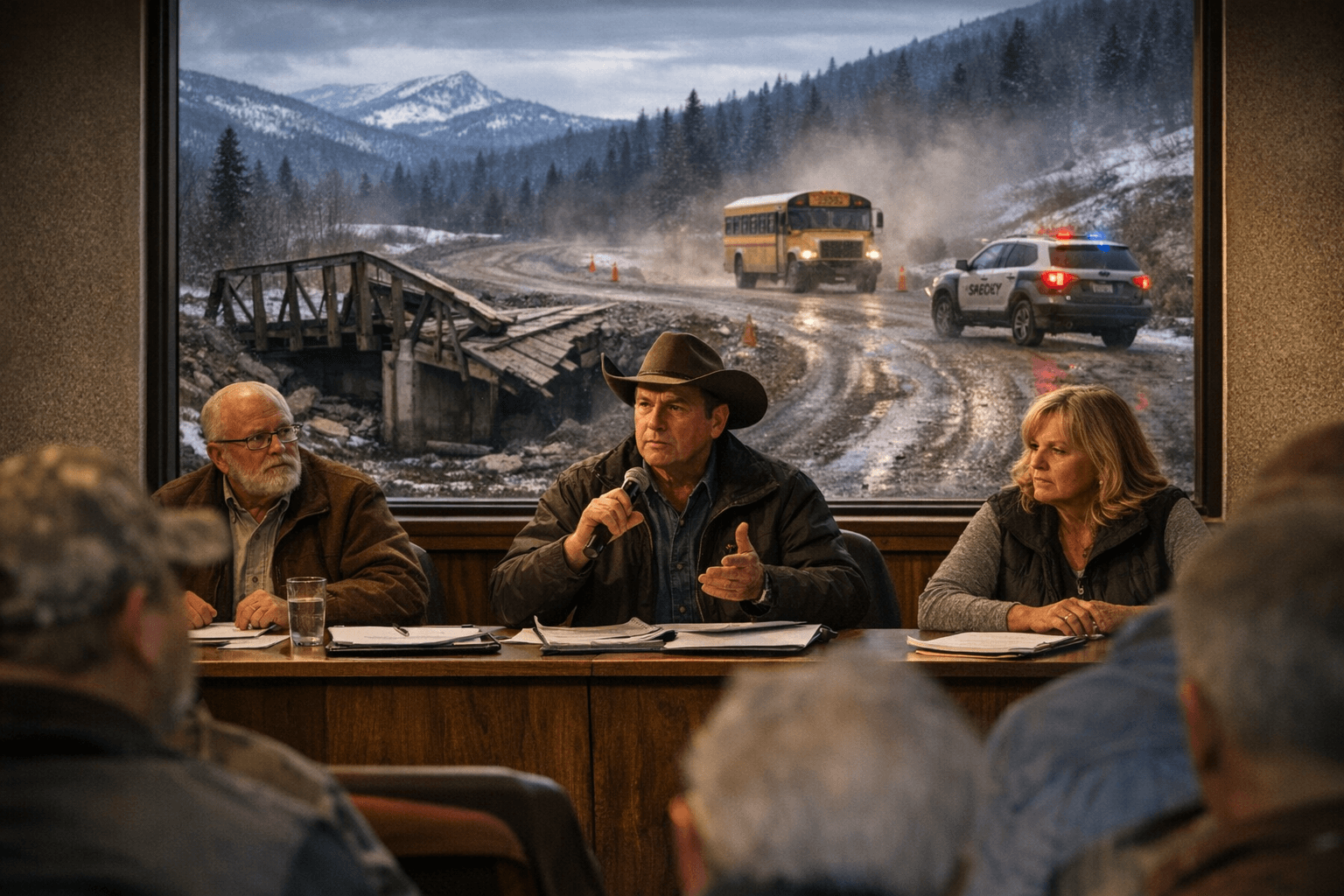
County commissioners and managers from La Plata, Montezuma, San Miguel, San Juan, Archuleta and Dolores counties met Monday in Pagosa Springs to press state lawmakers for clearer accounting of the local costs attached to new legislation. Officials said an expanding roster of unfunded mandates is eroding rural budgets already strained by inflation, lower oil and gas revenues and recent residential assessment rate cuts.
The meeting highlighted a pattern: state or federal policies that require county implementation but provide no matching funds force hard choices at the local level. Commissioners cited recent legislative campaigns such as the Wildland-Urban Interface Code, Energy Benchmarking and Building Performance Standards, and Demographic and Contact Reporting as measures they generally support but cannot shoulder financially without trimming essential services.
La Plata County Commissioner Marsha Porter-Norton noted the breadth of the objection in the region, saying, “That’s the most bipartisan thing I’ve seen since I'’e been a commissioner.” Commissioners pointed to a formal letter La Plata signed in September asking Gov. Jared Polis to weigh the volume and scope of new legislated programs against available local funding. The letter argued that counties should not be left to "continue further cutting our core programs and services – the majority of which were previously mandated by the State – to enact any new mandates," and urged that "every bill introduced carries a note that specifies the cost to local governments."
A recent state landfill regulation was singled out as an example of the type of mandate most problematic for sparse counties. Regulation No. 31, adopted in July, tightens controls on methane emissions at municipal solid waste landfills by accelerating well installation schedules, introducing a methane-based threshold for monitoring technology deployment and imposing stricter operator response requirements. Commissioners warned that a one-size-fits-all rule fails to reflect geographic differences across Southwest Colorado; as San Miguel Commissioner Galena Gleason said, “A lot of these unfunded mandates, they’re just not tenable for our very rural counties, but this one in particular … it just makes zero sense for our rural counties. We don’t even have a landfill in San Miguel County.”
Officials also raised practical concerns about unintended consequences, including the potential for higher landfill costs to drive residents to dump trash on public lands and burden county road crews and law enforcement. County leaders asked State Sen. Cleave Simpson and House District 59 Rep. Katie Stewart, who attended the meeting, to convey rural fiscal impacts to colleagues and push for clearer fiscal notes that capture local government costs.
Local commissioners emphasized organized resistance if state policy continues without funding. Montezuma Commissioner Jim Candelaria framed the sentiment bluntly: “No more unfunded mandates.” For Dolores County residents, the dispute matters in everyday ways — from the condition of rural roads and speed of emergency response to availability of social services — as local officials weigh which programs to protect and which may face cuts.
Sources:
Know something we missed? Have a correction or additional information?
Submit a Tip