Soyuz Touches Down, Returning Russian Cosmonauts and U.S. Astronaut Safely
Roscosmos reports that a Soyuz spacecraft carrying two Russian cosmonauts and a NASA astronaut lands near Zhezkazgan, Kazakhstan, and the crew is recovered in good condition. The return highlights continued international collaboration on the International Space Station despite sharp terrestrial tensions, and agencies pledge to keep rotating crews and conducting experiments aboard the station.
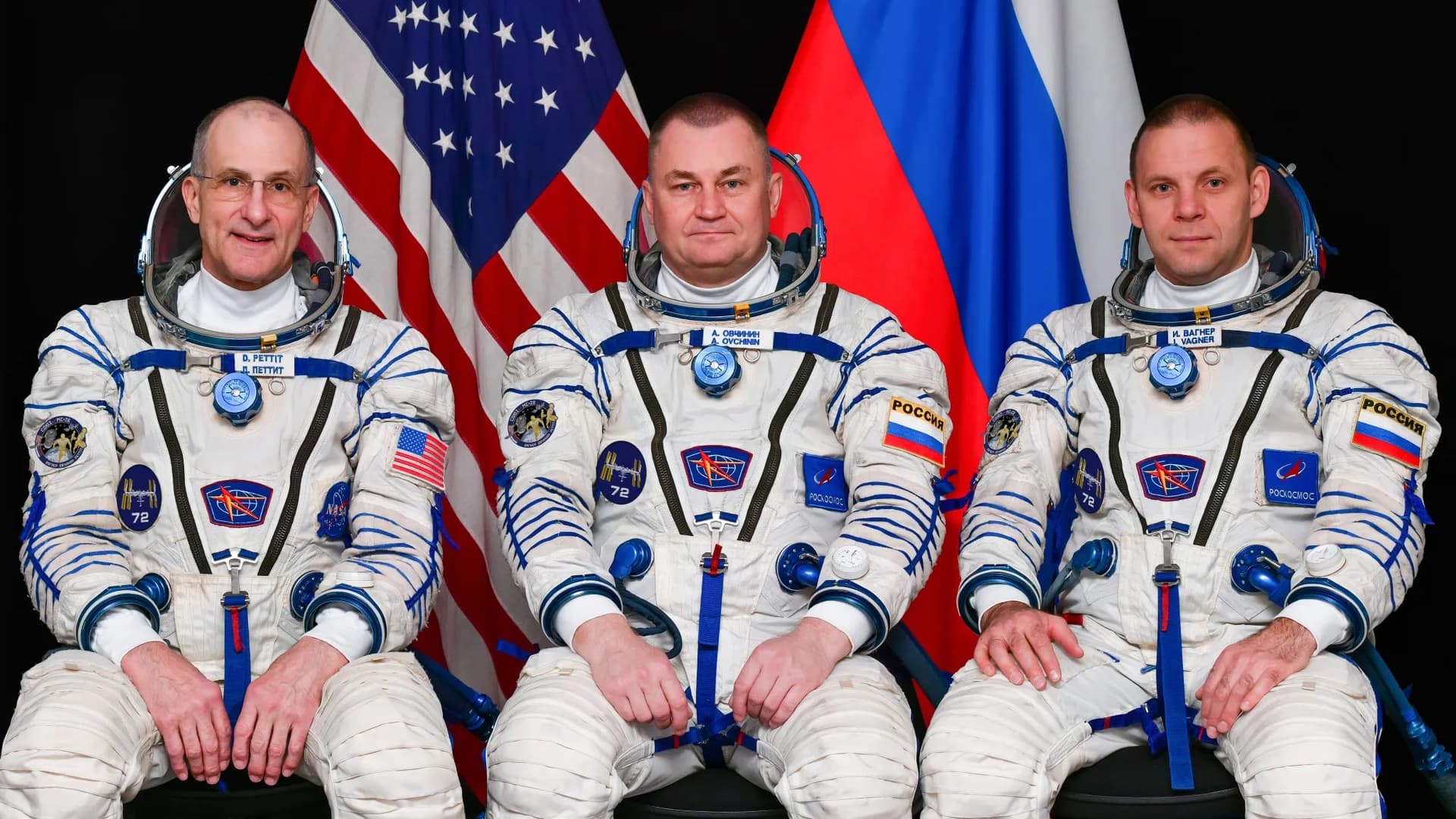
Roscosmos reports that a Soyuz spacecraft carrying two Russian cosmonauts and a NASA astronaut makes a successful landing near Zhezkazgan, Kazakhstan, and that the returning crew are recovered in good condition. The agency says the flight concludes a scheduled mission aboard the International Space Station and that mission managers praised the smooth deorbit and touchdown operations.
The landing, announced on the same day, underscores a pattern of practical cooperation in low Earth orbit that has persisted even as relations among the nations involved have grown strained on Earth. Space agencies from multiple countries reiterate commitments to continuing crew rotations and scientific experiments aboard the station while they deliberate long term plans for its use and eventual transition to future platforms.
The latest return maintains operational continuity on the station, where rotating crews keep experiments running and maintain complex systems that support dozens of research projects. Those projects include biological and biomedical investigations that space agencies and independent researchers say can yield benefits for health care on Earth, from understanding human physiology in extreme environments to testing technologies that can translate into medical devices and treatments.
Keeping crew rotations steady is also a matter of global public investment and trust. The International Space Station is a multibillion dollar laboratory that relies on shared logistics, coordinated training, and mutual reliance among partner agencies. Smooth recoveries and dependable launches help preserve the scientific output that underpins those investments and ensures that international experiments stay on schedule.
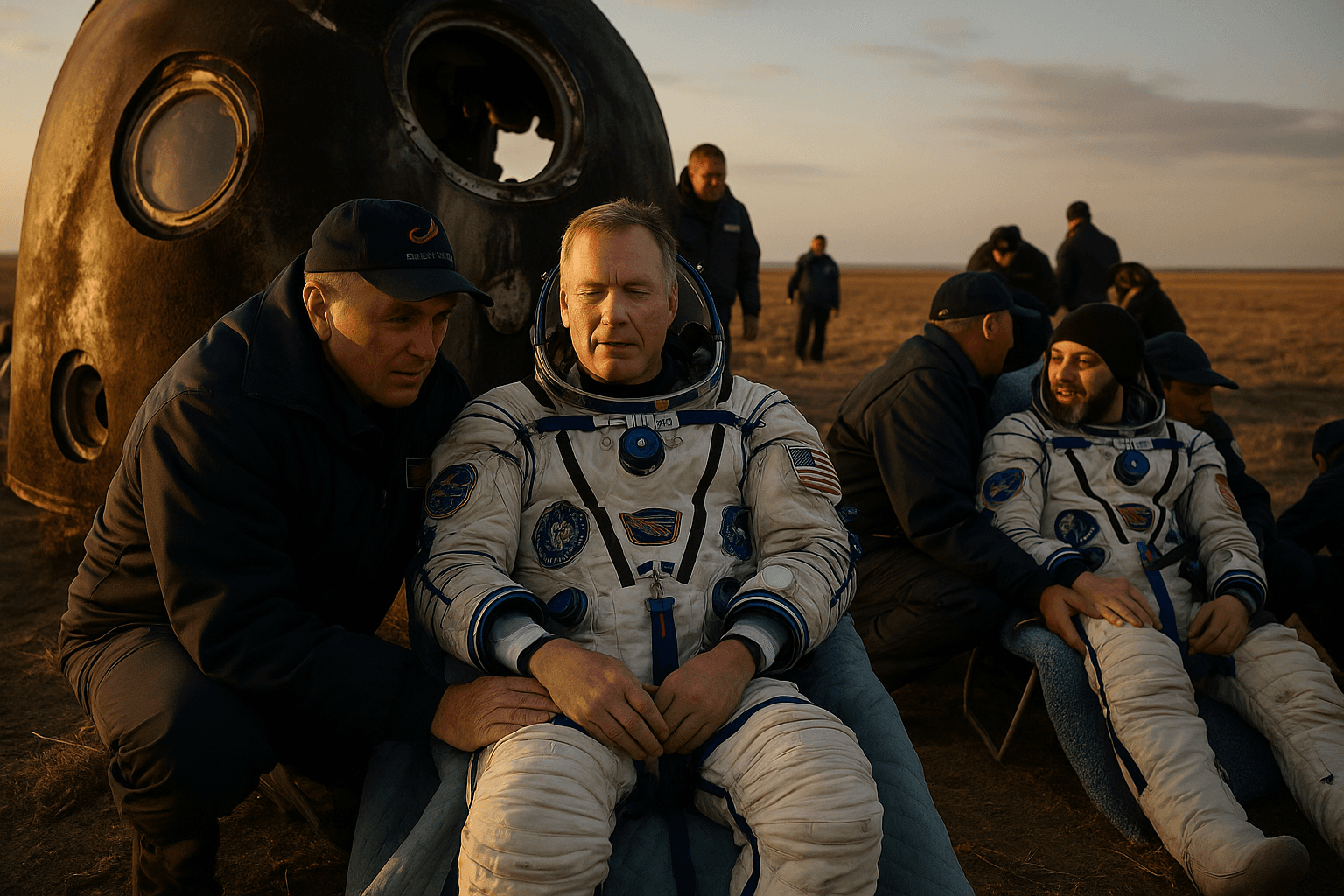
The successful landing also reflects safety systems and ground support capacity developed over decades of human spaceflight. Recovery teams respond rapidly to retrieve returning astronauts and cosmonauts, perform medical checks, and begin the transition back to life on Earth. Roscosmos reports that the crew were in good condition following initial medical evaluations, and that follow up monitoring and rehabilitation will continue as usual.
For communities in Kazakhstan that host landing zones, these operations bring short term activity and the regular presence of international teams, but they also raise questions about long term use of spaceports and the local impacts of the global space economy. As space agencies discuss next steps for the station, those conversations include logistics, funding, and the roles of private partners that are increasingly part of crew transportation and research support.
The mission managers say the return marks another successful chapter in a collaborative program that has endured through geopolitical turbulence. As agencies plan future rotations and prepare for the station's later years, the emphasis remains on sustaining scientific work, protecting crew health, and ensuring that the benefits of space research are shared broadly.