Stranger Things Season Five reframes Upside Down as Dungeons & Dragons Abyss
The final season of Stranger Things reframed the Upside Down as a wormhole that connects to a realm the show names the Abyss, a direct borrowing from Dungeons & Dragons cosmology. That choice links the series monsters and stakes to Dungeons & Dragons concepts, and it matters to tabletop players because it shapes how fans read the finale and how dungeon masters might borrow imagery and mechanics for their own games.
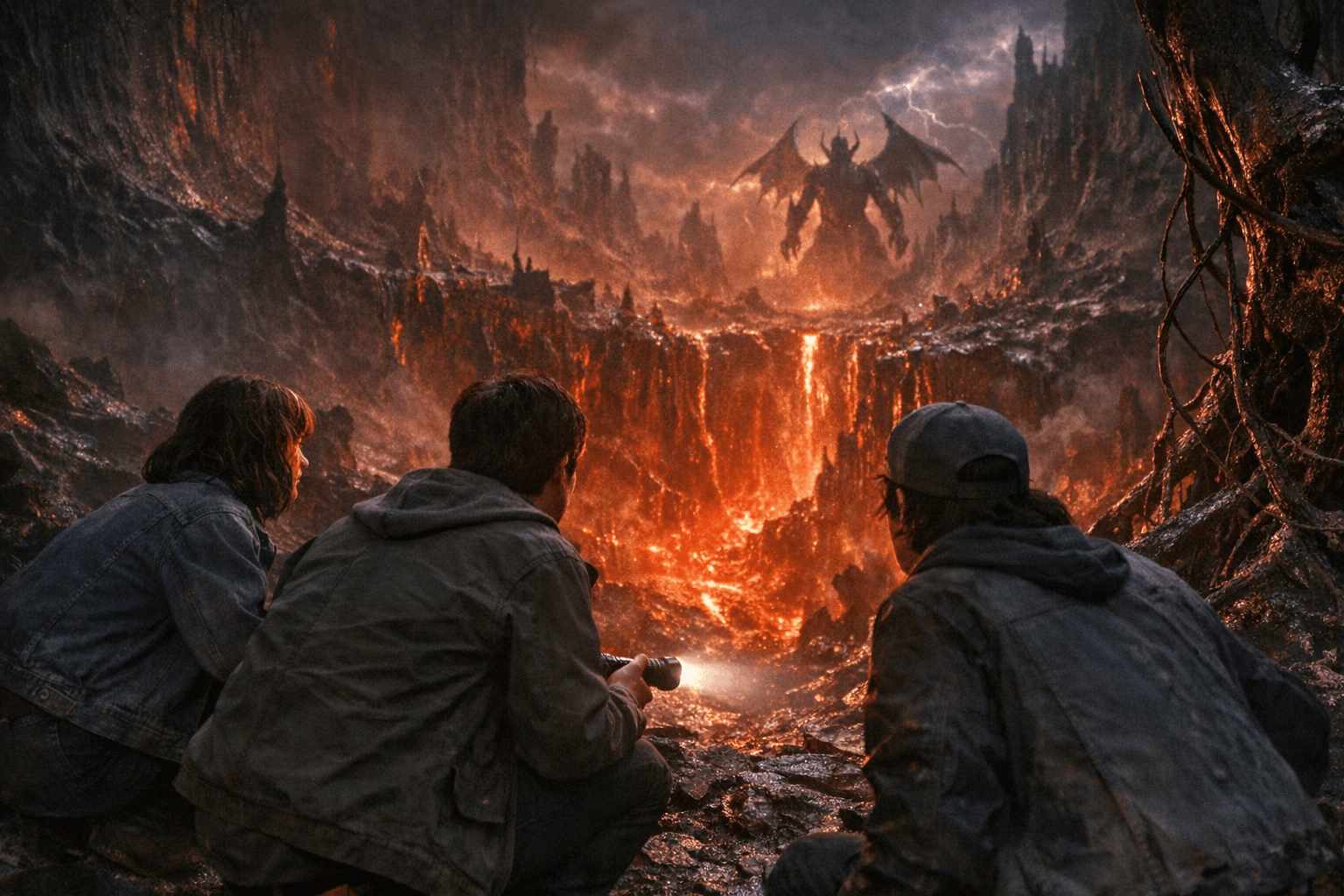
Stranger Things Season Five, released in two volumes, recast the Upside Down not simply as a shadow dimension but as a kind of wormhole or bridge to another realm the show explicitly calls the Abyss. By using the Abyss, a term drawn from Dungeons & Dragons cosmology, the series placed familiar monsters such as Demogorgons, Demodogs, and Vecna within a planar framework that echoes tabletop lore. The shift tightened the series narrative and reframed the final season's stakes around an interplanar incursion rather than a single isolated threat.
The season laid out a clear plan to reach that realm called the Abyss, codenamed Operation Beanstalk, and made the attempt to cross that bridge the central plot mechanic. Eleven and the supporting cast carried different roles in the operation, with the show focusing on the mechanics of transit and confrontation as much as on individual character arcs. The visual language and narrative choices leaned on Dungeons & Dragons iconography to make the Abyss feel like an established cosmological place rather than an invented horror element.
This use of Dungeons & Dragons terms matters for the tabletop community because mainstream media continues to borrow Dungeons & Dragons cosmology and language when depicting otherworldly horror. Fans who play or run games now have a clearer cultural touchstone for describing planar threats and monsters. Campaign writers and dungeon masters can draw on the season's imagery to convey a sense of scale and menace when introducing planar crossings, and players will notice how established Dungeons & Dragons names change expectations about origin and behavior of monsters on screen.
For practical play, verify the specific connotations you borrow from the show before folding them into a campaign. The season's framing suggests ready made hooks for adventures that center on a portal to an Abyssal realm, contested operations to close or cross that portal, and characters who must balance sacrifice and strategy. For community discussion, the season provides a shared vocabulary that will shape conversations at tables and online about planar horror and how Dungeons & Dragons language describes threats in popular culture.
Sources:
Know something we missed? Have a correction or additional information?
Submit a Tip

