Strong December Winds Hit Trinidad and Western Las Animas County
A High Wind Warning affected Trinidad and western Las Animas County from the afternoon of December 16 through the early hours of December 18, bringing sustained west winds of 20 to 30 miles per hour and gusts up to 60 miles per hour. The storm toppled trees and power lines, disrupted travel along Interstate 25, and highlighted risks for residents who rely on electricity and limited local services.
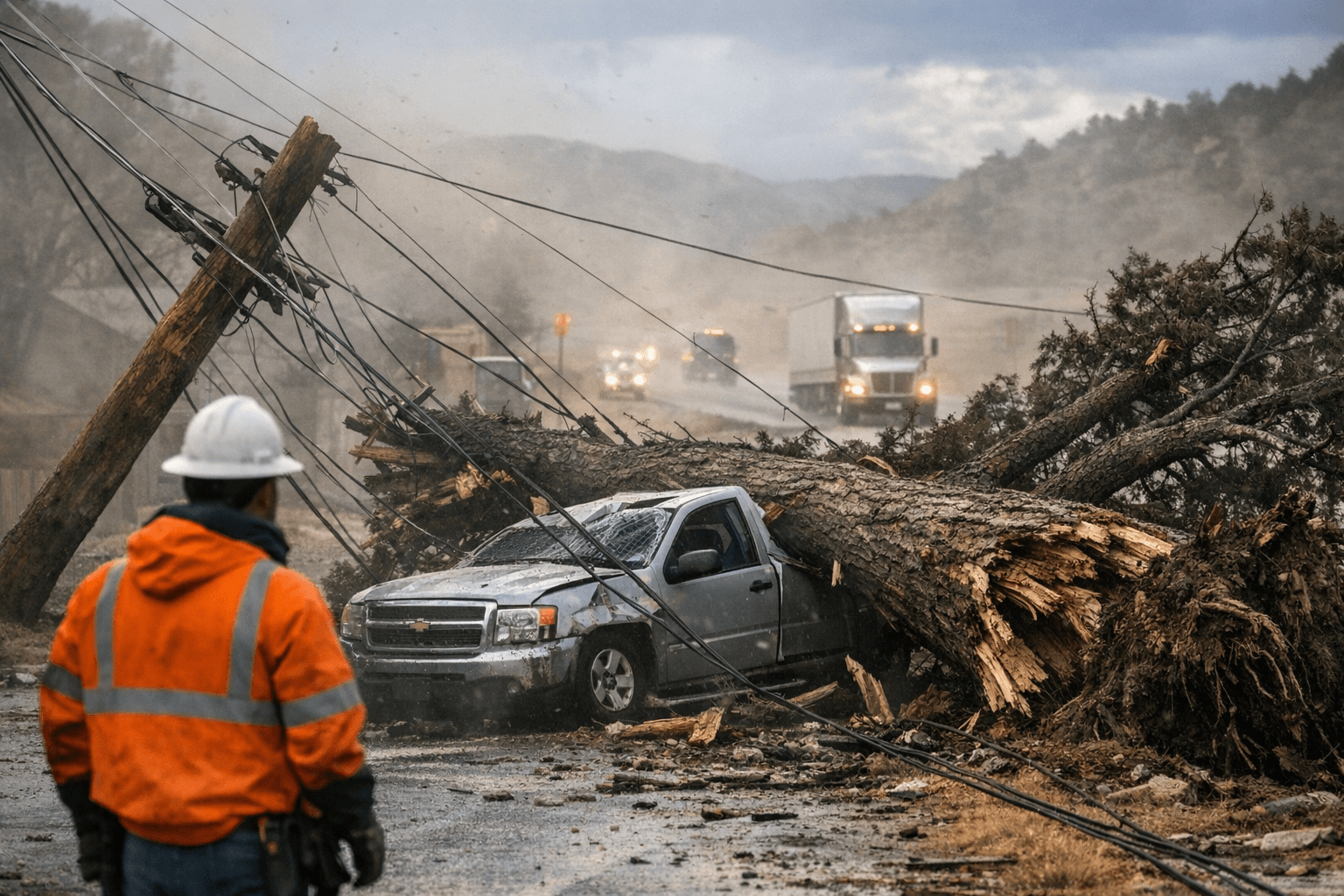
A brief but intense wind event swept across the Trinidad vicinity and western Las Animas County below 7,500 feet beginning the afternoon of December 16 and continuing into the early morning of December 18 for some zones. West winds of 20 to 30 miles per hour produced gusts as high as 60 miles per hour, strong enough to blow down trees and power lines and to create difficult travel conditions for high profile vehicles along the Interstate 25 corridor.
Local emergency crews responded to multiple reports of fallen branches and outages. Widespread power interruptions were possible and occurred in pockets of the county, leaving households without heating and complicating medical care for people who depend on electrically powered equipment. Rural residents and those with limited transportation faced longer waits for utility repair crews because of the county scale and the number of affected areas.
The same strong wind pattern contributed to very elevated fire weather concerns that culminated in a Red Flag Warning for parts of southern and Front Range Colorado later in the week. That linkage underscores how a single weather episode can strain both immediate emergency services and fire prevention resources, especially during the dry winter period when fuels remain receptive to ignition.
Public health implications were immediate for vulnerable populations. Loss of power threatens refrigeration for medications, access to oxygen and other life sustaining devices, and the ability to maintain safe indoor temperatures. Social equity concerns were evident as low income households and residents in outlying areas experienced disproportionate disruption, and small local providers struggled to offer warm spaces or backup power.
Residents were advised at the time to secure outdoor items, avoid unnecessary travel in high profile vehicles, and prepare for power interruptions. Moving forward, county leaders and utility partners face policy decisions about vegetation management, grid resilience, and emergency shelter capacity. Strengthening communications and prioritizing support for medically vulnerable and rural residents can reduce harm when future strong wind events occur.
Sources:
Know something we missed? Have a correction or additional information?
Submit a Tip