Supreme Court to Hear Challenge to Order Restricting Birthright Citizenship
The Supreme Court on December 6 agreed to hear an appeal of President Trump’s Executive Order 14160, which seeks to end automatic U.S. citizenship for most children born to parents here illegally or temporarily. The forthcoming decision will shape constitutional doctrine under the 14th Amendment and carry wide ranging implications for immigration policy, labor markets, and long term demographic trends.
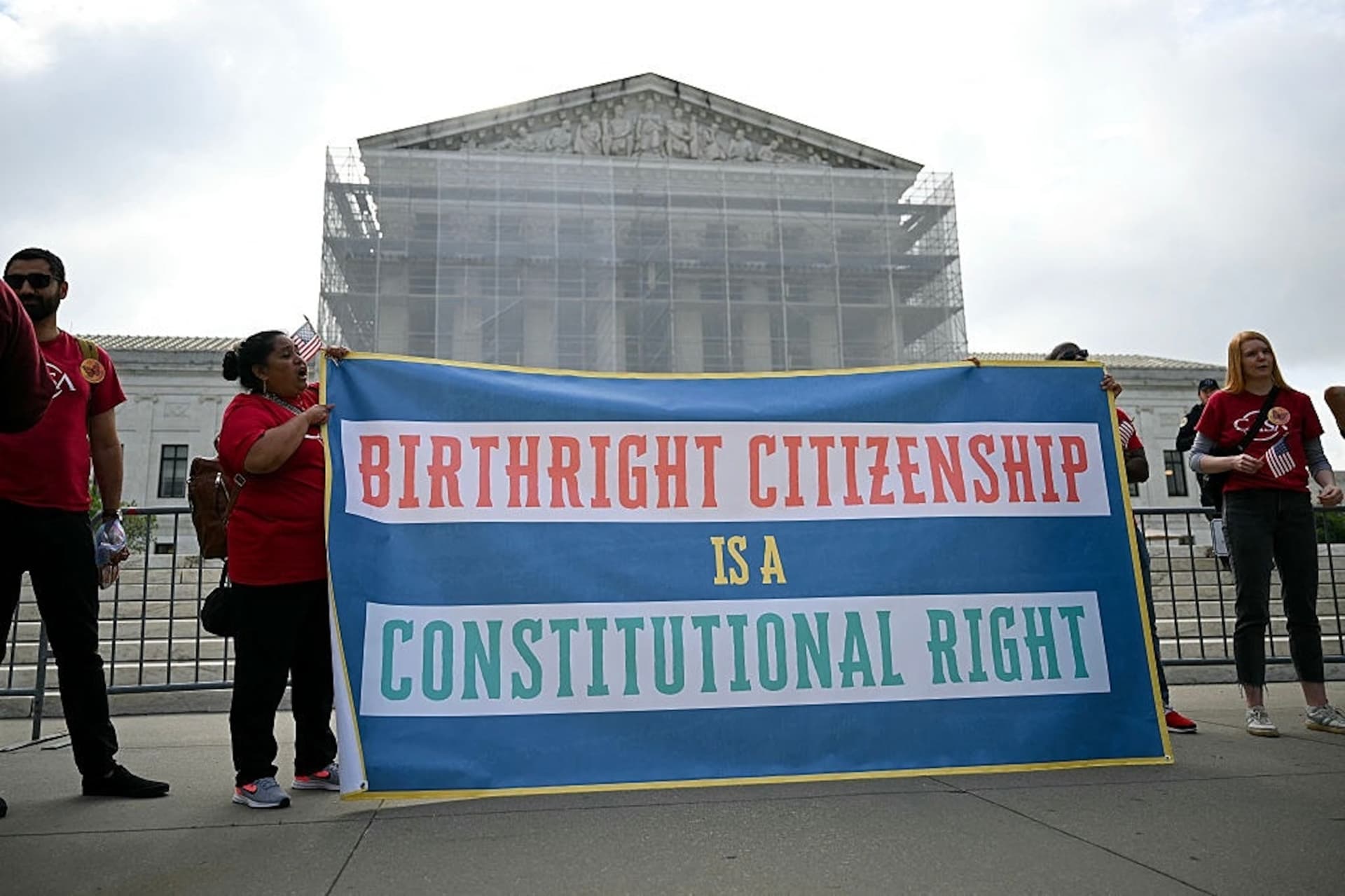
The Supreme Court moved into the center of a constitutional and political battle on December 6 by agreeing to take up an appeal of an executive order that would curtail birthright citizenship for most children born in the United States to parents who are in the country illegally or on temporary visas. The order, known as Executive Order 14160, was blocked by lower courts and has not taken effect while injunctions proceed. The justices said they will set briefing and argument dates and could issue a definitive ruling by mid 2026.
At stake is the Citizenship Clause of the 14th Amendment, which states that all persons born or naturalized in the United States and subject to its jurisdiction are citizens. That clause has long underpinned the conventional understanding that birth on U.S. soil confers citizenship, a view reinforced by the Supreme Court in United States v. Wong Kim Ark more than a century ago. Legal scholars expect the arguments to test competing textual and historical interpretations of the clause and to consider the scope of presidential authority over immigration and nationality.
The case is poised to have broad policy consequences. Roughly 3.6 million births occur in the United States each year. While estimates vary, experts say that tens of thousands to a few hundred thousand births annually could be implicated if birthright citizenship were narrowed, a shift that would ripple through demographic and fiscal calculations over decades. The U.S. foreign born population comprises about 14 percent of the total, and children born to immigrant parents contribute to future labor force growth at a time when many economists are warning of an aging population and slowing workforce participation.
Economically, the stakes are material for sectors that rely heavily on immigrant labor, including agriculture, construction, and hospitality. Employers and investors make long term decisions about capital and workforce based on expectations of labor supply. Legal uncertainty about the citizenship status of children born in the United States could complicate those expectations, raising risks for industries that depend on a steady pipeline of workers and for localities that budget for education and health services.
The fiscal implications are complex. Citizenship confers eligibility for social insurances and a clear legal status that facilitates employment and tax compliance. A change in the effective supply of future citizens could alter long term revenue and spending trajectories for Social Security and Medicare, while states and school districts would continue to face obligations under existing case law to educate children regardless of immigration status.
Politically, the case is likely to inflame debate ahead of the 2026 election calendar. A Supreme Court ruling upholding the order would mark a dramatic expansion of executive power over nationality and likely prompt legislative and administrative responses. A decision striking it down would reaffirm current interpretations of the 14th Amendment and constrain future executive initiatives on citizenship.
The court’s timetable and ultimate ruling will be closely watched by policymakers, businesses, and immigrant communities. Whatever the outcome, the decision will set a precedent that shapes American nationality policy and demographic dynamics for generations.