Tiered Schedule Reshapes Big Island Girls Basketball Competition
Hilo and Kamehameha Hawaii met Jan. 5 under a newly adopted three-tier scheduling format designed by Big Island athletic directors to address participation and competitive balance. Coaches say the change may alter regular-season records and seeding as playoffs return to two divisions, with implications for player development and community support across the island.

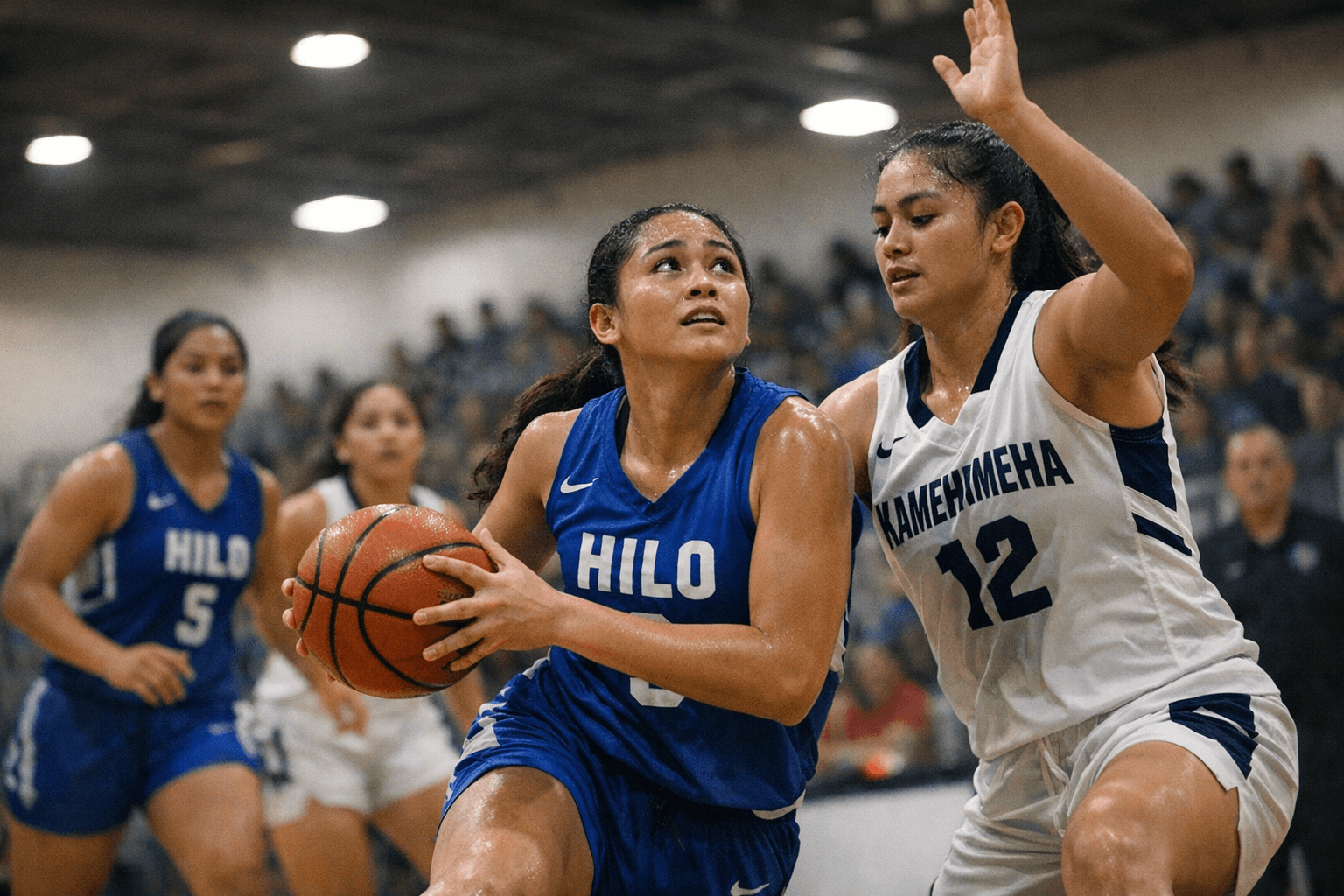
Big Island high school girls basketball moved into an experimental phase Jan. 5 when Hilo hosted Kamehameha Hawaii under a three-tier schedule approved by island athletic directors. The system was adopted to respond to declining participation and to create more evenly matched regular-season play, but coaches and administrators are watching closely to see how it translates into postseason outcomes once playoffs revert to two divisions.
The matchup highlighted both the promise and the uncertainty around the new approach. Hilo entered the contest 6-1 in league play, its only league loss coming against Waiākea, and used inter-island competition to sharpen younger players who are joining varsity programs later than in past years. Kamehameha Hawaii and other programs have pushed for scheduling that balances competitive equity while preserving opportunities for teams to face strong opponents outside the island.
Kamehameha head coach Donald Yamada expressed cautious optimism about the tiered system while noting uncertainty over how league results will interact with two-division postseason placement. Hilo head coach Fred Collins and other coaches pointed to a longer-term trend of declining youth participation on Hawaiʻi Island, which has shifted player development timelines so many prospects do not begin varsity play until their sophomore or junior seasons. That delayed entry elevates the developmental value of inter-island and Oʻahu matchups, coaches say, as those games expose players to higher levels of competition earlier in their high school careers.
The Jan. 5 game drew broader attention when the matchup was televised by Hawaii News Now, with coverage beginning at 7 p.m. on KFVE and available via the station’s streaming options. That exposure underscores local interest in how the island’s high school programs adapt in real time to participation shifts and scheduling changes.
For Big Island communities, the calendar adjustment carries practical implications. Teams could see improved regular-season records against comparable opponents, but mismatches between tiered regular-season play and two-division playoffs may complicate seeding, travel planning, and expectations for postseason success. Athletic directors and coaches have signaled they will monitor outcomes across the season to measure whether the format meets its goals of competitive balance and sustainable participation.
As the season progresses, attendance, player development trajectories, and postseason placements will offer tangible metrics for evaluating the three-tier experiment. Local stakeholders from parents to school leaders will be watching how the policy change affects opportunities for student-athletes and the island’s competitive standing in statewide play.
Sources:
Know something we missed? Have a correction or additional information?
Submit a Tip