Train-Linked Brush Fire Near Louviers Raises Local Wildfire Concerns
Investigators determined the brush fire near U.S. 85 in Louviers on January 6 was likely started by activity associated with a passing train, with video evidence and ignition indicators supporting that finding. The fire was substantially contained with no injuries or structure damage, but the incident highlights local wildfire vulnerabilities and raises policy and cost questions for Douglas County residents.
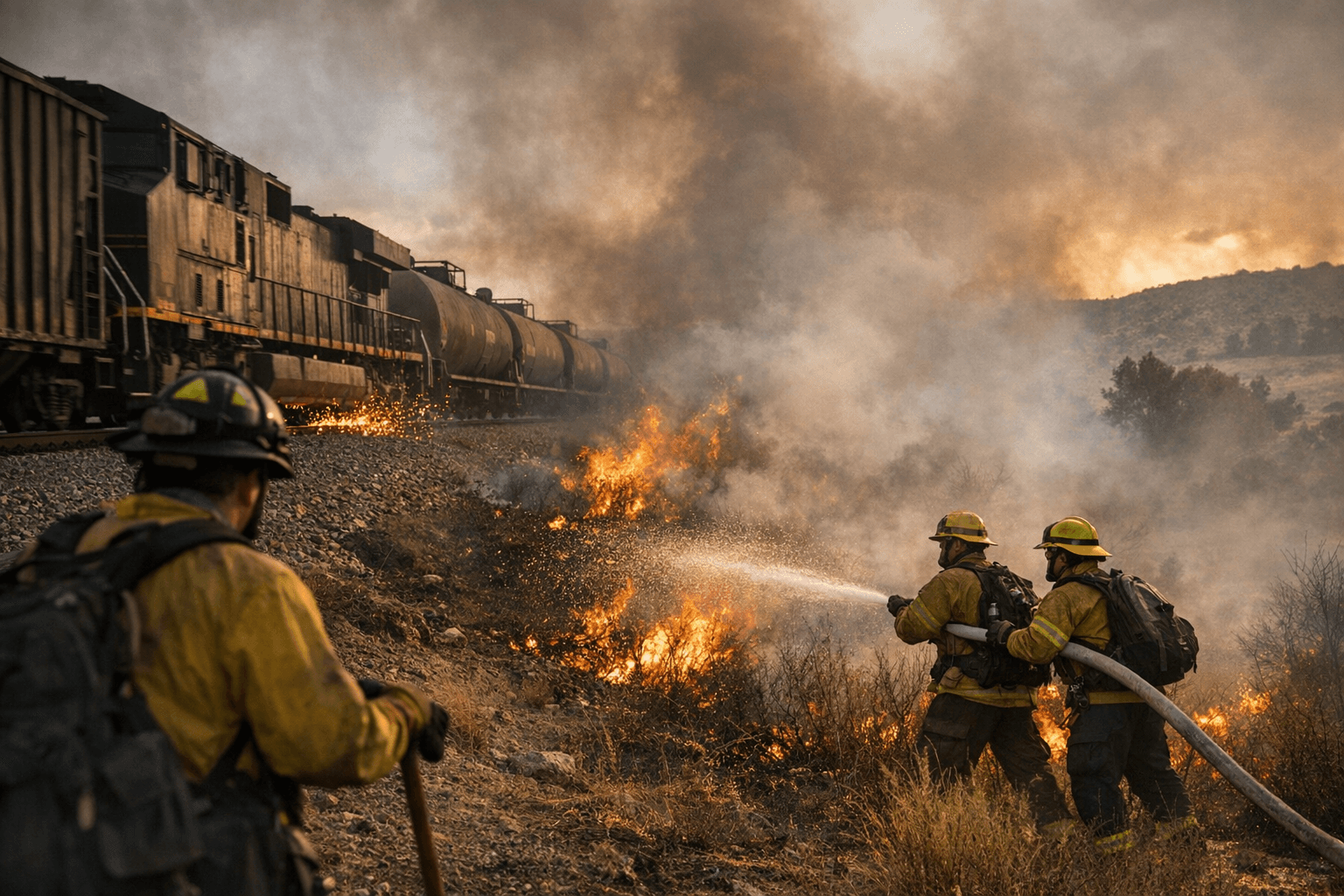
On January 6, a brush fire along U.S. 85 near Louviers, labeled the Airport Fire, was investigated by local authorities who found evidence that the blaze was likely ignited by activity associated with a passing train. The Douglas County sheriff’s office reported investigators identified ignition indicators and captured video evidence consistent with the train’s passage; no other ignition sources were found. South Metro Fire Rescue’s Fire Marshal’s Office participated in the probe. As of the latest status, the fire was substantially contained and there were no reported injuries or damage to structures.
The immediate consequence for residents was limited physical harm, but the incident underscores broader exposure for communities adjacent to rail corridors. Rail-caused ignitions can occur during dry conditions and create costly, fast-moving fires that strain emergency services. For Douglas County, which has neighborhoods and infrastructure near freight and passenger lines, even a single brush fire risks escalating under the right weather and fuel conditions.
Beyond safety, there are economic implications. Wildfire responses draw on county firefighting resources and can increase operating costs for fire districts, potentially pressuring local budgets and taxpayer funding for overtime, equipment replacement, and mutual-aid agreements. Insurance markets increasingly price wildfire risk into premiums and availability; while this event caused no structural loss, an uptick in train-related starts could influence underwriting decisions for properties near rights-of-way. For rail operators and shippers, repeated incidents would present operational and reputational costs, along with potential liability exposure if investigations point to preventable causes.
Policy choices at the local and regional level can mitigate these risks. Investigators attributed ignition to train activity in this case, and common train-linked mechanisms include hot bearings, sparks from wheels or braking systems, and embers from equipment; these paths point to preventive steps such as targeted rail inspections, investment in wheel and bearing technology, and vegetation management along track corridors. Coordinated planning between county officials, fire districts, and rail companies on inspection protocols, clearance standards, and rapid response routing can reduce ignition probability and limit impacts when fires occur.
For residents, the key takeaways are practical: maintain defensible space around structures near rail lines, report smoke or sparks observed along tracks to authorities immediately, and stay aware of evacuation guidance during high-risk weather. County leaders should review emergency resource readiness and consider whether additional funding or regulatory engagement with rail operators is warranted to lower future ignition risk and the fiscal burden of suppression efforts.
Sources:
Know something we missed? Have a correction or additional information?
Submit a Tip