Traverse City Seeks New Uses for Two Historic Downtown Buildings
On Jan. 7, 2026, Traverse City officials approved a plan to solicit proposals for adaptive reuse of the former Carnegie Building and the Bijou by the Bay, asking businesses and organizations to submit ideas that keep the properties active and accessible. The move aims to preserve the structures' historic character while bringing new community services and foot traffic to downtown, instead of allowing prolonged vacancy.
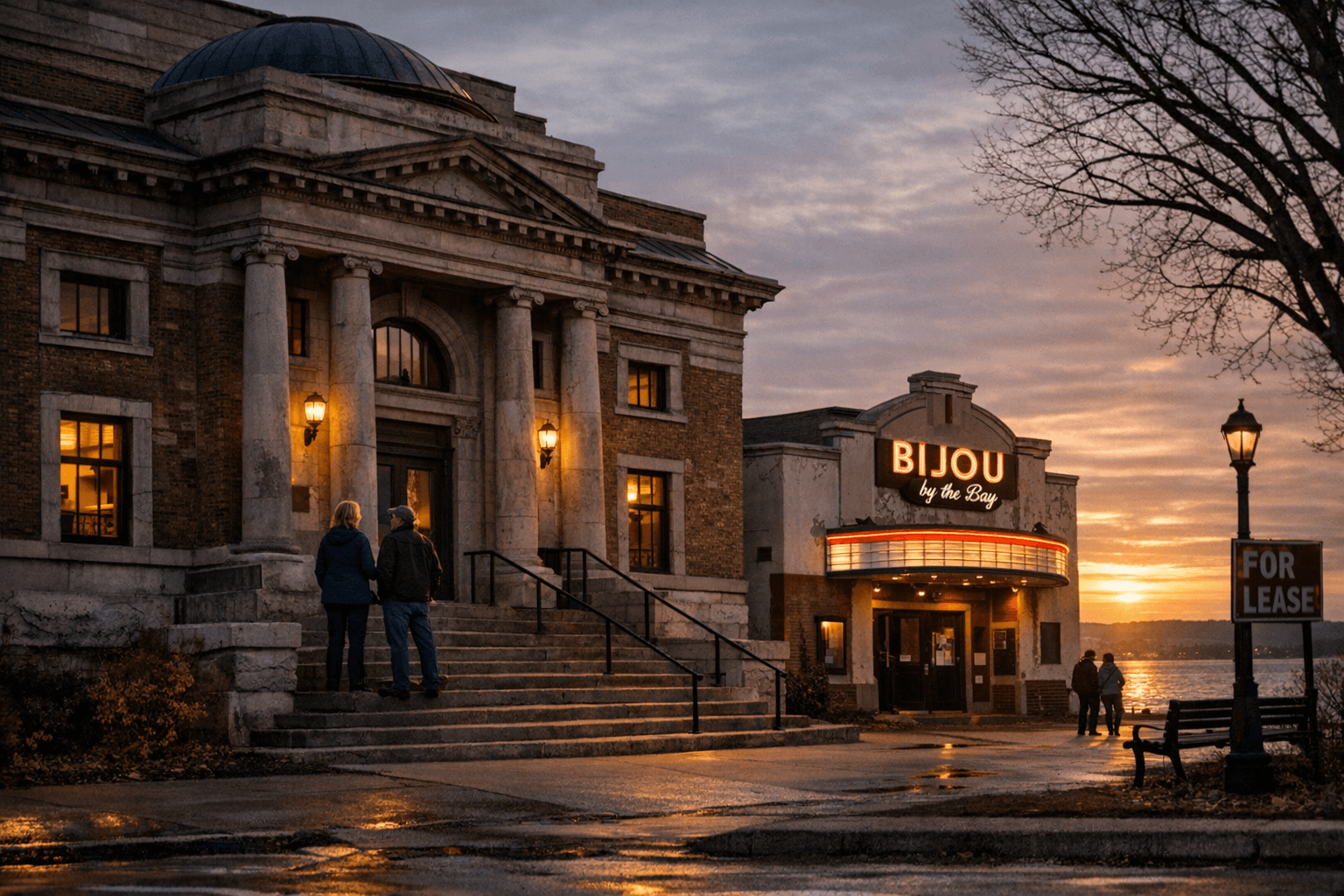
Traverse City commissioners and staff voted on Jan. 7, 2026 to open a formal solicitation for proposals to repurpose two landmark downtown properties: the former Carnegie Building and the Bijou by the Bay. The city is inviting businesses and organizations to propose uses that preserve the historic fabric of the sites while introducing community-oriented services and increased activity. Proposals are due in early February 2026.
City leaders described the effort as a stewardship-driven approach to ensure both buildings remain maintained and publicly accessible rather than falling into long-term vacancy. The solicitation emphasizes maintaining public access to the spaces and selecting stewards who will be accountable for ongoing upkeep and programming. The decision reflects a priority for adaptive reuse that balances historic preservation with contemporary community needs.
The two properties occupy prominent roles in downtown life. By keeping them active, city officials hope to bolster downtown vitality, support local economic activity, and protect architectural heritage that contributes to community identity. For residents, that could mean more places to gather, expanded cultural or social services, and a downtown that feels safer and more animated throughout the week.
The timeline set by the city puts initial proposals in within a matter of weeks, with early-February submissions allowing a rapid next phase of review and selection. Applicants are expected to propose specific uses and stewardship plans that demonstrate how historic features will be preserved while integrating functional adaptations. The city has framed this process as an opportunity for local nonprofits, small businesses, arts organizations, and other community-minded entities to play a role in shaping downtown's future.
This approach mirrors a broader trend in urban planning where municipalities convert historic libraries, theaters, and civic buildings into multiuse community hubs that honor the past while meeting present needs. For a county that attracts seasonal visitors and values its cultural assets, the outcome will affect not just downtown aesthetics but also year-round economic resilience and community cohesion.
Residents and organizations considering proposals should be prepared to outline how their plans will preserve the buildings' character, ensure public access, and provide reliable stewardship. With the solicitation now open and deadlines approaching, the city has signaled a clear preference for proposals that keep these downtown landmarks in active, inclusive use rather than letting them languish.
Sources:
Know something we missed? Have a correction or additional information?
Submit a Tip