Tribal Business Unit Faces Outcry Over Nearly $30 Million ICE Contract
The Prairie Band Potawatomi Nation drew sharp criticism after a tribal economic unit was awarded a nearly $30 million federal contract to design early planning documents for U.S. Immigration and Customs Enforcement detention centers nationwide. The escalation has prompted internal management changes, legal review and renewed debate over tribal contracting, sovereignty and accountability in federal procurement.

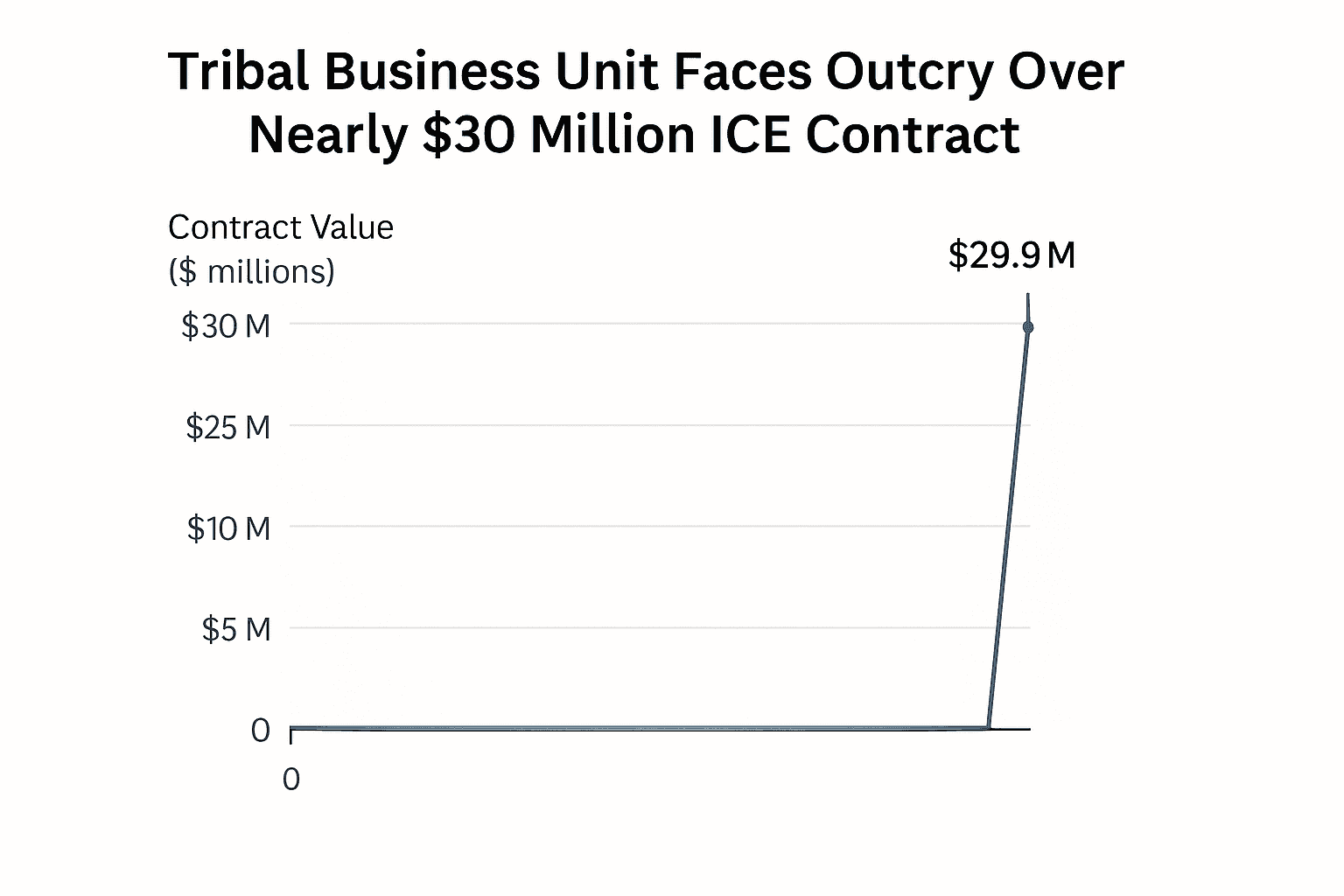
A federal contract valued at nearly $30 million and tied to early planning and design for Immigration and Customs Enforcement detention centers has prompted immediate and intense backlash against the Prairie Band Potawatomi Nation. Reported accounts place the award at $29.9 million and say the agreement was signed in October. The work was described publicly as nationwide in scope, and community leaders and tribal citizens criticized the arrangement as inconsistent with the tribe's history and values.
The contract is tied to the tribe's economic development entities, including Prairie Band LLC and Prairie Band Construction Inc. Authorities and registration records show a Florida branch of Prairie Band Construction Inc. was registered in September, and a separate company, KPB Services, was registered in April by Ernest Woodward. Woodward is identified as an executive vice president of Prairie Band LLC and as chief operating officer of the Florida branch of Prairie Band Construction Inc. Reports also say Woodward advised the tribe in 2017 on the acquisition of a government contractor that supplies federal buildings and the military with furnishings and equipment.
After the contract became public, the tribe moved to remove senior management of its economic development corporation. On or by Dec. 9 the Prairie Band Potawatomi Nation and Prairie Band LLC issued a public statement about the nearly $30 million agreement. Tribal Chairman Joseph "Zeke" Rupnick addressed members in a video message, promising "full transparency," calling the matter an "evolving situation," and saying the tribe is consulting legal counsel about ways to end the agreement.

The decision reignited conversations about historical trauma and modern economic strategy. Critics from within the tribe and other Native American leaders framed the contract as profiting from deportation and forced removal, drawing a direct line to the tribe's ancestor removal from the Great Lakes region in the 1830s and subsequent relocation to land north of Topeka. That history has been central to the community response and amplified calls for accountability.
The controversy also spotlights a broader pattern of tribal and Alaska Native corporate participation in federal immigration and homeland security contracting. Examples cited in public discussion include involvement by NANA Regional Corporation in immigration enforcement operations and subsidiaries of Bering Straits Native Corporation and Ahtna Inc. operating detention facilities in other states. Doyon Ltd. is noted for previously holding Homeland Security contracts before exiting that line of work about a decade ago. Those precedents have helped shape expectations and mistrust among tribal members when sovereign governments engage in federal procurement tied to enforcement functions.
The episode raises questions about governance at the intersection of tribal sovereignty and federal procurement policy. For tribal governments, economic development corporations provide revenue and employment but can create legal and reputational exposure when contracts clash with community values. For federal agencies, the award invites scrutiny of how contracts are structured and whether procurement practices adequately consider political and social consequences.
As the Prairie Band Potawatomi Nation explores legal options to end the agreement, the controversy is likely to influence internal decision making and civic engagement. Members have demanded greater oversight and transparency, and the dispute could reshape leadership debates and voter mobilization in upcoming tribal governance cycles. Federal officials have not announced a response, and registration months for the corporate entities were reported without consistent year attribution in available accounts. The developing situation will test how tribal governments balance economic opportunity with historical memory and member consent.
Sources:
Know something we missed? Have a correction or additional information?
Submit a Tip
%2Fi.s3.glbimg.com%2Fv1%2FAUTH_da025474c0c44edd99332dddb09cabe8%2Finternal_photos%2Fbs%2F2025%2FK%2Fk%2FyrBrW1ScatAE4lj5somA%2F54719297810-53f7e85105-c-1-.jpg&w=1920&q=75)
