Trump Plans Executive Order to Block State AI Regulations
President Donald Trump says he will sign an executive order this week to prevent states from enacting their own artificial intelligence regulations, arguing that a single national standard is necessary to preserve American leadership in the technology. The move raises immediate legal and political questions, and could reshape how the United States governs AI across innovation, privacy, and competition.

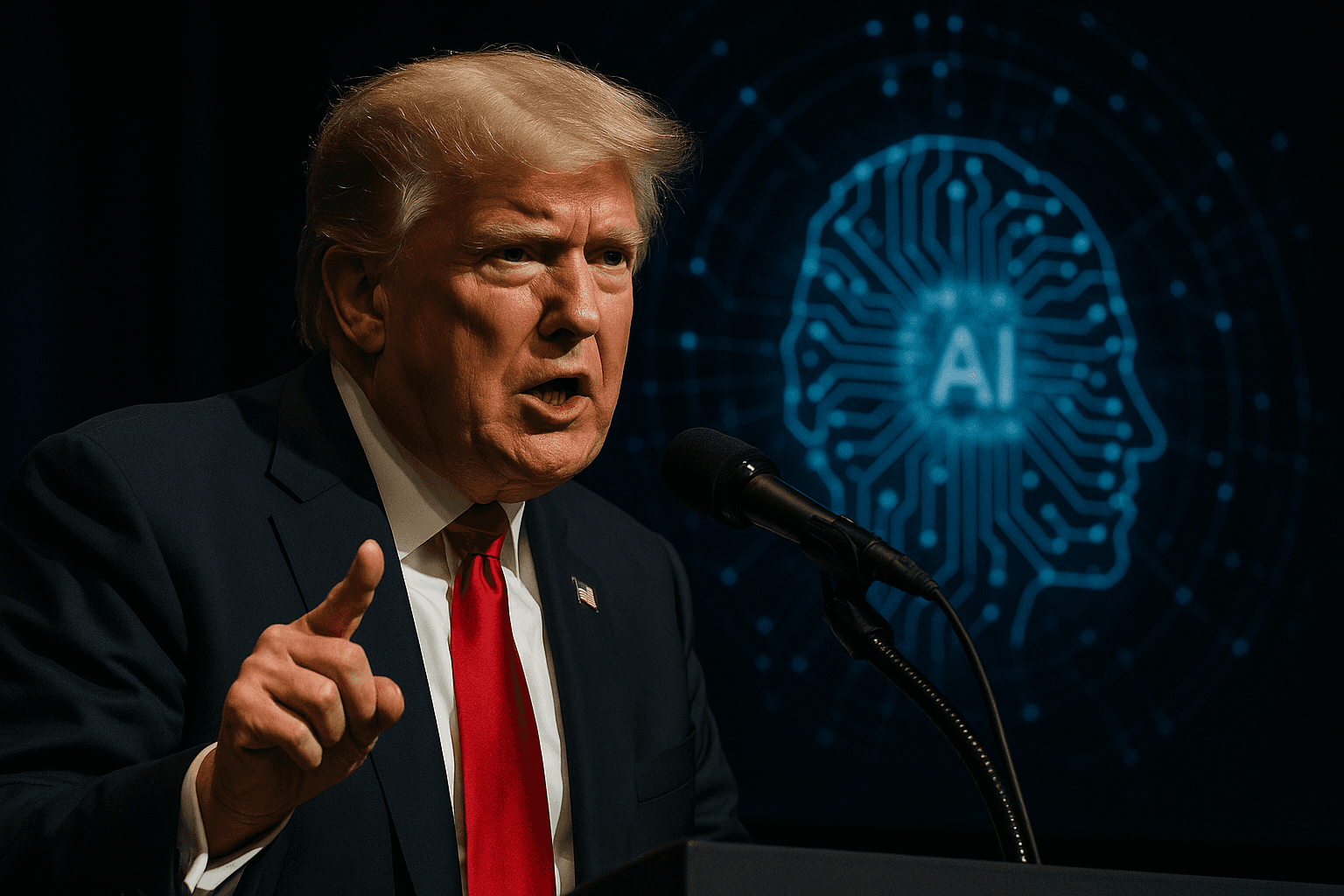
President Donald Trump announced Monday on his Truth Social platform that he will sign an executive order intended to prevent states from adopting divergent rules for artificial intelligence. He wrote, “There must be only One Rulebook if we are going to continue to lead in AI,” and said he would issue a “ONE RULE Executive Order” this week.
According to reporting on a draft seen by The Hill, the proposed order would establish a federal task force empowered to challenge state AI laws and could make certain federal broadband funding contingent on states’ adherence to federal AI standards. The draft is described as being associated with key White House AI advisers and industry figures who favor a uniform national framework.
Supporters in Silicon Valley and some industry leaders have welcomed the idea of a single federal approach as a way to reduce regulatory fragmentation that they say could impede product development and cross state commerce. Backers argue that a consistent rulebook would simplify compliance for companies operating nationally and help concentrate resources on ensuring that American firms remain competitive with foreign rivals.
Critics responded quickly with warnings about political fallout and legal peril. Opponents say the order risks provoking partisan backlash and alienating segments of Mr. Trump’s political base that remain skeptical of close ties between government and large technology companies. Legal analysts also caution that attempts to preempt state laws through executive action face significant constitutional and statutory hurdles. Congress has twice declined to grant federal preemption of state AI laws, making executive preemption an untested and contested path.
The announcement arrives as states have increasingly moved to fill what they view as a regulatory void. Several states have already enacted or proposed legislation focused on AI transparency, consumer protections, and government use of automated decision systems. Those measures reflect a broader international trend, as lawmakers and regulators from Europe to Asia press forward with rules intended to manage AI’s economic, social, and security implications.
Legal scholars say the central questions will include whether the president can use executive authority to override state policymaking and whether conditioning federal funds on state regulatory compliance would survive judicial scrutiny. Those issues could lead to immediate court challenges if the order is finalized and applied broadly.
Beyond legal considerations, observers note the policy trade offs are stark. A national standard could accelerate deployment of AI technologies by reducing compliance costs, but it could also limit states’ ability to experiment with tighter safeguards in areas such as privacy, algorithmic fairness, and consumer protection. That tension will shape debates over the coming weeks as the administration seeks to translate a mandate for uniformity into executable policy.
The White House has not released a final text of the order. Administration officials and legislative allies will confront both the practical task of drafting enforceable measures and the political test of winning support in Congress and among a wary public.