Two Plano Men Receive Lengthy Federal Sentences for Meth Trafficking
Two Plano residents were sentenced on January 7, 2026 to long federal prison terms after pleading guilty in a methamphetamine trafficking conspiracy that federal prosecutors say involved more than 500 grams of meth. The case highlights coordinated federal enforcement in Collin County and raises policy questions about local public safety, mail security, and the balance between enforcement and community-based responses to drug demand.
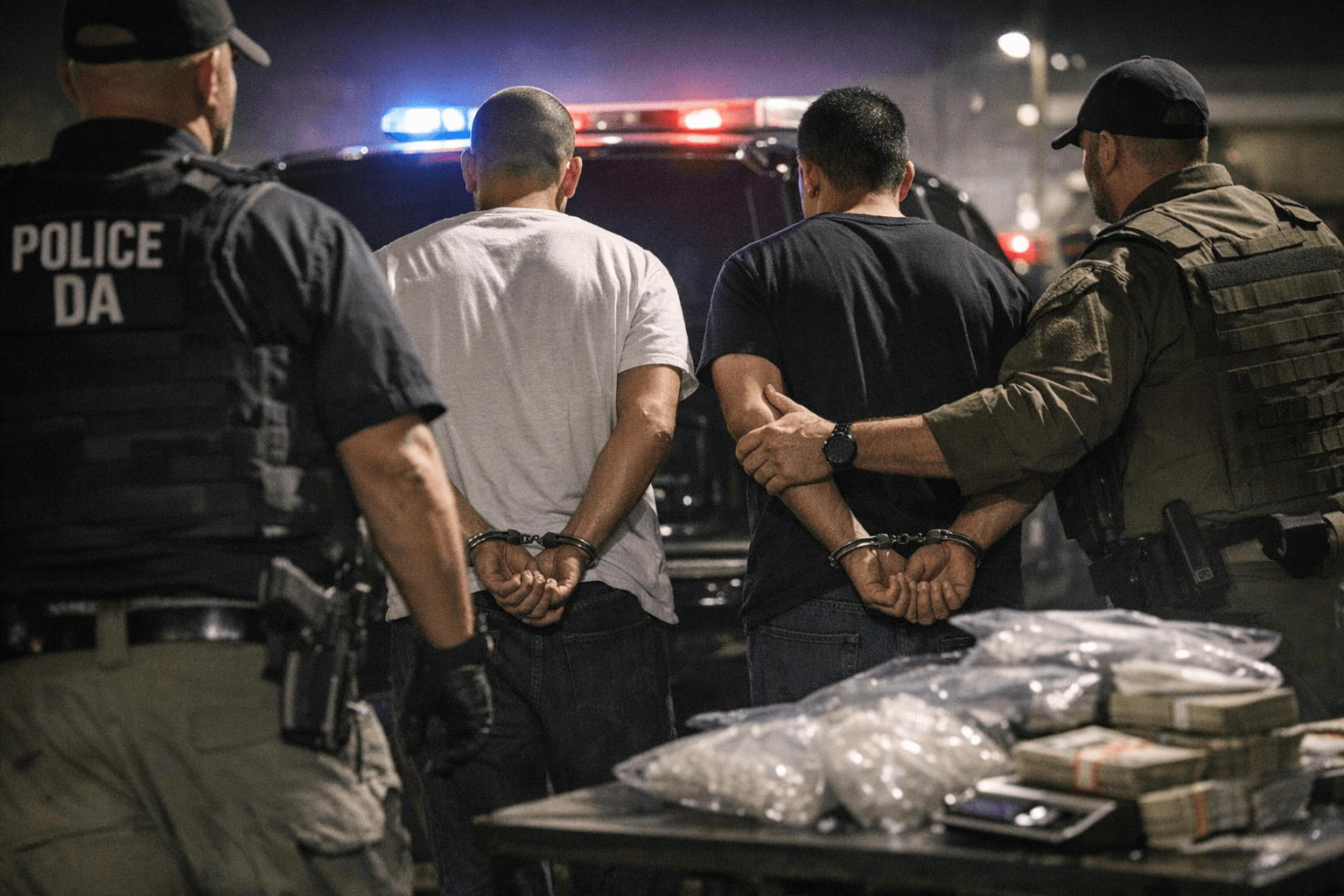
Two men from Plano were sentenced in federal court this week for their roles in a methamphetamine trafficking conspiracy that extended into the Eastern District of Texas. Brandon Michael Pitts, 30, pleaded guilty to conspiracy to possess with intent to manufacture and distribute more than 500 grams of methamphetamine and received a 216-month federal prison sentence from U.S. District Judge Sean D. Jordan on January 7, 2026. Matthew Craig McCutchen, 30, pleaded guilty to possession with intent to manufacture and distribute methamphetamine and was sentenced the same day to 162 months.
Prosecutors presented information in court that Pitts and McCutchen were part of a drug trafficking organization responsible for distributing more than 500 grams of methamphetamine. The investigation that led to the prosecutions involved the U.S. Postal Inspection Service, the U.S. Marshals Service, and the Drug Enforcement Administration. The case was prosecuted by Assistant U.S. Attorney Heather H. Rattan. U.S. Attorney Jay R. Combs announced the sentences and identified the matter as part of Operation Take Back America, a nationwide Department of Justice initiative targeting transnational criminal organizations and violent crime.
For Collin County residents, the case carries immediate and broader implications. The removal of alleged distributors from the community may reduce local supply and related street-level harms, but it does not address underlying demand or the broader networks that move drugs across jurisdictions. The involvement of the Postal Inspection Service signals that federal agents are tracking and intercepting drug shipments that use the mail system, a development that can affect how investigators, postal employees, and residents think about package security and suspicious activity.
Institutionally, the prosecution illustrates interagency coordination at the federal level and federal willingness to pursue long sentences under statutes tied to large-quantity drug distributions. That enforcement emphasis can shape local policy debates about public safety priorities, funding for law enforcement, and investments in treatment and prevention. Collin County officials, municipal leaders, and voters will confront choices about whether to prioritize expanded enforcement capacity, diversion and treatment programs, or hybrid strategies that combine both.
Civic engagement will matter as those choices are reviewed. Residents concerned about public safety, addiction treatment access, or criminal justice policy can raise those issues with county commissioners, the county sheriff, and state and federal legislators. Local elections and public meetings offer forums to press for transparency on enforcement outcomes and for measures aimed at reducing demand and supporting affected families.
Sources:
Know something we missed? Have a correction or additional information?
Submit a Tip