U.S. Allows Nvidia H200 Chip Shipments to China, Citing Controls
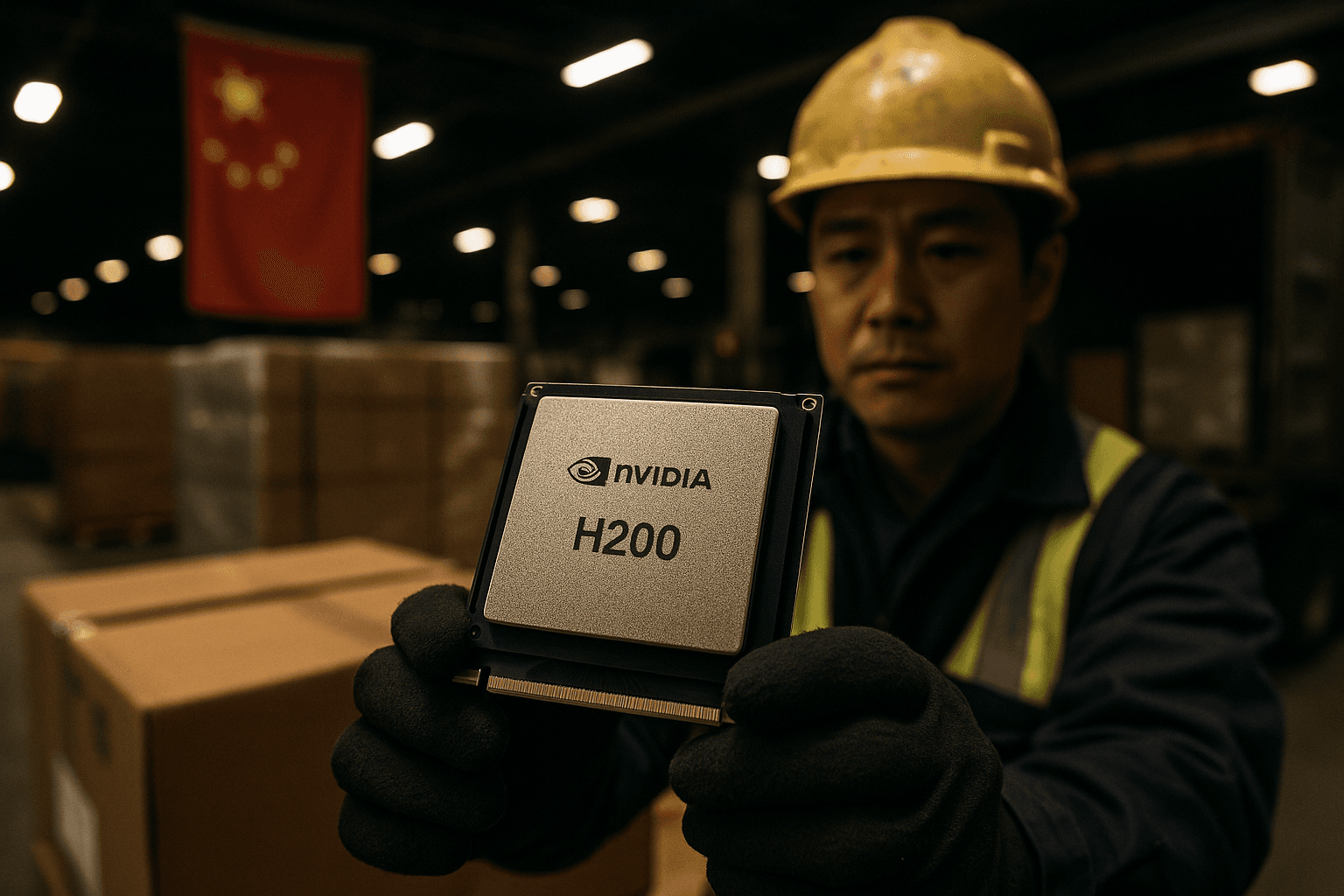
President Trump announced today that the United States will permit exports of Nvidia H200 artificial intelligence processors to approved commercial customers in China, under conditions meant to safeguard national security and impose a government fee reported at 25 percent. The narrow easing aims to balance commercial interests with security concerns while keeping the newest Blackwell class of chips off limits.

The White House declared a calibrated change in U.S. export policy on December 9, authorizing shipments of Nvidia H200 AI accelerators to vetted commercial buyers in China, subject to strict licensing and oversight. The move, described by administration officials as a compromise, comes as the Commerce Department finalizes terms reported by Reuters and seeks to preserve American technological leadership while limiting military risks.
Under the announced framework, exports will be allowed only to approved commercial customers and will carry a government fee reported at 25 percent intended to offset risks and fund monitoring and enforcement efforts. The administration will continue to block exports of the most advanced chips in Nvidia’s Blackwell family, preserving a hard line on the very highest performance hardware. The Commerce Department is expected to publish detailed licensing criteria soon, officials say.
The change underscores the tension between economic and strategic priorities. Nvidia and other U.S. chip makers have long pushed for clearer rules that allow trade while protecting sensitive capabilities. For China, access to H200 processors would bolster commercial AI development in industries from cloud computing to autonomous systems. For Washington, the question is whether these same components could accelerate aspects of China’s military modernization.
Lawmakers and analysts have raised sharp concerns about dual use risks. Some members of Congress have been pressing for tougher curbs, citing the potential for advanced AI processors to improve weapons systems, intelligence analysis, and autonomous platforms. Other legislators and industry leaders argue that overly broad restrictions would hurt U.S. companies and cede market share to non U.S. competitors.
Market reaction to the announcement was positive for Nvidia, whose shares moved higher on the news, reflecting investor hopes for expanded addressable markets in China. Nvidia stands to gain commercially if licenses are issued, though any uptick will depend on the final scope of approved customers and the pace of Treasury and Commerce enforcement.
China’s response is complicated by its own regulatory posture. Beijing’s technology regulators have scrutinized Nvidia products and cloud partnerships in recent years, and Chinese authorities could impose reciprocal checks or approval processes that limit immediate uptake. Beijing may also push domestically to accelerate alternative chip designs and manufacturing capacity as a hedge.
The decision comes amid ongoing export control politics in Washington. Competing legislative proposals in Congress aim to further restrict advanced chip sales to China, and lawmakers could seek to tighten rules if they judge the administration’s approach insufficient. Enforcement will require detailed licensing vetting, export monitoring, and co operation with allies to prevent circumvention.
Analysts say the administration’s approach reflects a pragmatic middle path, allowing some commercial exchanges while attempting to contain military risks. Implementation will test the ability of U.S. regulators to balance economic interests with national security in a technology race that shows no sign of slowing.