Whidbey Island Activities Guide Highlights Outdoor Recreation and Local Economy
A concise guide to Whidbey Island's top outdoor and cultural destinations maps activities across Oak Harbor, Coupeville, Langley and Freeland, helping residents and visitors plan seasonal outings. The guide spotlights parks, marine recreation, arts and agritourism that sustain local businesses and shape Island County's tourism economy.

Whidbey Island offers a compact mix of natural attractions and cultural amenities that drive visitor activity and support local businesses across Island County's four primary population centers: Oak Harbor, Coupeville, Langley and Freeland. For residents and arriving visitors, key destinations provide reliable options for day trips, family outings and event planning year round.
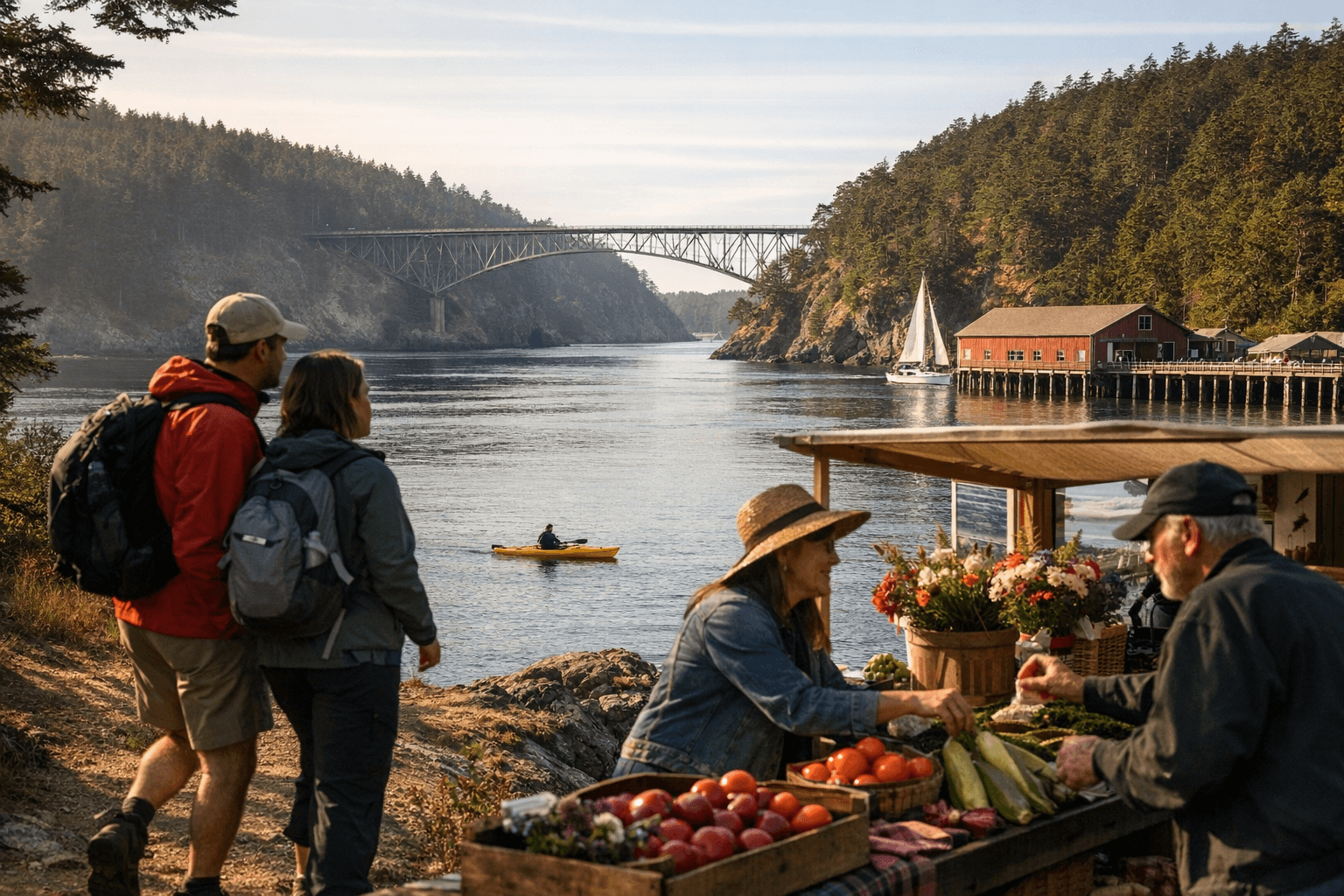
On North Whidbey, Deception Pass State Park commands attention with its iconic bridge views, tidepools, forest trails and beaches near Oak Harbor. Central island attractions around Coupeville include Ebey's Landing National Historical Reserve, where coastal bluff hikes deliver panoramic views of Puget Sound and the Olympic Mountains while protecting historic agricultural landscapes. Fort Casey State Park on the west shore adds a mix of history and shoreline access with Admiralty Head Lighthouse, bunkers and picnic areas that make it a frequent stop for visitors exploring the maritime past.
South Whidbey's state park near Freeland and Double Bluff Beach feature forest trails, old-growth trees and driftwood-lined shores, popular for family hikes and beachcombing. Launch points around Langley, Coupeville and Penn Cove support kayaking, paddleboarding and wildlife viewing, with seasonal whale-watching and marine recreation offered during peak months. Langley's village atmosphere is anchored by galleries and cafés, while Coupeville's historic waterfront and Penn Cove mussels remain a draw for food-focused tourism. Greenbank and surrounding farms provide agritourism experiences, wineries and tasting rooms that diversify revenue for rural landowners and small producers.
The local economic implications are tangible. Island County, home to roughly 87,000 residents, relies on a steady flow of day trippers and longer-stay visitors to sustain restaurants, galleries, outfitters and lodging. Outdoor recreation and agritourism spread spending across the island, helping small businesses bridge seasonal fluctuations. Continued interest in outdoor activities and local food experiences supports modest job growth in hospitality and services and encourages investments in trail maintenance, park facilities and marine access points.
Practical value for planning is immediate: residents organizing festivals, families seeking seasonal activities and newcomers learning the island can use the mapped destinations as a framework for outings. Timing matters for certain experiences—tidepool exploration, shellfish seasons and whale migration windows—but the island's mix of parks, waterfronts and village centers provides options throughout the year. As demand for outdoor and local-food experiences continues, these attractions will remain central to Island County's community life and economic resilience.
Sources:
Know something we missed? Have a correction or additional information?
Submit a Tip