Winchester Council Discusses Infrastructure, Finance and Animal Control Measures
Winchester City Council met on December 3 at City Hall to review a slate of municipal items that could affect public safety, local development and taxpayer obligations. The session examined proposals ranging from winter equipment procurement and water system mapping to tax increment financing requests and animal control licensing, issues that will shape services and budgets for residents.
Winchester City Council met in regular session at 7 p.m. on December 3 at City Hall, 5 E. Market Street, and took up a range of agenda items with potential implications for service delivery and municipal finances. Council members heard presentations and discussed options that city officials say will inform near term decisions on equipment procurement, mapping technology and economic incentives.
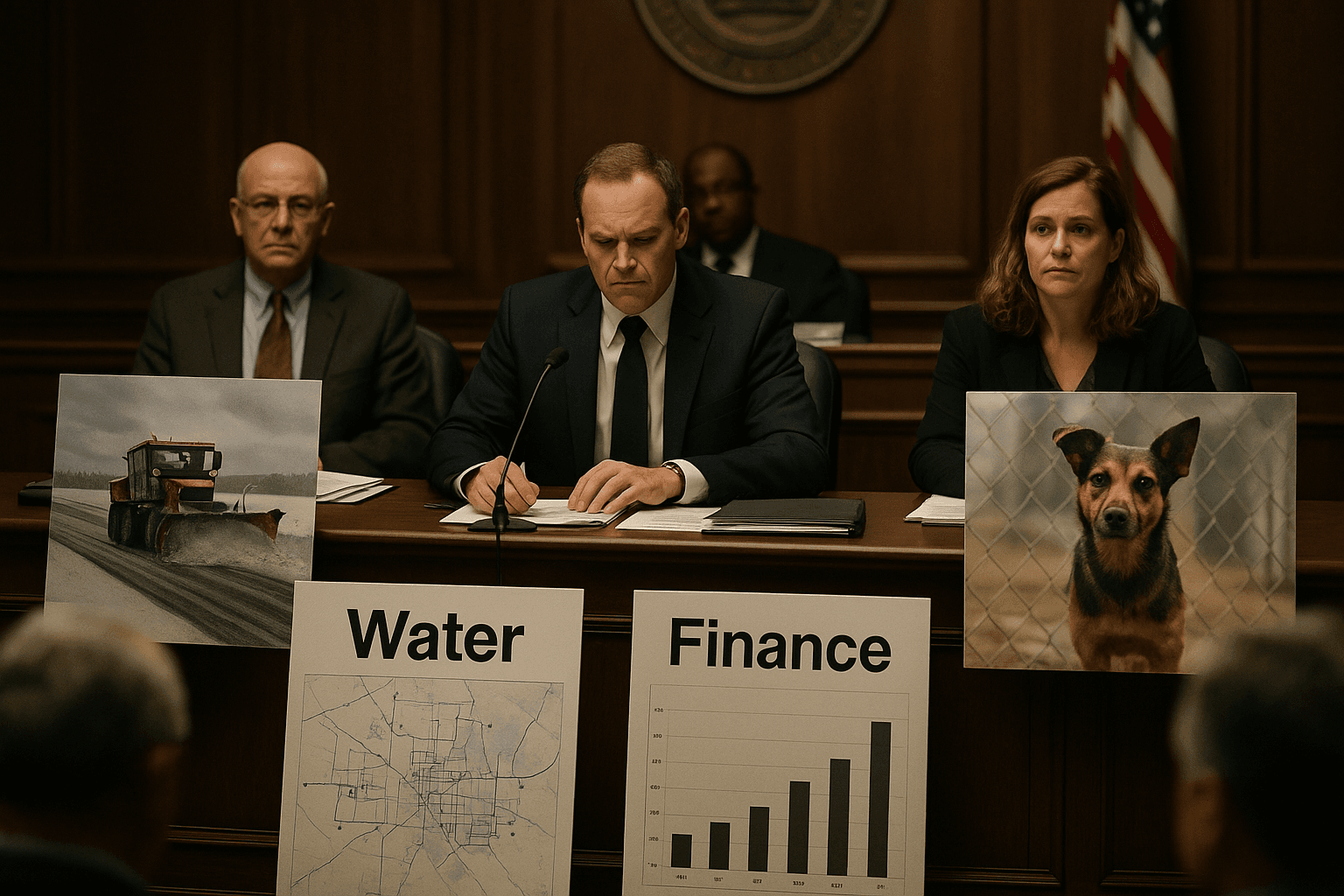
One substantive discussion focused on winter road maintenance. John Simmons, superintendent of Public Works, briefed the council about the prospect of seeking bids for an additional salt spreader. Procuring additional equipment could improve the citys ability to keep streets clear during severe weather, but it will also factor into the Public Works budget and vehicle replacement planning.
Simmons also raised the idea of charging a permit fee for road openings or replaced sewer taps. Such a fee would shift some of the cost of road repairs and sewer work to contractors and property owners undertaking excavation, and could create a new revenue stream for maintenance. Council members discussed the administrative and fairness implications of adopting a permit fee, and the item is likely to return for formal consideration if staff produce cost estimates and ordinance language.
The council weighed a proposal to move the water system from the current GIS platform to Diamond Mapping. Officials framed the change as a potential upgrade to mapping accuracy and asset management. Improved mapping can support faster leak detection, better billing accuracy and more efficient capital planning, but it carries upfront costs and transition requirements that the council must evaluate.
Economic development conversations included a Tax Increment Financing application presented by Debra Mustard, and a separate TIF application tied to a proposed new convenience store. Council discussion centered on the balance between encouraging local investment and preserving the citys tax base, as well as potential effects on nearby businesses and traffic.
Additional items on the agenda included review of an animal control facility license and consideration of the annual tax levy. Licensing for the animal control facility bears on animal welfare standards and municipal liability, while the tax levy will determine revenue available for public services in the coming year. Council members indicated these items would be studied further, with staff to provide detailed proposals and cost analyses before any formal votes.