Winter storm in early December disrupted Perry County travel, health access
A winter weather advisory on December 4 warned of snow and a light glaze of ice across Perry County, which arrived late that night and into the next morning, creating slippery roads and slowing travel. Residents experienced disruptions to commutes, access to medical appointments, and routine services, highlighting ongoing challenges for rural communities during severe weather.

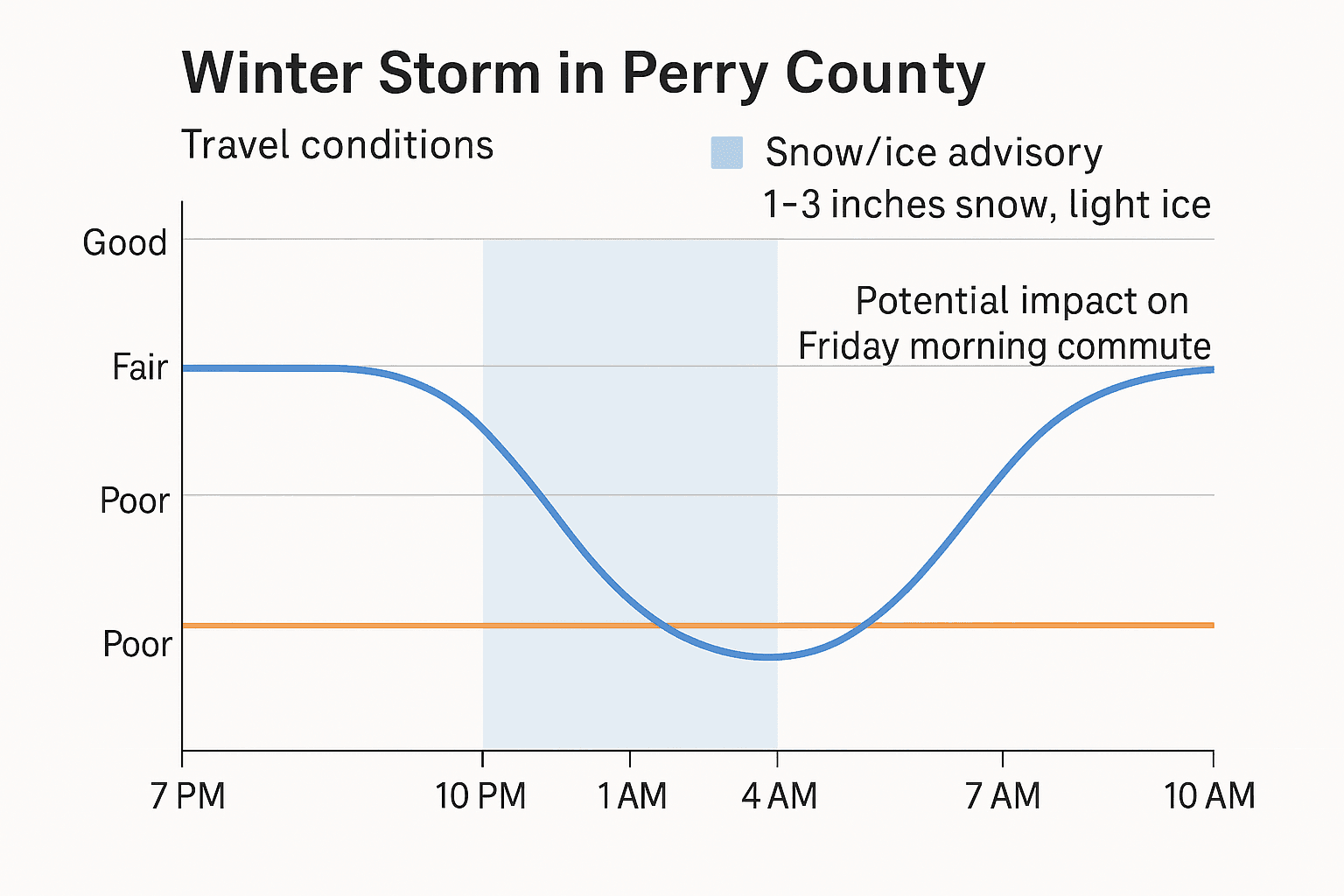
Perry County faced a brief but impactful winter event the evening of December 4 into the morning of December 5, when snow and freezing precipitation created hazardous conditions across the region. The advisory in effect covered the county from about 7 PM that evening through 10 AM the next morning, and officials urged caution as the storm moved through populated and outlying areas.
The advisory warned, "Snow possibly mixed with rain or freezing rain late tonight and early on Friday." It added, "Total snow accumulations 1 to 3 inches and a light glaze of ice accumulations possible." Local roadways became slick and travel slowed, just as many residents were preparing for the Friday morning commute. The advisory cautioned that drivers should "Plan on slippery road conditions and longer travel times." It also advised people to "slow down and use caution while traveling; check local travel and road conditions; be alert for changing conditions."
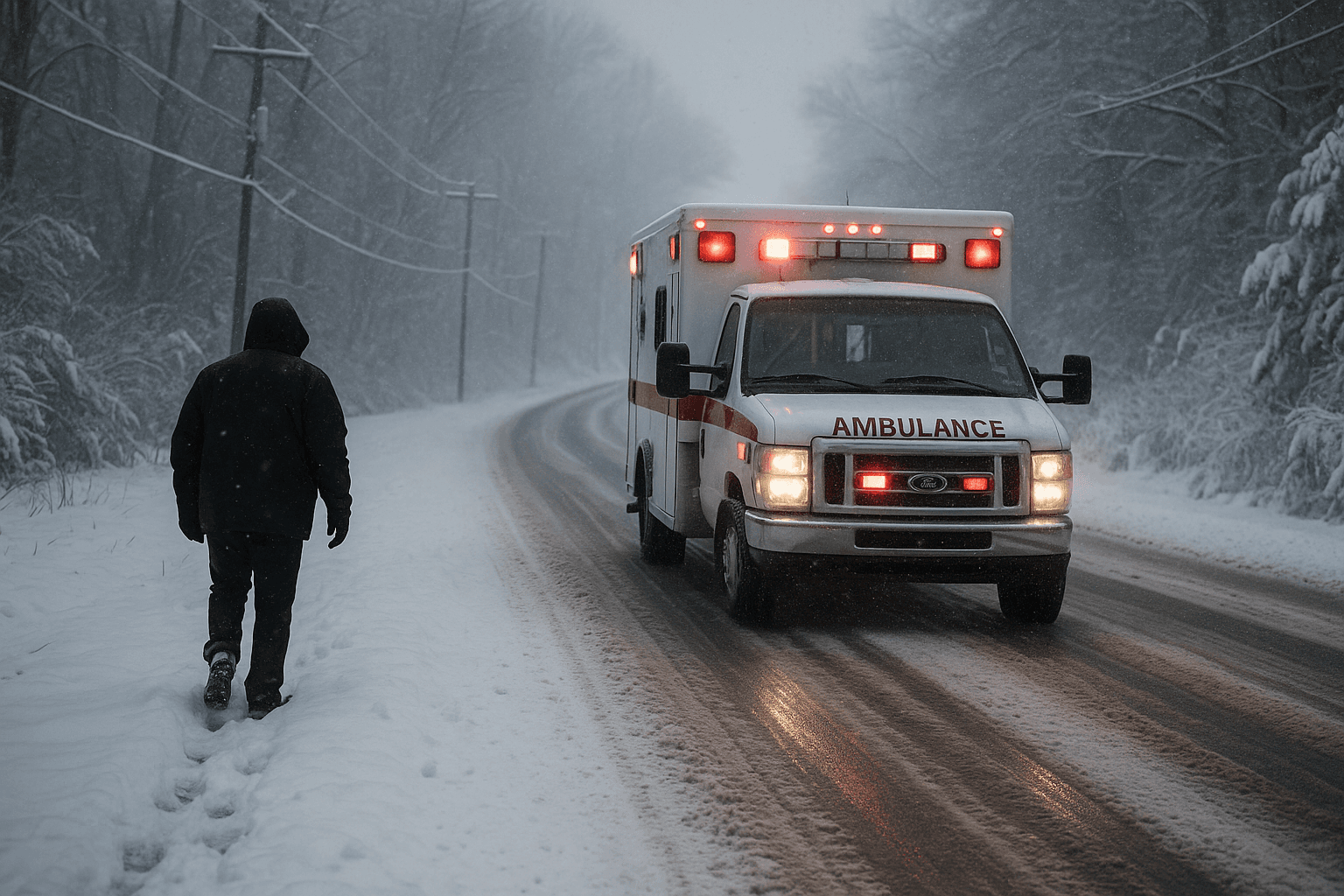
Beyond immediate traffic hazards, the event underscored public health and equity concerns that regularly surface during winter storms in rural counties. Slippery roads and uncertain travel times can delay emergency medical services and routine care for residents who rely on in person appointments for chronic disease management. Homebound older adults, people with mobility challenges, and households without reliable transportation are particularly vulnerable when even a few inches of snow and a thin glaze of ice are present.
The storm also highlighted systemic gaps in weather response for communities with limited transit and long distances to clinics and pharmacies. When road clearing is slow or resources are stretched, residents may miss dialysis appointments, medication deliveries, or home health visits. Community coordination between road crews, health providers, and social services can reduce harm by prioritizing routes serving health facilities and vulnerable neighborhoods.
As the county moves deeper into winter, residents are urged to check road conditions before travel, verify appointments with health providers if weather is forecast, and make plans for medication and heating needs during storms. Neighbors and community organizations play a vital role in checking on older and isolated residents during hazardous weather, reinforcing public safety in a county where distance and limited infrastructure can turn a small storm into a major disruption.
Sources:
Know something we missed? Have a correction or additional information?
Submit a Tip