Yemen leadership council accepts prime minister's resignation and names new premier
Yemen's presidential council approved Salem bin Breik's resignation and appointed Foreign Minister Shaya Mohsen Zindani to form a new cabinet, shifting the balance of power amid southern unrest.
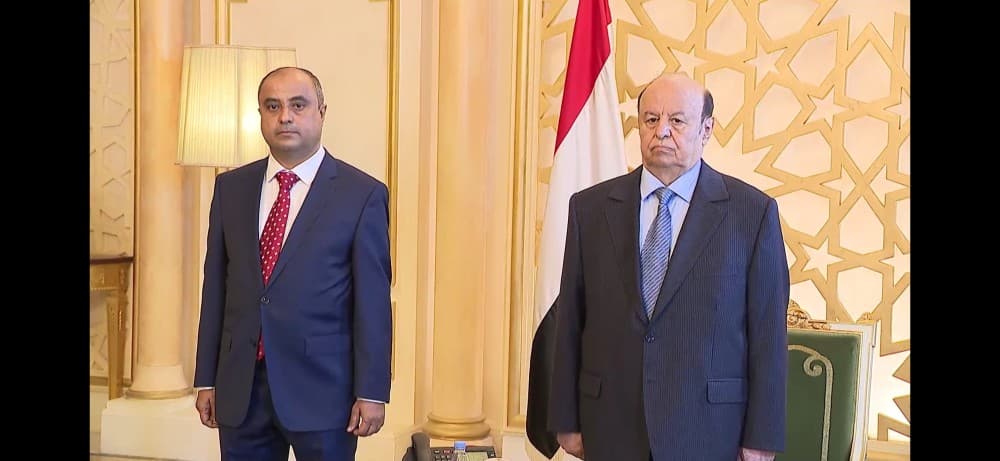
Yemen’s Presidential Leadership Council accepted Prime Minister Salem bin Breik’s formal resignation and named Foreign Minister Shaya Mohsen Zindani as the new prime minister, charging him with forming the next cabinet in accordance with the constitution and relevant laws. The council convened in Riyadh and reassigned bin Breik to an advisory role on financial and economic affairs to the PLC chairman.
The personnel moves come as the council also reshuffled membership, installing former defence minister Mahmoud al-Subaihi and Hadramout Governor Salem al-Khanbashi to replace two members dismissed for ties to the Southern Transitional Council. The changes follow a volatile December campaign on the southern front, when a UAE-backed Southern Transitional Council forcefully seized territory across parts of southern and eastern Yemen, including Hadramout and Al-Mahrah, prompting Saudi air strikes and a subsequent round of counteroperations that restored most ground to pro-government forces.
The appointment of a career diplomat and sitting foreign minister to the premiership signals an attempt by the PLC to present a unified, internationally palatable executive at a moment of heightened regional diplomatic tension. Yemen’s internationally recognized government has relied on support from regional powers since the outbreak of wider conflict in 2014, and the new make-up of the council underscores Riyadh’s continued influence over decision-making. By shifting bin Breik to an economic advisory post, the council appears to be preserving continuity in fiscal management even as it reorders political leadership.
The immediate economic implications are modest but nontrivial. Yemen’s economy has been devastated by more than a decade of conflict, with large swaths of the population dependent on aid and public finances strained by curtailed revenues and disrupted trade. Political consolidation in the internationally recognized camp could help stabilize donor engagement and unlock frozen transfers, but lingering fragmentation, particularly in the south, risks deterring private investment and complicating reconstruction planning. The southern provinces affected in December host critical infrastructure and export routes; insecurity there tends to raise shipping and insurance costs through the Red Sea and Bab al-Mandeb corridor, increasing the price of imports and further pressuring an already fragile currency and public budget.

Policy priorities for the new prime minister will likely center on restoring security, reconstituting civil administration in reclaimed areas, and coordinating with international donors to sustain humanitarian operations. Yemen continues to face a severe humanitarian crisis, with millions in need of assistance and recovery needs that will require years of sustained funding and political stability to address. How quickly Zindani assembles a cabinet inclusive enough to manage southern grievances will be a key test of whether the council can translate leadership changes into tangible governance gains.
For markets and aid agencies, the next signals to watch are the composition of the new cabinet, the council’s approach to STC-linked actors, and practical steps to reopen ports and restore services. Absent credible progress on those fronts, Yemen’s economic recovery will remain hostage to security dynamics and regional rivalries that have dominated the conflict since 2014.
Know something we missed? Have a correction or additional information?
Submit a Tip

