$60 million in HIV funds raise questions about audit transparency in Baltimore
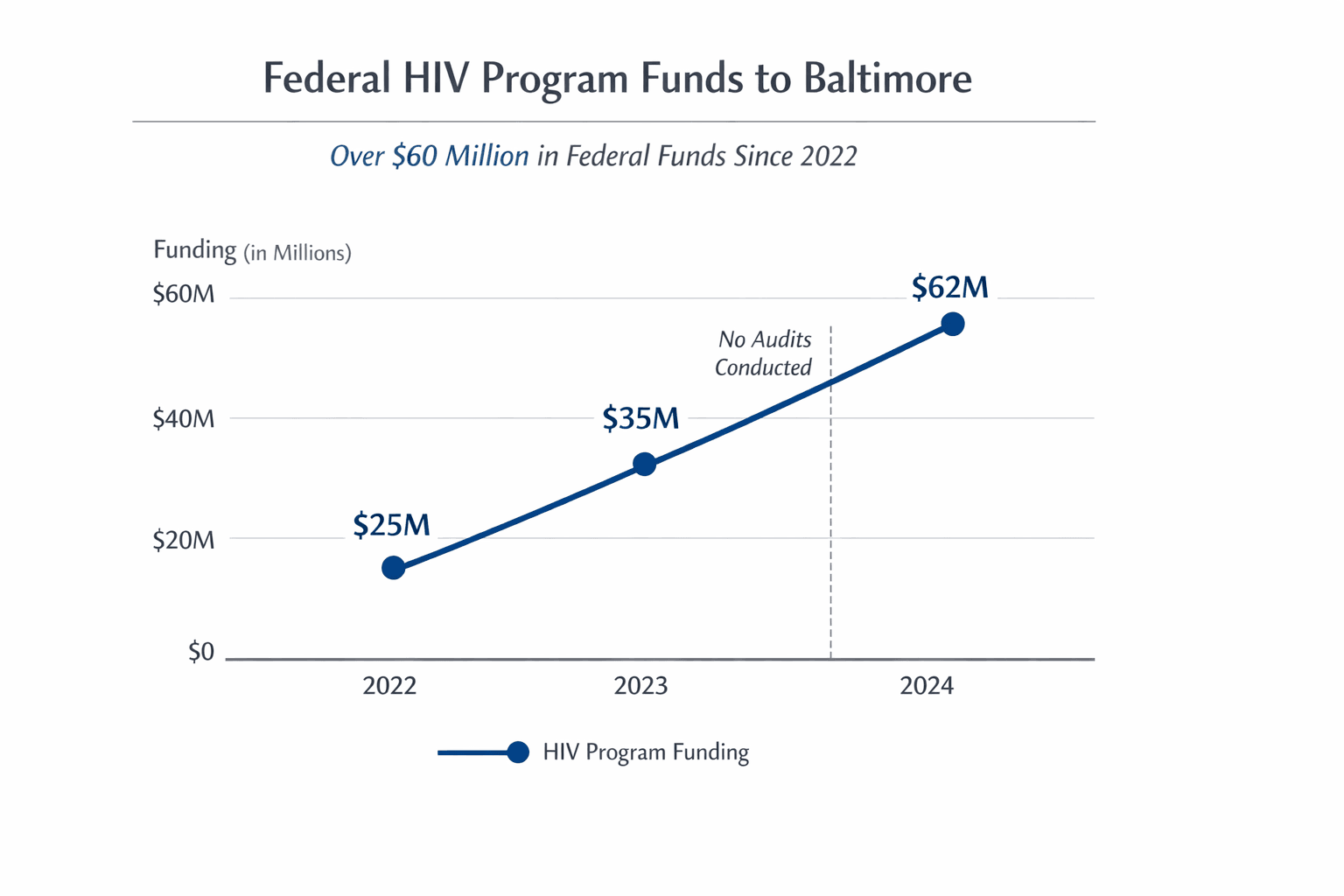
Connections Thru Life received more than $60 million for the Ryan White HIV program since 2022, but tax filings say no audit was completed. This matters for Baltimoreans who rely on funded services and want accountability for taxpayer dollars.

Connections Thru Life, an Owings Mills nonprofit acting as the fiscal agent for Ryan White HIV program funds in the Baltimore region, has received more than $60 million in federal funds since 2022, yet its nonprofit tax filings for 2022–2024 state that "no audit has been completed." The disclosure in CTL’s Form 990s has raised concern among accounting experts and local health officials about transparency and stewardship of federal taxpayer dollars tied to HIV care and support.
The organization manages Ryan White program funds that cover the Baltimore metro area and subgrant to institutions including Johns Hopkins and multiple county health departments. Federal rules generally require independent audits for recipients of federal awards of this size; the absence of a completed, publicly available audit prompted independent accounting academics to call the situation "troubling" and to question whether governance and financial oversight were sufficient before CTL received large federal awards.
Baltimore City Health Department officials acknowledged that CTL provided an audit during a site visit but said the department would release the document only after a public information request. The city comptroller's office said it conducts a performance audit of the Baltimore City Health Department, but that the comptroller’s review does not specifically examine CTL's finances. City leaders have also said BCHD is building capacity to move some work in-house and reduce reliance on third-party vendors.

For Baltimore residents who depend on Ryan White-funded services, the issue is more than an accounting dispute. Ryan White dollars fund medical care, case management, transportation, and other supports that keep people with HIV linked to treatment. When a fiscal intermediary overseeing those flows lacks a documented independent audit, community organizations and clients worry about continuity of services, equitable distribution of funds, and whether administrative overhead is being managed in the public interest.
The arrangement also highlights a structural issue in public health finance: large federal grants often flow through nonprofit intermediaries. That model can expand capacity quickly, but it increases the importance of visible, independent financial checks. When audit records are delayed, unavailable, or flagged as incomplete on official filings, it erodes public trust—especially in a city still confronting deep health disparities and a history of uneven resource access across neighborhoods.
The questions raised by CTL's filings are procedural but carry real consequences for people receiving care and the community organizations that partner to deliver services. City residents and advocacy groups interested in accountability can request records, press elected officials for clearer oversight, and urge BCHD to publish audits proactively as programs are outsourced or moved back in-house.
The takeaway? Transparency matters where health and taxpayer dollars intersect. If you rely on Ryan White services or care about how public funds are spent in Charm City, ask for the audit, ask your council members for detail, and keep showing up at public meetings—those are small acts that help protect services for neighbors who depend on them.
Sources:
Know something we missed? Have a correction or additional information?
Submit a Tip