Admiral Alvin Holsey relinquishes SOUTHCOM command, retires early
Admiral Alvin Holsey formally relinquished command of U.S. Southern Command on December 12, 2025, and retired after 37 years in service, leaving the post two years short of the usual tour. The abrupt turnover comes amid an operational surge in the Caribbean and eastern Pacific and raises questions about legal authorities and continuity of command at a strategically sensitive moment.
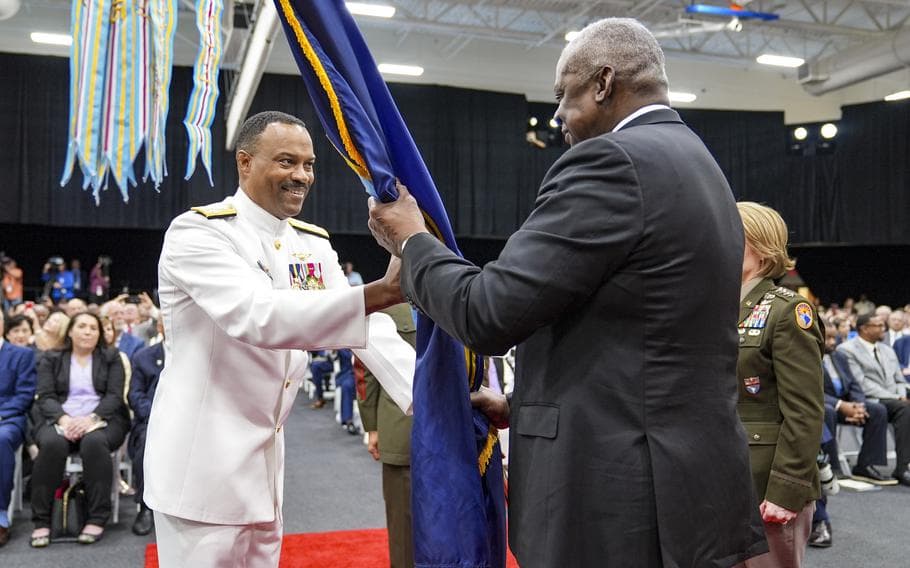
Admiral Alvin Holsey stepped down as commander of U.S. Southern Command at a change of command ceremony on December 12 at SOUTHCOM headquarters in Doral, Florida, ending a Navy career that spanned 37 years. Holsey retired two years earlier than is customary for the post after announcing his intention to leave in October without offering a reason, a move that left the command under acting leadership as regional operations intensified.
Holsey handed authority to his deputy, Air Force Lieutenant General Evan L. Pettus, who will serve as SOUTHCOM acting commander. Pettus had been serving as Holsey’s military deputy prior to the transfer. The ceremony was presided over by Air Force General Dan Caine, chairman of the Joint Chiefs of Staff. As of the ceremony President Donald Trump had not nominated a permanent successor, leaving a key leadership slot subject to forthcoming White House decision and Senate confirmation.
The change of command occurred against a backdrop of heightened U.S. military activity in the Caribbean and eastern Pacific. Recent operations cited by military and media accounts include the Venezuelan seizure of an oil tanker and more than 20 U.S. strikes on vessels described by U.S. officials as alleged drug smuggling ships. SOUTHCOM has framed a recent scale up of presence as improving deterrence and responsiveness, while critics and regional actors warn that aggressive operations risk further destabilizing a volatile security environment.
SOUTHCOM credited Holsey with reshaping the command’s posture in the region during his tenure, which began on November 7, 2024. Public releases and reporting said the command expanded from roughly 3,500 personnel to nearly 15,000 personnel in direct support of operations. That expansion was presented internally as strengthening deterrence across the hemisphere, but it also coincided with operational actions that raised legal and policy questions about the scope of authorities for lethal strikes against vessels at sea.
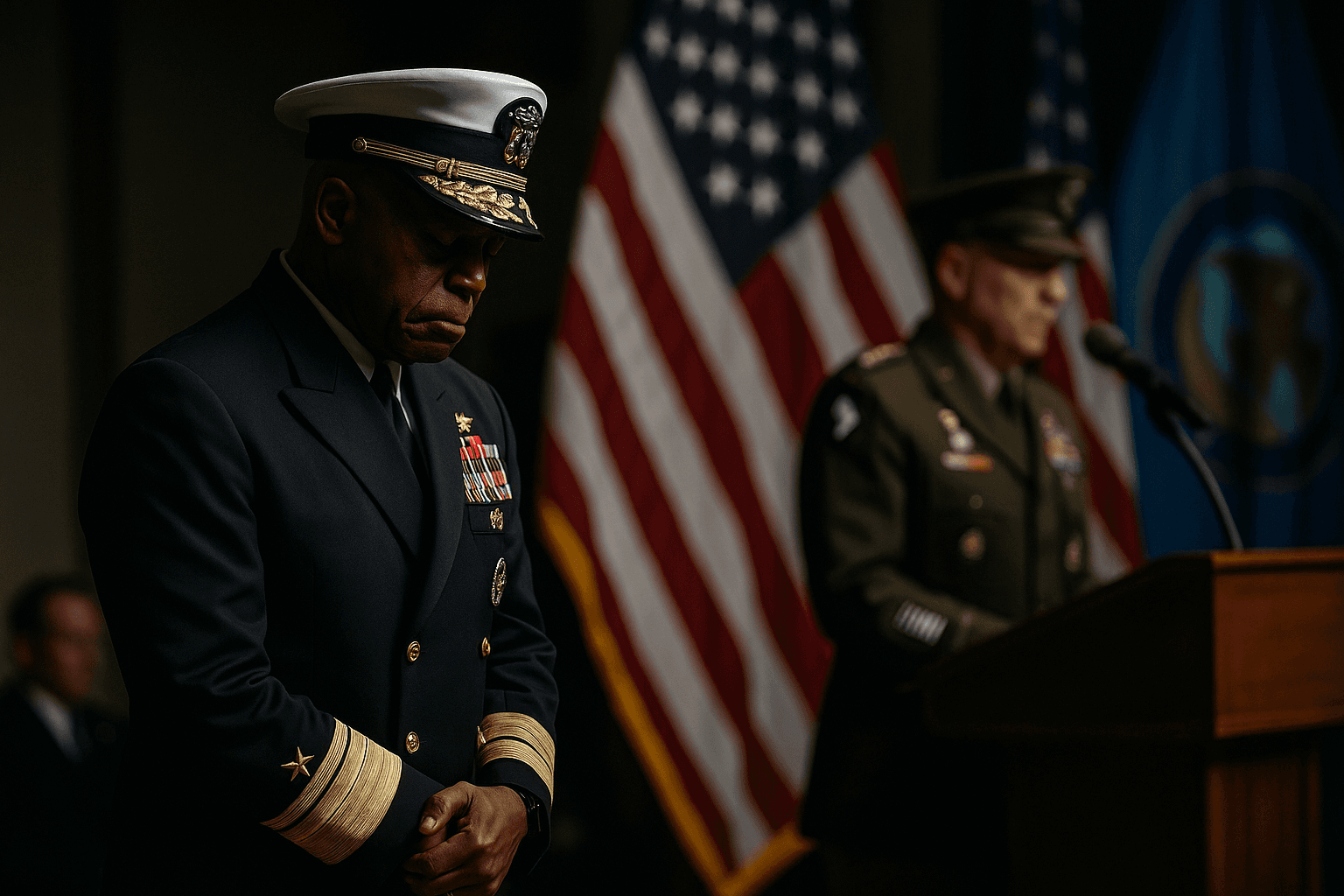
Media accounts cited by several outlets have reported that Holsey had reportedly raised concerns about the legality of U.S. lethal strikes against vessels alleged to be drug traffickers. Those accounts attribute the substance of the concerns to unnamed sources. Holsey did not publicly confirm those reports as the reason for his retirement. At the relinquishment ceremony Holsey said, in remarks reported by UPI, “We have worked hard and tirelessly to build relationships and understand requirements across the region.”
The ceremony was described in contemporaneous reporting as smaller and more subdued than the event that marked Holsey’s assumption of command in November 2024, when he became SOUTHCOM’s first African American leader. Photographs and accounts showed Holsey and his wife, Dr. Stephanie Holsey, walking down a red carpet during the event.
Holsey’s departure places near term responsibility for ongoing operations and policy judgments with an acting commander while the White House considers a permanent nominee. For Congress and oversight bodies the turnover comes at a moment when questions about the legal basis for maritime strikes, the consequences of forceful operations for regional stability, and the expanded footprint of U.S. personnel in the hemisphere will likely demand renewed scrutiny. Holsey’s long career, which began with a 1988 commission through the Naval Reserve Officers Training Corps program at Morehouse College, concludes amid a debate over how the United States balances tactical operations, legal authorities, and diplomatic consequences in the Western Hemisphere.
Know something we missed? Have a correction or additional information?
Submit a Tip