Aguilar Charged Nearly 90 Dollars for Public Settlement Records
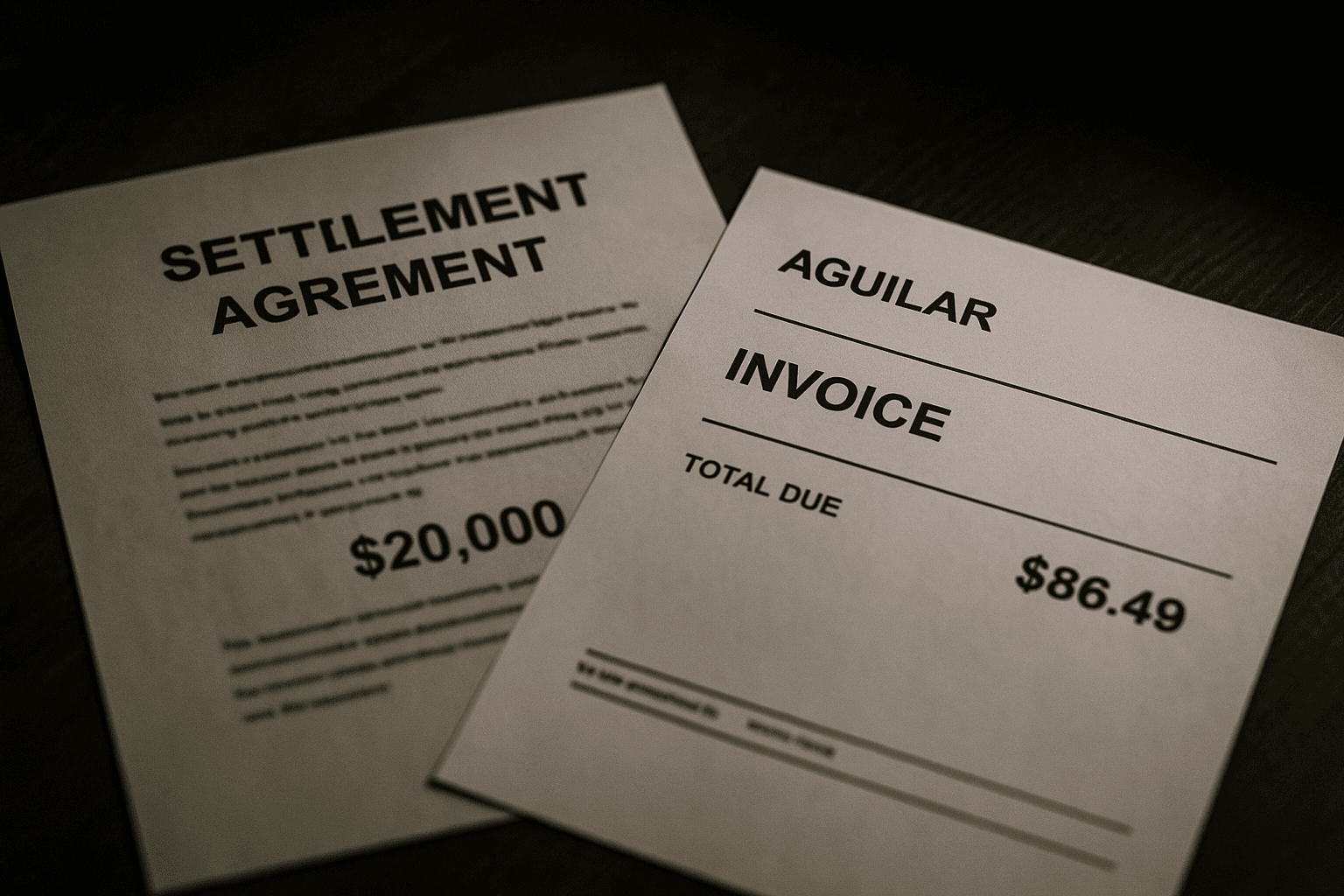
The Town of Aguilar invoiced this newspaper $86.49 after producing two settlement agreements, including a $20,000 payout to former clerk Tyra Avila, in response to a Colorado Open Records Act request. The after the fact billing raises questions about compliance with state law and worsens transparency barriers for residents in a town already facing serious budgetary strain.

On December 11, 2025 this newspaper received two settlement agreements from the Town of Aguilar after paying an $86.49 invoice for research time and copies. One of the agreements documents a $20,000 settlement paid last summer to former clerk Tyra Avila. The town did not notify the requester of the fee estimate before performing the work, a step required by state statute.
Colorado law sets a clear obligation on custodians of public records. The statute states, “Before performing any research and retrieval of public records, the custodian shall notify the requester of the amount of the fee.” Instead, Aguilar processed the request, completed three hours of research and data gathering, and then sent an invoice citing three hours at $41.37 per hour and 15 pages of copies at 25 cents each. The first hour of research is free under statute, and the request originally asked for electronic copies and for advance notice if fees would exceed $25.
When this newspaper attempted to narrow the request to reduce costs, Clerk Stephanie Coca responded, “The work for your request has already been performed. If you would like the information, please pay the fees in full… I cannot modify a request that has already been performed.” That response underscores the central concern for residents, that records funded by local taxes can be made effectively inaccessible through after the fact billing and elevated hourly rates.
The issue comes as Aguilar confronts acute fiscal warnings. Recent auditors cautioned the town may not be solvent past 2026, a prospect that makes scrutiny of taxpayer funded settlements and municipal spending more urgent. Transparency advocates also point to broader trends that compound the problem. The state maximum hourly rate for public records research increased from $33.58 to $41.37 in 2024 and 2025, a 23 percent rise that makes modest requests more costly. Lawmakers have also advanced Senate Bill 77, which would extend the statutory response window from three to five working days and allow up to 10 working days under extenuating circumstances. Critics say the change would give public agencies more time to delay disclosure.
For Aguilar residents the practical effect is twofold. First, public dollars used for legal settlements are less visible to taxpayers who pay them. Second, increased fees and delayed timelines erect financial and procedural barriers to oversight at a time when fiscal transparency could influence decisions about budget priorities and municipal survival. Local officials now face the choice of clarifying their public records practices and ensuring compliance with state law, or continuing a path that leaves residents without timely access to information about how their tax dollars are spent.
Sources:
Know something we missed? Have a correction or additional information?
Submit a Tip