Amazon Commits Over $35 Billion to India for AI, Exports
Amazon announced on December 10, 2025 that it will invest more than $35 billion in India through 2030 to expand e commerce, logistics, cloud and artificial intelligence capabilities and to boost exports from Indian sellers. The pledge could reshape the country’s digital infrastructure, labor market and trade patterns, while prompting closer scrutiny of regulation, competition and data governance.

Amazon said on December 10 that it planned to invest in excess of $35 billion in India through 2030, directing capital toward AI and cloud infrastructure, logistics and operational capacity to accelerate delivery and expand cross border shipments by Indian sellers. The company framed the commitment as a multibusiness push to strengthen e commerce, scale cloud capacity for enterprise and AI workloads, and increase exports from small and medium sized enterprises that sell on its platform.
Amazon estimated the plan could support roughly one million additional jobs directly and indirectly. It also said it expects to lift cumulative exports from Indian sellers significantly by 2030, positioning the country as a larger participant in global e commerce flows. Reuters reported the announcement in the context of growing commitments from other U.S. technology firms that are expanding investments in India’s AI ecosystem, underscoring a broader industry shift toward long term bets in the market.
The package deepens Amazon’s existing footprint in India and signals a strategic focus on combining cloud infrastructure with logistics to remove barriers for sellers seeking to reach international customers. For Indian policymakers, the investment presents both opportunity and challenge. On one hand, expanded cloud and AI capacity could accelerate digital adoption across industry and public services, and increased exports could generate foreign exchange and support industrial policy objectives that prioritize employment and SME growth.
On the other hand, the scale and scope of the commitment are likely to revive debates within regulatory and legislative arenas about competition, data governance and labor standards. Large capital inflows that centralize cloud and AI compute, coupled with proprietary logistics networks, can concentrate market power and create dependencies among sellers and smaller logistics providers. Regulators will face choices about whether to steer investment toward interoperability, ensure fair market access for rival providers and set guardrails around data flows and consumer protection.
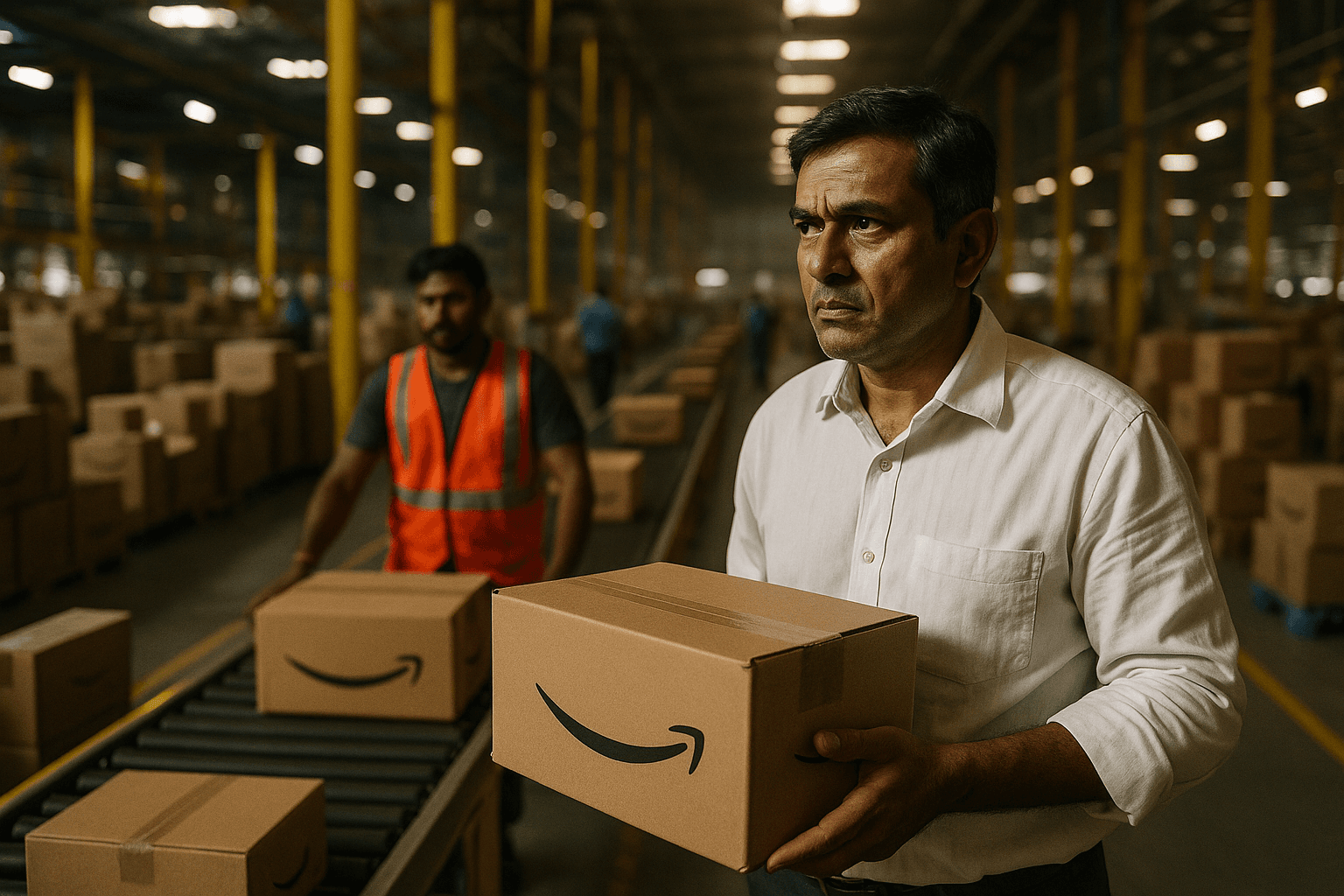
The job creation figure cited by Amazon will be a central metric in political discussions. Employment gains may be substantial, but the quality and distribution of those jobs will determine the political and social payoff. Policymakers and civil society will press for transparency over how roles are defined, whether gains are predominantly in lower paid logistics work or higher skilled cloud and AI employment, and how workforce training will be coordinated between industry and public institutions.
Trade and export implications are equally consequential. If Amazon’s investment succeeds in scaling cross border shipments, India could see a notable expansion in small seller access to overseas markets, altering export composition and supply chain dynamics. That outcome aligns with New Delhi’s stated desire to promote digital exports, but it will require integration with customs, standards and trade facilitation measures to minimize frictions.
The announcement reinforces a pattern of major U.S. technology firms making long term investments in India. For Indian democratic institutions the task will be to balance facilitation of foreign capital with active oversight to protect competition, data sovereignty and labor rights, while ensuring that promised economic gains materialize broadly. As Amazon proceeds to implement its plan, scrutiny from regulators, parliamentarians and civil society is likely to grow, centering on implementation details, transparency and measurable outcomes.
Sources:
Know something we missed? Have a correction or additional information?
Submit a Tip

