Baltimore Launches Multi Agency Plan to House At Risk Youth
Mayor Brandon M. Scott announced a multi agency partnership to rapidly place young people and families at risk of homelessness into permanent housing, with commitments to case management and wraparound supports. The multi year agreement running from 2025 to 2029 aims to reduce returns to homelessness, and will affect Baltimore residents by coordinating local nonprofits, city services, and state and federal partners to expand supportive housing options.

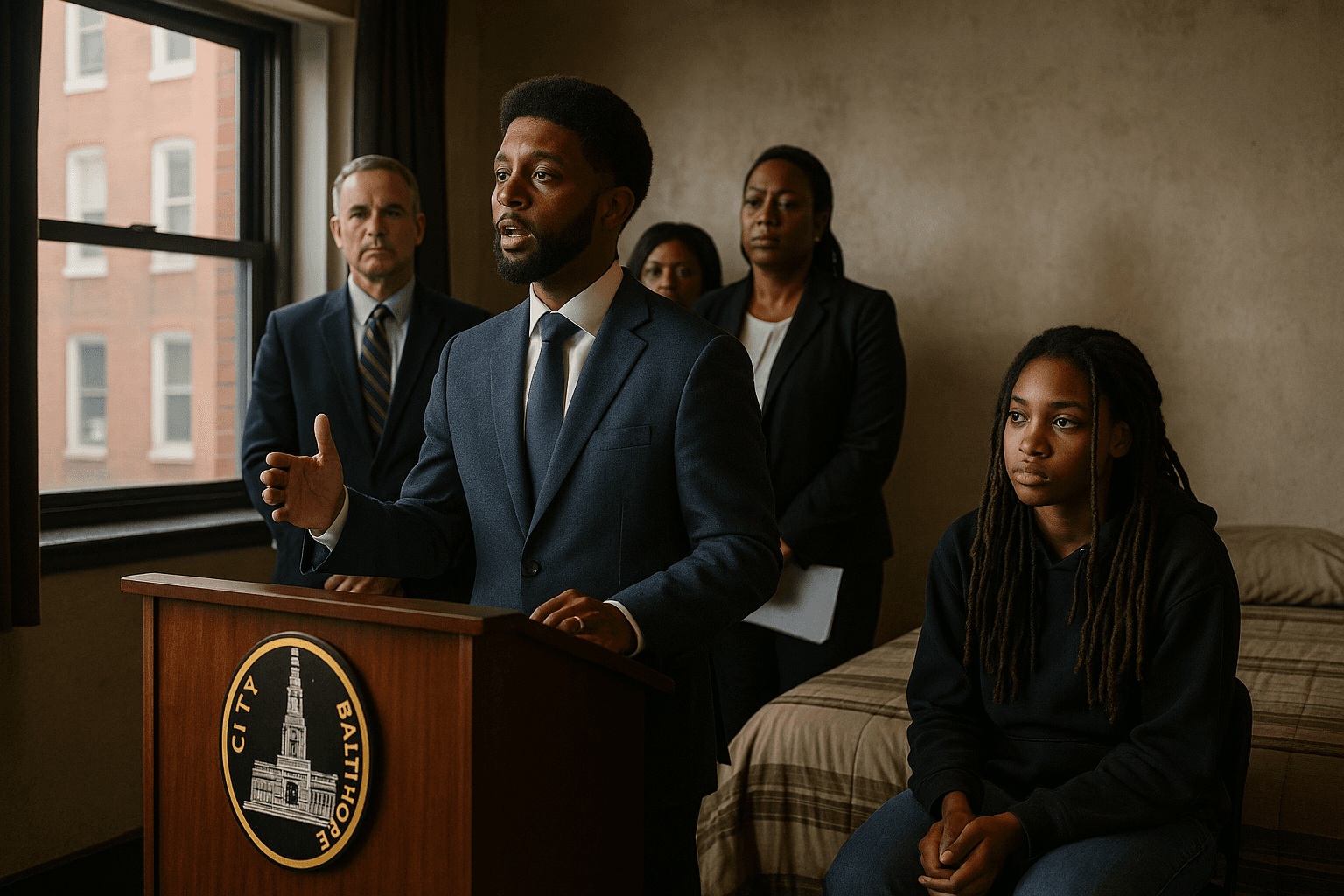
On December 4, 2025 Mayor Brandon M. Scott unveiled a citywide initiative that brings together the Mayor’s Office of Homeless Services, the Baltimore City Department of Social Services, and community nonprofit providers to accelerate housing placements for youth and families at risk of homelessness. The agreement covers the period from 2025 to 2029 and commits partners to provide case management, housing placements, and wraparound supports intended to prevent returns to homelessness.
City officials framed the plan as part of a broader strategy to reduce youth and family homelessness while leveraging state and federal partnerships to expand supportive housing capacity. The program prioritizes permanent housing with services attached, moving away from short term shelter stays toward more stable tenancies supported by ongoing case management and connections to health, education, and employment resources.
For Baltimore residents the immediate impact will depend on how quickly units and services are deployed. Families and young people identified as being at imminent risk will be referred to participating providers for expedited placements. The involvement of the Department of Social Services is intended to synchronize benefits and eligibility screenings, while the Mayor’s Office of Homeless Services will coordinate placements and track outcomes across agencies.
Community nonprofit providers will deliver frontline services, and the multi agency framework is designed to reduce duplication and shorten the time between referral and move in. Over the 2025 to 2029 period officials expect to measure success by reductions in repeat episodes of homelessness among youth and families and by improved housing stability indicators.
The initiative echoes national shifts toward supportive housing models that pair permanent housing with services, and it signals Baltimore’s intent to align municipal efforts with broader state and federal resources. Residents can expect the city to report progress as placements ramp up and to seek continued collaboration with community partners to address capacity constraints and the complex needs of young people and families exiting homelessness.