Bemidji’s Year of Resilience: Community Action Shapes Local Priorities
Columnist Daltyn Lofstrom reflects on 2025 as a year when Bemidji residents mobilized after the June windstorm, pushed into public debate over wastewater and annexation boundaries, and rallied against county budget cuts affecting libraries. The column argues that sustained civic engagement, volunteerism, and local fundraising turned crisis into civic momentum that will shape policy and governance choices in 2026.
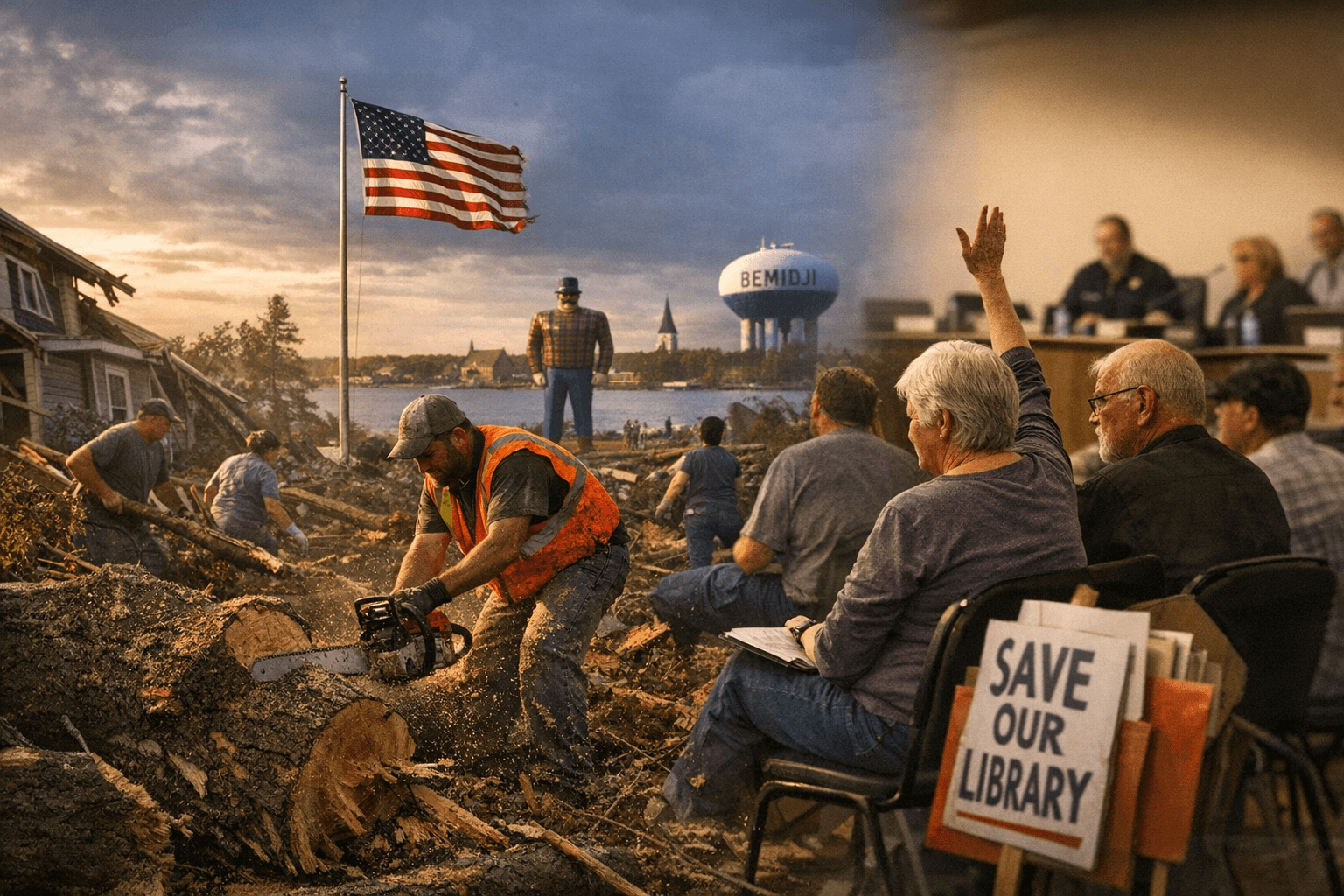
Bemidji closed out 2025 having weathered a series of shocks that tested local institutions and civic capacity. The most visible was the June windstorm, an event that produced immediate damage, prompted volunteer-led cleanup and fundraising, and exposed gaps in municipal emergency response and infrastructure resilience. At the same time, debates over wastewater management and city-county annexation boundaries drew sustained public attention, and county budget reductions affecting library services sparked organized community pushback.
Those developments mattered because they shifted civic energy from reactionary relief toward sustained scrutiny of how local government makes decisions about infrastructure, land use, and public services. Volunteer groups and neighborhood networks filled urgent needs after the storm, but their efforts also highlighted the limits of relying on informal resilience rather than systematic investment in preventive measures and coordinated recovery plans. The municipal and county roles in permitting, annexation, and wastewater finance came under increased public review as residents sought clearer lines of responsibility and predictable service provision.
Library funding became another flashpoint. County budget cuts that reduced resources for libraries prompted new levels of advocacy and fundraising, bringing attention to how budget choices at the county level translate into diminished programs and access across the community. That debate underscores a broader policy trade-off facing elected officials: balancing fiscal constraints against the social returns of public services that support education, civic engagement, and economic stability.
Institutionally, 2025 illustrated both strengths and weaknesses. Local nonprofits, faith groups, and volunteer-led committees demonstrated capacity to mobilize quickly and raise funds. Elected bodies and administrative agencies were pushed to respond more transparently and to explain the fiscal and technical rationales behind decisions on annexation lines, wastewater infrastructure, and budget allocations. Those interactions strengthened civic accountability but also signaled potential areas for reform: clearer intergovernmental agreements, more proactive infrastructure planning, and inclusive public engagement processes that translate neighborhood concerns into policy outcomes.
For residents of Beltrami County, the practical implications are immediate. Ongoing recovery from storm damage will require coordinated planning and potential budgetary trade-offs. Debates over annexation and wastewater policy will shape development patterns and tax responsibilities. Library funding choices will affect program availability and hours. Civic participation in 2026 elections and public meetings will be consequential for who sets those priorities.
Lofstrom’s central point is a call to sustain the momentum of 2025: continue recovery efforts, remain engaged in public decision-making, and convert volunteer energy into durable policy changes that strengthen community resilience. The coming year will test whether that civic energy translates into institutional reforms and budget choices that reflect the values the community mobilized to protect.
Sources:
Know something we missed? Have a correction or additional information?
Submit a Tip