Bezos Backed Blue Origin Developing Orbital AI Data Centers
The Wall Street Journal reported that Blue Origin has quietly been developing technology for orbital data centers to host energy intensive AI computing, a program Reuters summarized on December 10, 2025. If realized, the effort could reshape where and how cloud computing runs by shifting power and cooling burdens off Earth, though engineers and economists warn of significant technical and cost hurdles.

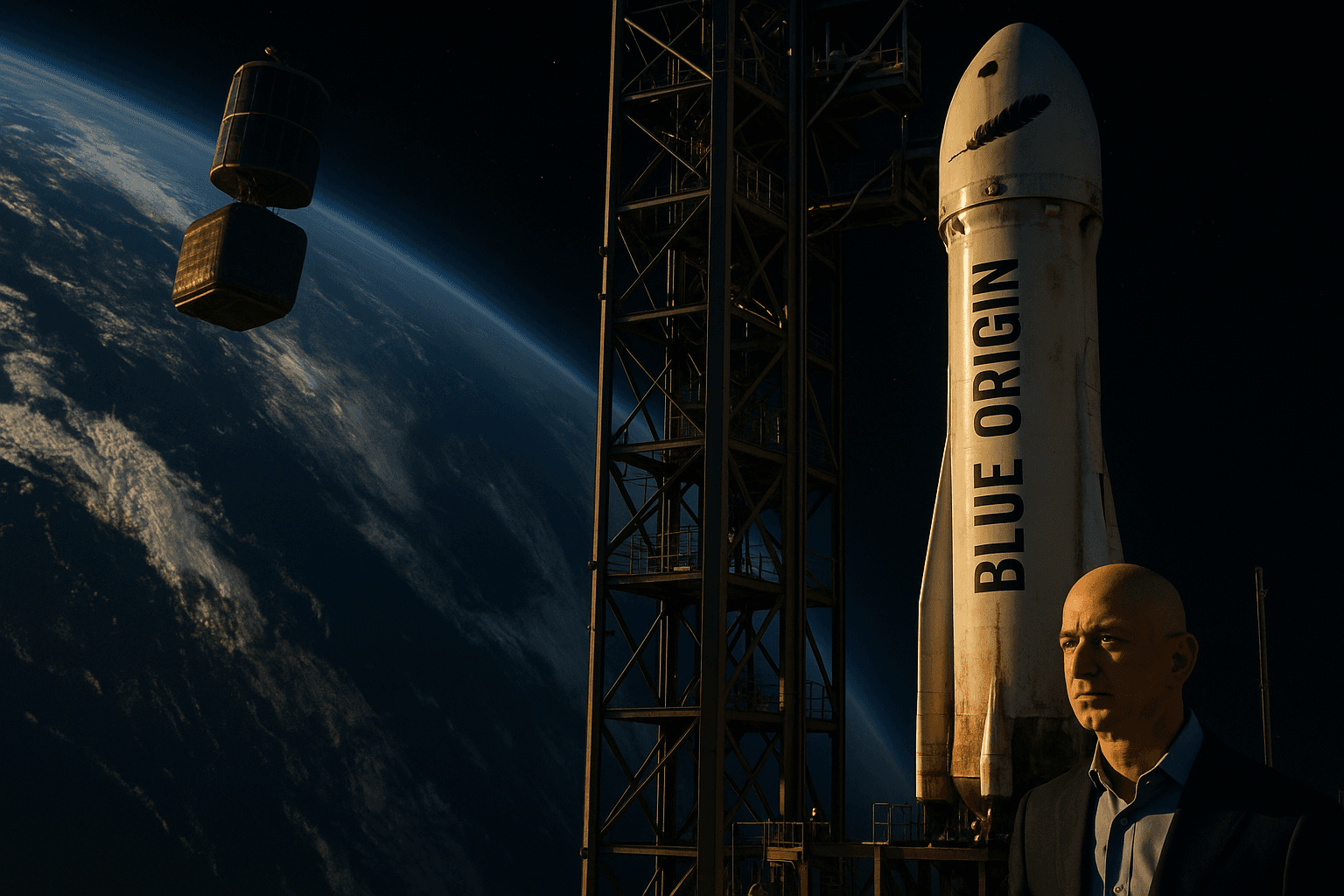
The Wall Street Journal reported that Blue Origin has spent more than a year developing hardware and systems intended to support data centers in orbit, part of an emerging effort to move energy intensive artificial intelligence computing out of congested terrestrial facilities. Reuters summarized the story on December 10, 2025, noting that the work has proceeded quietly as large technology companies seek alternatives to the growing limits of land based power supply and cooling infrastructure.
According to the reporting, Blue Origin’s technology aims to exploit continuous solar power available in certain orbits and to sidestep terrestrial constraints such as water use, grid capacity limits and local heat emissions. The Journal’s account, as summarized by Reuters, adds that SpaceX is also exploring variants of its Starlink satellites that could carry AI compute payloads, signaling broader industry interest in placing computing closer to space based energy sources.
Companies named in the reporting did not comment publicly. Analysts and engineers contacted by this newspaper said the idea has conceptual appeal but faces formidable obstacles before it could scale. Launch cost remains a primary barrier. Sending the volume of servers, power systems and thermal control hardware that modern AI models require would be expensive relative to putting those machines in existing land based data centers that benefit from economies of scale and established supply chains.
Technical challenges are also significant. Electronics operating in orbit encounter higher levels of ionizing radiation than on the ground, which requires expensive radiation hardening or fault tolerant architectures. Cooling still matters in vacuum. Without convective air, heat must be radiated away, necessitating large radiator arrays that add mass and complexity. High throughput links between space based systems and ground networks are necessary to move training data or deliver inference results, creating demands on spectrum, ground station networks and latency tolerant software designs.
Proponents argue these costs may be offset by advantages that cannot be matched on Earth. Solar energy in sun synchronous orbits can be effectively continuous, reducing dependence on carbon intensive grids and potentially lowering lifecycle environmental impacts of large compute clusters. Removing the need for land based cooling could reduce local water and energy stress in regions hosting hyperscale facilities.
The emerging interest raises regulatory and policy questions as well. Increased launches and heavy payloads could add to congested orbits and raise concerns about debris. Spectrum allocation for high capacity downlinks and export controls on advanced computing hardware destined for orbit are likely to become points of contention among technology companies, national regulators and international bodies.
For now, the effort remains exploratory. The Wall Street Journal’s reporting and the Reuters summary indicate that companies are actively studying the tradeoffs, but a clear path from prototype hardware to operational orbital AI farms has not been publicly disclosed. If the idea advances, the move could shift some of the computing industry’s environmental footprint off planet and redraw the geography of cloud infrastructure, even as it poses novel engineering and governance challenges.
Sources:
Know something we missed? Have a correction or additional information?
Submit a Tip