Bob Weir’s death spotlights San Francisco music legacy and policy
Bob Weir, Grateful Dead co-founder, died Jan. 10 at 78; his passing has prompted local memorials and raised questions about preserving San Francisco’s musical heritage.
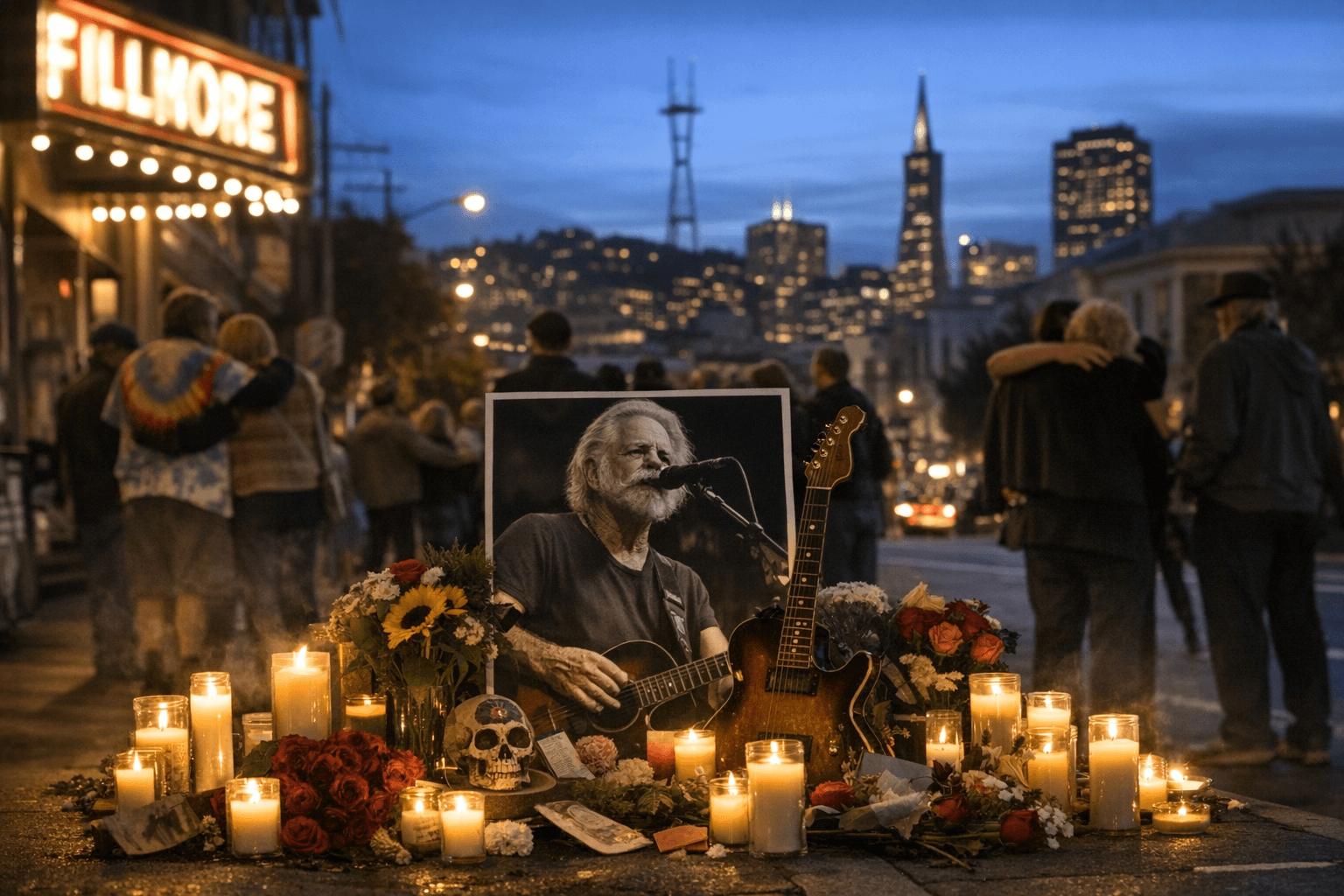
Bob Weir, a guitarist, singer and co‑founder of the Grateful Dead who was born and raised in the Bay Area, died Jan. 10 at age 78 after a battle with cancer and underlying lung issues. His death has drawn large local tributes in Haight‑Ashbury and at other city sites, renewed attention to the cultural institutions that nurtured the 1960s music scene, and exposed practical questions for city government about managing memorial gatherings and protecting cultural legacy.
Weir’s role in shaping the Dead’s sound and his songwriting — including contributions such as "Sugar Magnolia" — made him a central figure in San Francisco’s musical identity. After the death of Jerry Garcia, Weir continued to perform with projects including RatDog and Dead & Company, sustaining ties between the city’s contemporary music venues and the Deadhead community. Musicians, public figures and fans have publicly reacted, and spontaneous memorials in the Haight and other neighborhoods have signaled how deeply local residents associate the band with civic life.
Immediate municipal concerns are plain: memorial gatherings can strain sanitation, transit and public safety resources and often require coordination with city permitting offices. Parks, sidewalks and small businesses in the Haight historically absorb heavy foot traffic during high‑profile events, creating both economic opportunity and logistical burdens. City agencies that manage public space and event permitting will be asked to balance open expression with crowd control, noise ordinances and public health considerations.
Longer term, Weir’s death raises policy questions about cultural preservation. The Haight‑Ashbury’s role as a living historic district is not just nostalgic; it involves land use, zoning and funding decisions that affect music venues, small businesses and nonprofit music institutions. City leaders and voters will face choices about whether to expand protections for music venues, increase funding for arts organizations, or create formal commemorations and heritage plaques that codify the neighborhood’s cultural importance.
There is also a civic angle to how the community remembers influential figures. The Dead’s countercultural roots intersected with local political movements in the 1960s and beyond; memorial activity can mobilize civic engagement, galvanize neighborhood associations and influence ballot debates over arts funding and zoning protections for cultural spaces.
Our two cents? Expect more memorials and a push to formalize protections for the Haight’s music ecosystem. If you care about the future of live music in San Francisco, check local event permits, support neighborhood businesses and music nonprofits, and consider arts and preservation measures when you vote.
Sources:
Know something we missed? Have a correction or additional information?
Submit a Tip